February 3, 2026
.webp)
Top 10 Types of Mulch for Australian Gardens in 2025
Discover the 10 best types of mulch for your garden. Our guide covers organic and inorganic options to help you choose the right one for Aussie conditions.
Career Development
minutes
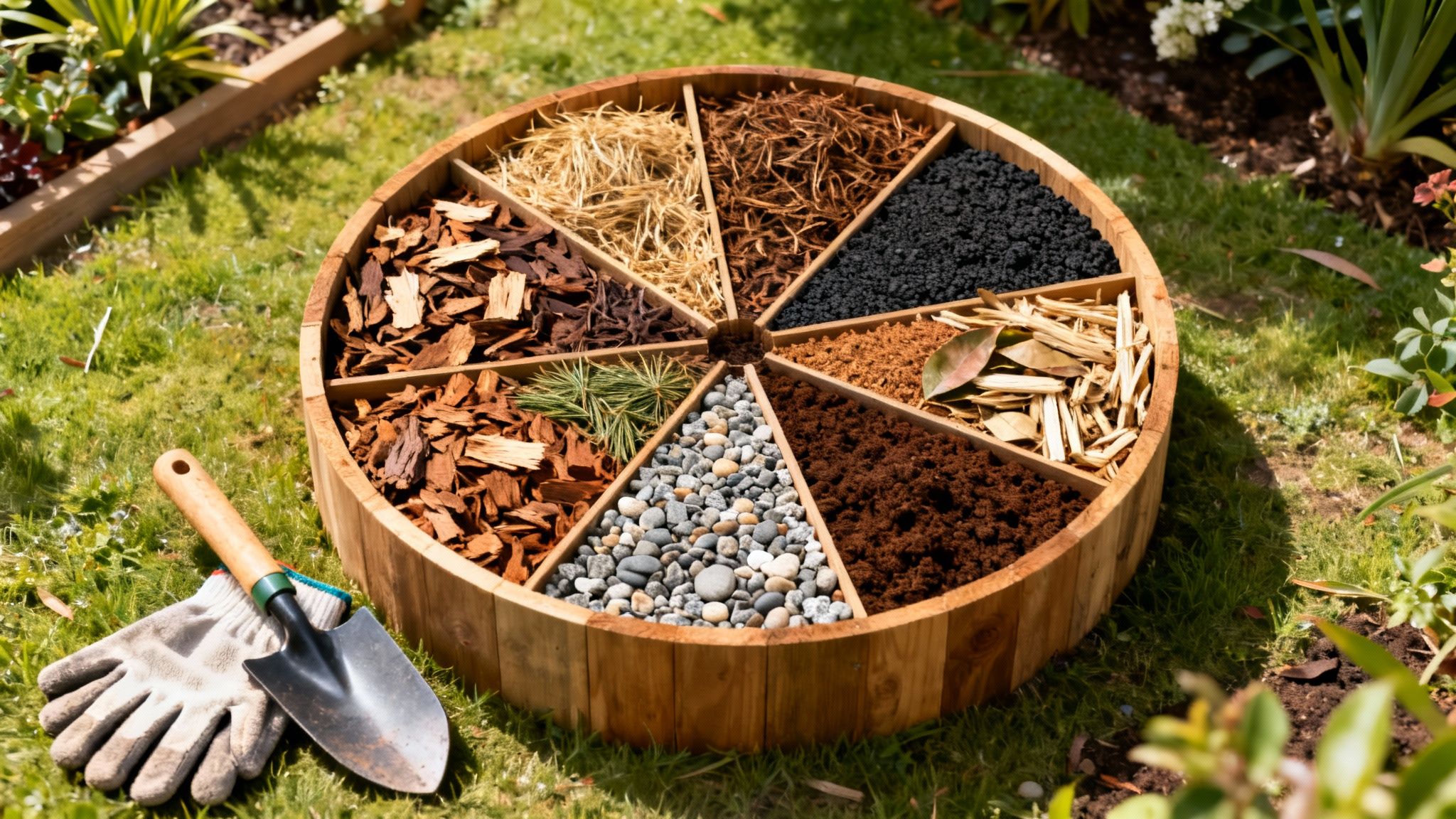
Mulch is more than just a decorative top layer for your garden beds; it's a critical component for healthy soil, water conservation, and weed suppression, especially in Australia's challenging climate. From the nutrient-rich depths of compost to the long-lasting durability of stone, the world of mulch is vast and varied. But how do you know which one is right for your project, your client's needs, or your specific environmental conditions?
Choosing the correct ground cover is fundamental to successful horticulture. For professionals in landscaping, garden maintenance, or even pet services offering yard clean-ups, recommending the right types of mulch is a key value-add. It demonstrates expertise, protects a client’s investment in their plants, and can even become a profitable upsell. For the dedicated home gardener or horticulture student, this knowledge translates into healthier plants, reduced water bills, and less time spent weeding.
This comprehensive guide is designed to be your go-to resource. We will break down the top 10 mulch options available in Australia, moving beyond generic advice to provide specific, actionable insights. You will learn the distinct pros and cons of each material, its ideal application for different plant types and garden styles, and practical tips on sourcing and application. We'll explore everything from organic options like wood chips and leaf mould that enrich the soil, to inorganic choices like river rock and recycled rubber that offer permanence and unique aesthetic appeal. This is your ultimate list for mastering mulch and achieving spectacular, sustainable results in any garden.
1. Wood Chip Mulch
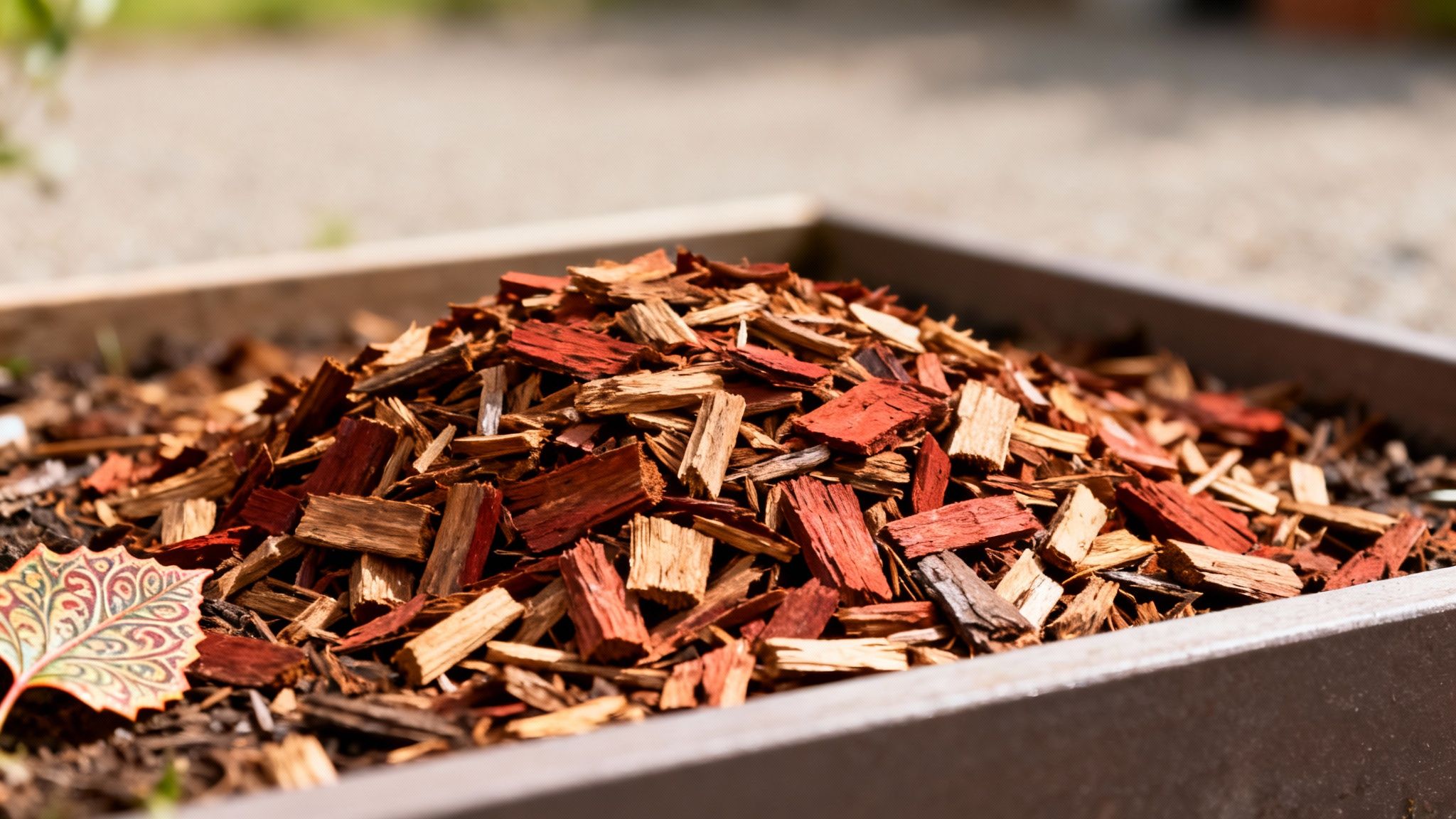
Wood chip mulch is a versatile and widely used ground cover in Australia, created from shredded or chipped wood. Sourced from various materials like forestry by-products, tree pruning, or recycled timber pallets, it is a sustainable choice for many landscaping projects. Its popularity stems from its affordability, aesthetic versatility, and long-lasting nature.
As one of the most common types of mulch, wood chips decompose slowly, offering extended soil protection and gradually releasing valuable organic matter. This process improves soil structure, aeration, and water retention over time, making it an excellent long-term investment for garden health. Its chunky, interlocking texture is highly effective at suppressing weeds and insulating soil from extreme temperature fluctuations.
Key Benefits and Best Uses
Wood chips are ideal for established garden beds, pathways, and around trees and shrubs. They are a staple in public landscaping projects, such as Melbourne’s council gardens which often use native eucalyptus chips, and in Brisbane’s urban beautification efforts. For home gardeners, they provide a polished, professional finish.
- Best For: General landscaping, established ornamental beds, pathways, and around mature trees.
- Pros: Long-lasting, excellent weed suppression, great soil temperature regulation, cost-effective, and aesthetically pleasing.
- Cons: Can temporarily draw nitrogen from the soil surface during decomposition (a process known as nitrogen drawdown), which can affect young annuals. Not ideal for vegetable gardens where you need to dig frequently.
Application and Sourcing Tips
For optimal results, apply a layer of wood chip mulch 5-7 cm deep to effectively block sunlight from reaching weed seeds. Crucially, keep the mulch at least 10 cm away from the base of tree trunks and plant stems to prevent moisture build-up, which can lead to rot and disease.
Client Tip: Advise clients that sourcing fresh, uncomposted wood chips directly from local arborists or tree removal services is often the most budget-friendly option. These "green" chips will need to age for a few months before use to prevent nitrogen drawdown from impacting plants. For immediate use, recommend purchasing aged or composted wood chips from a reputable garden supplier.
2. Bark Mulch (Hardwood and Pine)
Bark mulch is a highly popular and aesthetically pleasing ground cover derived from the shredded bark of trees, a by-product of the timber industry. Common in Australia, it is available in both hardwood varieties, such as eucalyptus, and softwood varieties like pine bark. Its rich colour and fine texture make it a preferred choice for creating a natural, tidy finish in garden beds.
As one of the most decorative types of mulch, bark decomposes more slowly than mixed mulches like lucerne or pea straw. This slow decomposition means it offers long-lasting coverage and excellent moisture retention. While it contains fewer nutrients than wood chips, its primary benefits are weed suppression, soil insulation, and a polished appearance that complements both native and ornamental garden designs.
Key Benefits and Best Uses
Bark mulch is particularly effective in ornamental garden beds where aesthetics are a priority. Its durability makes it suitable forsloped areas where lighter mulches might wash away. It is a common sight in Adelaide’s heritage gardens, which often feature aged hardwood bark, and in tropical garden installations on the Gold Coast, where pine bark’s resistance to matting is beneficial.
- Best For: Ornamental beds, native gardens, sloped areas, and around shrubs and acid-loving plants (pine bark).
- Pros: Highly attractive, long-lasting, excellent at retaining moisture, resistant to compaction, and good for weed control.
- Cons: Can be slightly acidic (especially pine bark), offers fewer nutrients to the soil compared to composted mulches, and can be more expensive than basic wood chips.
Application and Sourcing Tips
Apply a generous layer of bark mulch, around 7-10 cm deep, to ensure effective weed suppression and moisture conservation. Like wood chips, keep it pulled back from the stems of plants and tree trunks to prevent collar rot. Before applying, ensure the soil has good drainage, as the fine texture of bark can sometimes trap excessive moisture in poorly drained areas.
Client Tip: When consulting with clients, recommend hardwood bark for maximum longevity and a classic look. For gardens with acid-loving plants like azaleas or camellias, suggest pine bark, as it can help maintain a lower soil pH. Advise them that while bark is a premium product, its durability often makes it a cost-effective choice over the long term.
3. Straw and Hay Mulch
Straw and hay are lightweight organic mulches, popular in Australian food production, from large-scale vegetable farms to backyard veggie patches. Straw consists of the dry, hollow stalks of cereal grain crops like wheat or oats, making it virtually seed-free. Hay, in contrast, is dried grass or legumes and often contains seeds, which can introduce weeds into garden beds.
As one of the fastest-decomposing types of mulch, both straw and hay rapidly break down to enrich the soil with organic matter. This quick decomposition boosts soil fertility and improves its structure, making it ideal for annual vegetable gardens that require nutrient-rich conditions. Its light colour reflects sunlight, helping to keep soil cool in the hot Australian sun, while its loose structure allows water and air to penetrate easily.
Key Benefits and Best Uses
Straw is particularly favoured in productive gardens, such as the market gardens of NSW and community projects in Queensland, because it protects soil and plants without hindering growth. It is excellent for keeping produce like strawberries and pumpkins off the soil, reducing rot.
- Best For: Vegetable gardens, fruit patches (especially strawberries), and newly seeded lawns.
- Pros: Decomposes quickly to enrich soil, excellent water retention, keeps soil cool, lightweight, and easy to spread. Quality straw is weed-free.
- Cons: Decomposes quickly and needs frequent reapplication (every 2-3 months). Hay can introduce significant weed problems. Can blow away in windy areas if not watered down after application.
Application and Sourcing Tips
Apply a thick layer of straw, around 10-15 cm deep, as it will compress over time. This depth is crucial for effective weed suppression and moisture retention. When mulching, keep it a few centimetres away from plant stems to ensure good air circulation and prevent stem rot.
Client Tip: Strongly advise clients to source "pea straw" or "lucerne hay" (which acts more like a green manure) from reputable garden suppliers or local farms to minimise weed seed contamination. For organic gardening, confirm the source is a certified organic farm to avoid pesticide residues. Suggest mixing straw with compost before application for a powerful soil-building boost.
4. Compost and Composted Mulch
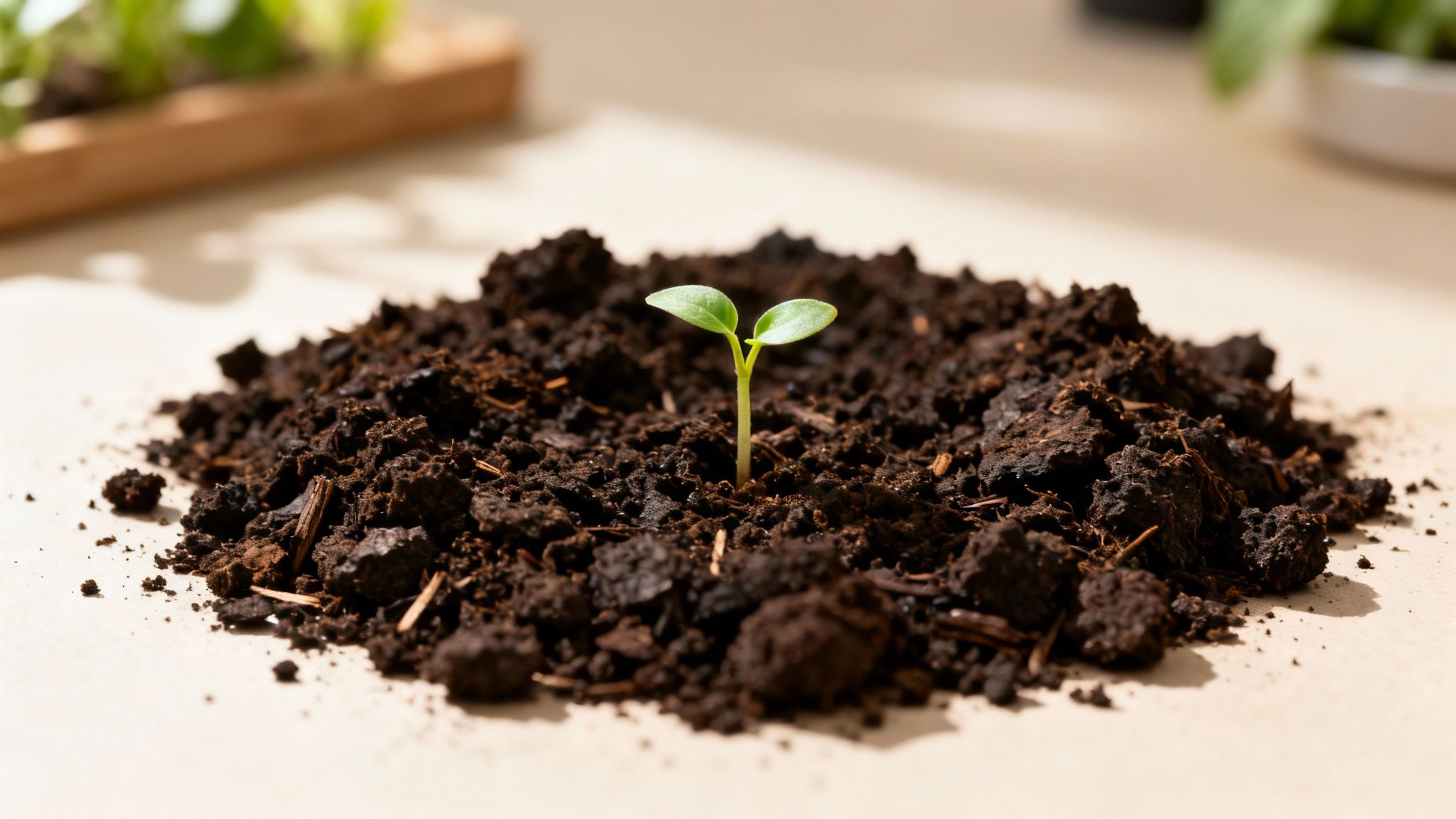
Compost is a nutrient-rich organic material that serves a dual purpose as both a premium mulch and a powerful soil amendment. Created from decomposed kitchen scraps, garden waste, and other organic matter, it is a cornerstone of sustainable gardening in Australia. Using compost as one of the key types of mulch not only suppresses weeds and retains moisture but also actively feeds the soil with vital nutrients and beneficial microorganisms.
This process transforms garden beds into thriving ecosystems, improving soil structure and fertility season after season. As it breaks down, compost releases a slow and steady supply of nutrients, reducing the need for synthetic fertilisers. This approach is favoured by organic gardening communities in Melbourne and is actively supported through council composting programs in cities like Adelaide, showcasing its growing importance in urban horticulture.
Key Benefits and Best Uses
Compost is the gold standard for vegetable gardens, annual flower beds, and any area where soil improvement is a top priority. Its fine texture allows it to be easily incorporated into the soil. For those interested in the specifics of how it boosts plant health, there are many detailed guides on the benefits of using compost as mulch. Many Brisbane gardeners, for instance, rely on compost to enrich the notoriously sandy or clay-heavy soils in the region.
- Best For: Vegetable gardens, annual flower beds, new plantings, and revitalising poor or depleted soils.
- Pros: Enriches soil with a wide range of nutrients, improves soil structure and water retention, boosts microbial activity, and is an excellent use for household organic waste.
- Cons: Decomposes faster than woody mulches, requiring more frequent reapplication. Can be more expensive if purchased in large quantities and may contain viable weed seeds if not properly composted at high temperatures.
Application and Sourcing Tips
Apply a layer of mature compost 5-7 cm deep over the soil surface, being careful not to pile it directly against plant stems. Because it is so nutrient-dense, it's best to reapply a fresh layer each growing season to maintain coverage and continue feeding the soil. Understanding the science behind composting is crucial for professionals, a topic often covered in depth within a Certificate of Horticulture.
Client Tip: Advise clients that while home composting is the most cost-effective method, it requires time and management. For clients needing a high-quality, immediate solution, recommend purchasing certified organic, fully matured compost from a reputable landscape supplier. Suggest they can extend its coverage and add the longevity of a woody mulch by layering a coarser mulch, like pine bark, on top of the compost.
5. Cardboard and Paper Mulch
Cardboard and paper mulch is an innovative and highly sustainable ground cover, utilising recycled materials like corrugated cardboard boxes and newspaper. This method, often called sheet mulching, is a cornerstone of permaculture and no-dig gardening practices across Australia. Its popularity is growing among eco-conscious gardeners as it diverts waste from landfill while dramatically improving soil health.
As one of the most effective biodegradable types of mulch, cardboard forms a dense barrier that blocks sunlight, killing off existing weeds and preventing new seeds from germinating. It decomposes over 6 to 12 months, slowly adding valuable carbon to the soil, improving its structure, and encouraging earthworm activity. This makes it an exceptional choice for establishing new garden beds or revitalising compacted, weed-infested areas.
Key Benefits and Best Uses
Cardboard and paper are perfect for creating new garden beds directly on top of lawn or weedy patches, a technique widely used in Canberra's community gardens and by permaculture farms in NSW and Victoria. It is an excellent base layer that can be topped with a more decorative mulch like wood chips or sugar cane for a neat finish.
- Best For: Establishing no-dig garden beds, smothering weeds and lawn, improving soil in new planting areas, and as a base layer under other organic mulches.
- Pros: Excellent weed suppression, free and readily available, improves soil structure as it decomposes, conserves moisture, and attracts beneficial earthworms.
- Cons: Not aesthetically pleasing on its own, can become slippery when wet, and may harbour pests like slugs if not managed. Can blow away if not weighed down or wetted immediately.
Application and Sourcing Tips
For best results, remove all plastic tape, labels, and staples from cardboard before laying it down. Overlap the edges by at least 20-30 cm to ensure no gaps for weeds to grow through. It’s crucial to wet the cardboard thoroughly as you lay it to help it mould to the ground and stay in place. Cover it with a 5-7 cm layer of another mulch like lucerne hay or compost to improve its appearance, aid decomposition, and add nutrients.
Client Tip: Advise clients that sheet mulching is the fastest way to convert a patch of weedy lawn into a productive garden bed. Suggest they start collecting boxes from local businesses or their own deliveries. Emphasise that for tough perennial weeds like couch grass, applying two or three layers of cardboard will provide a more robust and effective barrier.
6. Grass Clippings and Green Waste Mulch
Grass clippings and green waste mulch is a highly sustainable and cost-free ground cover, created from materials readily available in most backyards. Sourced from lawn mowing, pruning, and general garden clean-ups, this approach champions a zero-waste ethos, turning what would be discarded into a valuable resource for enriching soil. Its popularity in Australia is growing, particularly in suburban gardens where waste reduction is a key priority.
As one of the most accessible types of mulch, green waste decomposes rapidly, quickly releasing nitrogen and other essential nutrients back into the soil. This rapid nutrient cycling makes it an excellent soil conditioner, particularly for hungry vegetable gardens. When properly prepared, it helps conserve moisture, suppress annual weeds, and improve soil structure without costing a cent.
Key Benefits and Best Uses
Grass clippings are ideal for vegetable patches, annual flower beds, and around fruit trees where a quick nutrient boost is beneficial. This method is a cornerstone of many urban sustainability initiatives, from Sydney schools teaching closed-loop gardening to Melbourne home gardeners aiming for zero-waste landscapes. It effectively recycles garden resources on-site.
- Best For: Vegetable gardens, annual flower beds, and feeding nutrient-hungry plants.
- Pros: Absolutely free, readily available, high in nitrogen, improves soil structure quickly, and reduces garden waste.
- Cons: Decomposes very quickly, requiring frequent reapplication. Can become slimy and matted if applied too thickly or when wet, hindering water and air penetration. May contain weed seeds or herbicide residues.
Application and Sourcing Tips
To avoid creating a slimy, anaerobic mat, always dry fresh grass clippings in the sun for a few days until they are hay-like before applying them. Apply in thin layers, no more than 2-3 cm deep, and reapply every few weeks during the peak growing season. Never use clippings from lawns treated with herbicides, as these chemicals can harm your plants.
Client Tip: Advise clients to use this mulch in their vegetable gardens for a free, nutrient-rich boost. Recommend mixing dried clippings with tougher materials like shredded leaves or straw. This improves aeration and balances the carbon-to-nitrogen ratio, creating a more effective and longer-lasting mulch.
7. Coconut Coir (Coco Peat) Mulch
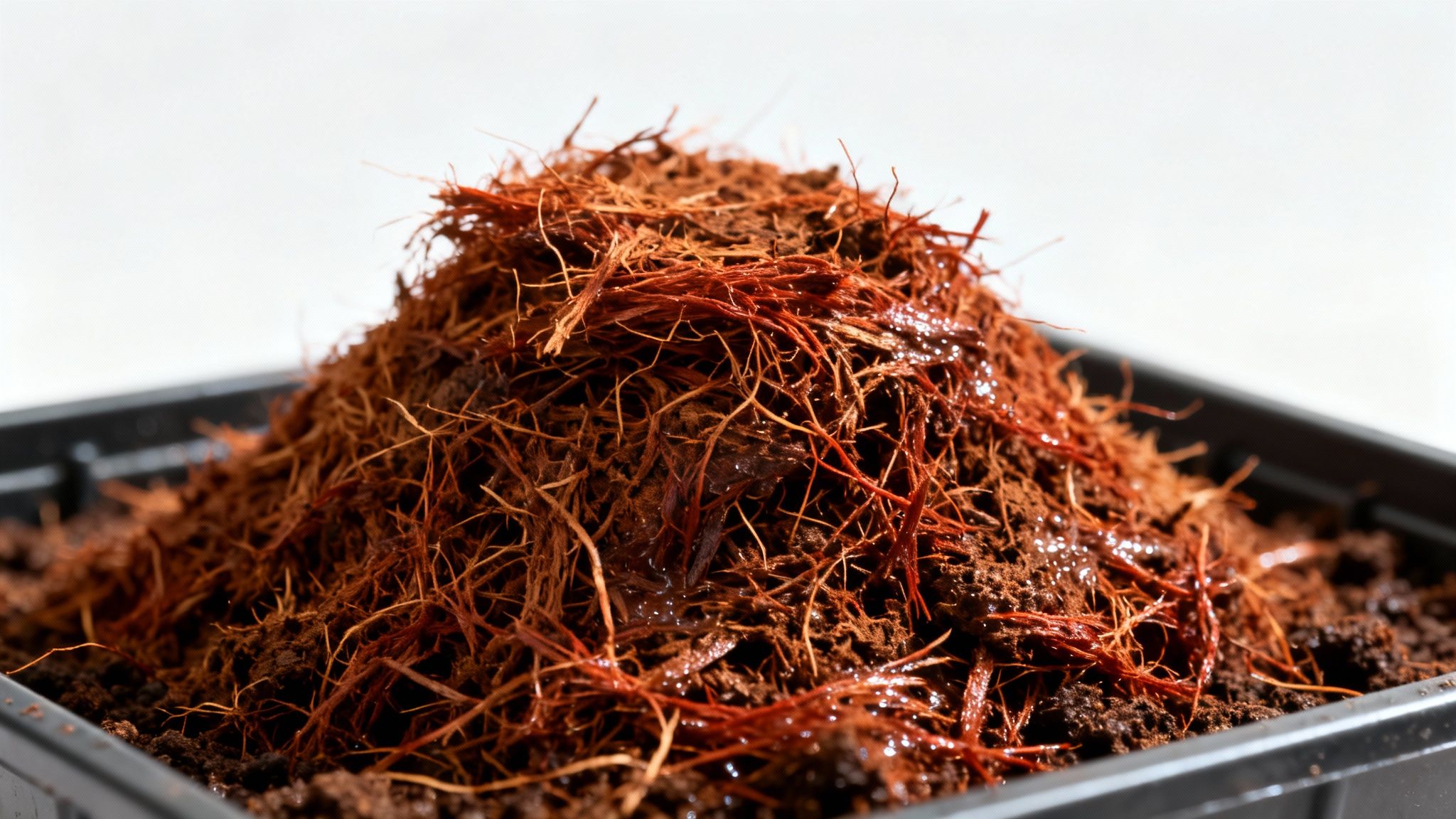
Coconut coir, often sold as coco peat, is a sustainable and lightweight mulch derived from the fibrous husks of coconuts. As a by-product of the coconut industry, it represents an excellent use of agricultural waste. Its popularity in Australia is growing, particularly in warmer climates, due to its incredible ability to retain moisture and its fine, soil-like texture.
This material is one of the most absorbent organic types of mulch available, capable of holding several times its weight in water. This makes it an outstanding choice for improving water retention in sandy soils and keeping the root zones of plants consistently moist. It decomposes slowly, enriching the soil with organic matter and improving its overall structure without significantly altering pH levels.
Key Benefits and Best Uses
Coconut coir is particularly effective in container gardening, for moisture-loving plants, and as a soil amendment to improve aeration and water holding capacity. It is frequently used in Perth’s tropical-style gardens and Brisbane's extensive container gardening projects to combat rapid water evaporation. It's also gentle enough for seed-raising mixes and is a key component in many high-quality potting soils, a topic you can explore further while learning about how to care for indoor plants.
- Best For: Vegetable gardens, container pots, hanging baskets, seed-raising mixes, and plants that require consistent moisture like ferns and tropicals.
- Pros: Exceptional water retention, improves soil aeration, neutral pH, lightweight and easy to handle, sustainable and renewable resource.
- Cons: Can be more expensive than other mulches, provides minimal weed suppression due to its fine texture, and may be prone to compaction if not mixed with other materials.
Application and Sourcing Tips
Coir is often sold in compressed, dehydrated blocks that are lightweight and easy to transport. To use, simply soak the block in water for about 30 minutes, and it will expand significantly in volume. Apply a 5-7 cm layer over the soil surface to lock in moisture. For best results in garden beds, consider mixing it with a coarser mulch like pine bark to improve weed control and prevent the surface from crusting over.
Client Tip: Advise clients that while coir is excellent for moisture, it contains few nutrients on its own. Recommend mixing it with compost or a slow-release fertiliser to create a nutrient-rich growing medium. When sourcing, suggest they look for suppliers that offer washed coir to ensure low salt levels, which is crucial for sensitive plants.
8. River Rock and Stone Mulch
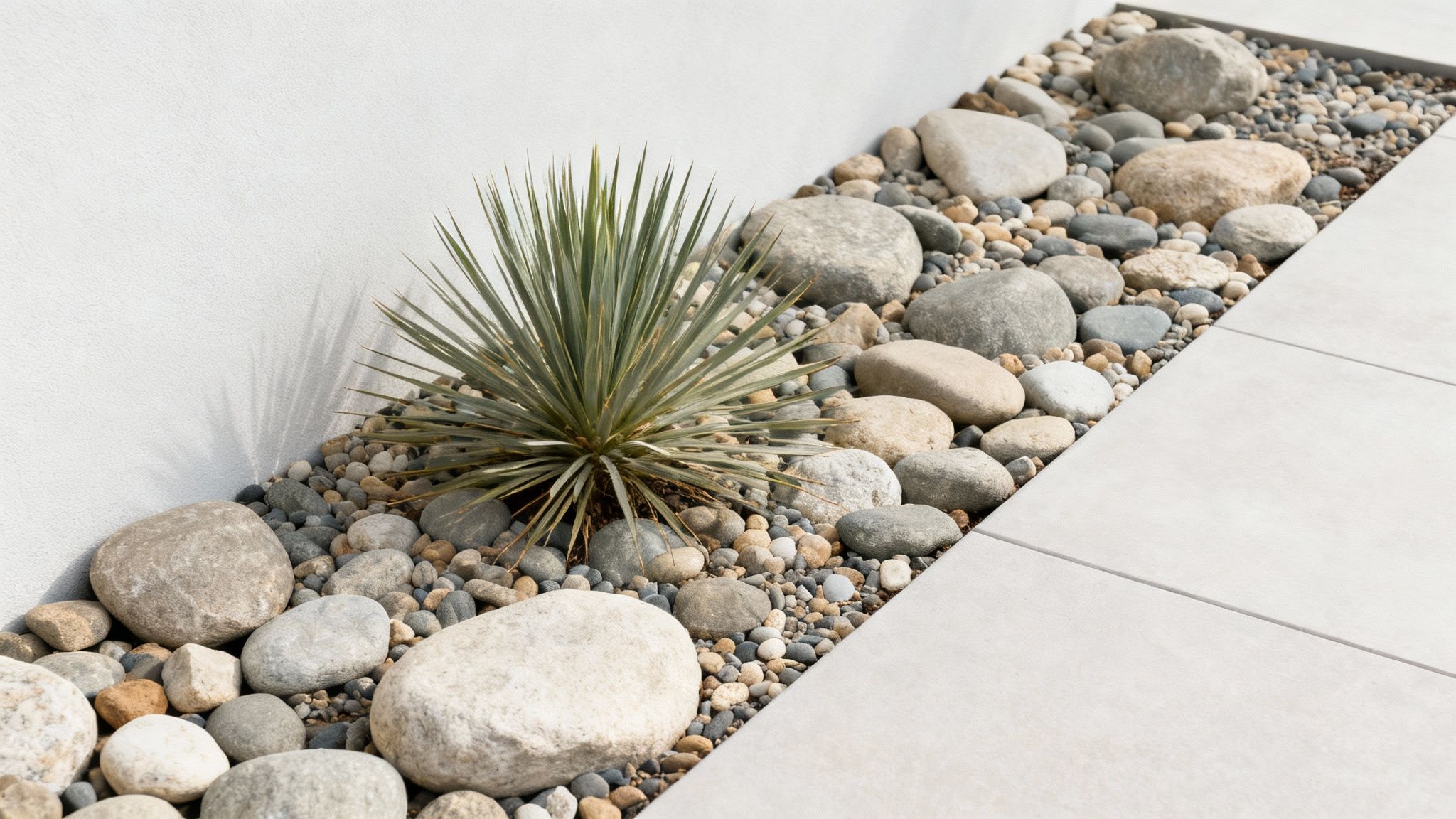
River rock and stone mulch is an inorganic ground cover offering a permanent, low-maintenance solution for Australian gardens. Comprising materials like pebbles, gravel, or decorative stones, it provides exceptional durability and a contemporary aesthetic without decomposing. This makes it a popular choice in water-wise designs and arid regions, where organic mulches break down too quickly.
As one of the most lasting types of mulch, stones do not enrich the soil with organic matter but excel in other areas. They are non-flammable, making them a safe choice in fire-prone areas, a key consideration in many parts of Australia. Their ability to absorb and radiate heat can also create a warmer microclimate, benefiting heat-loving plants like succulents and natives commonly found in Perth or Adelaide gardens.
Key Benefits and Best Uses
Stone mulches are perfect for creating permanent landscape features, succulent gardens, and dry riverbeds. They are often used in modern Sydney garden designs to create clean lines and contrast against foliage. They also prevent soil splashback onto house foundations, keeping surfaces clean. For those interested in professional landscaping, a Certificate in Garden Design can provide deeper insights into using materials like stone effectively.
- Best For: Succulent gardens, native plant displays, high-traffic areas, fire-prone zones, and decorative features.
- Pros: Permanent and long-lasting, excellent for water-wise and fire-wise landscaping, low maintenance, and won't blow away in high winds.
- Cons: Can significantly increase soil temperature, doesn't improve soil health, can be difficult to remove, and may be expensive upfront.
Application and Sourcing Tips
Apply a layer of river rock or stone mulch 5-7 cm deep for effective coverage. It is essential to install high-quality landscape fabric underneath to prevent weeds from growing through the gaps and to stop the stones from sinking into the soil. Choose a stone colour and size that complements your home's architecture and the surrounding landscape.
Client Tip: Advise clients that while the initial outlay for stone mulch is higher than for organic options, the long-term savings on maintenance and replacement make it a cost-effective choice for permanent garden areas. Suggest sourcing stones from local quarries to minimise transportation costs and support regional businesses.
9. Leaf Mold and Fall Leaves Mulch
Leaf mold is a superb, nutrient-rich mulch created by composting fallen leaves over one to two years. Sourced directly from deciduous trees each autumn, this organic material breaks down into a dark, crumbly, and earthy-smelling conditioner that mimics the natural decomposition process found on a forest floor. It’s an increasingly popular choice for environmentally conscious Australian gardeners looking to turn seasonal yard waste into a valuable resource.
As one of the most sustainable types of mulch, leaf mold excels at improving soil structure and water retention. Unlike woody mulches, its primary benefit is as a soil conditioner rather than a weed suppressor. Its fine texture allows it to be easily incorporated into the soil, boosting fungal and microbial life, which in turn unlocks nutrients for plants. It is particularly effective for acid-loving plants and in woodland-style gardens.
Key Benefits and Best Uses
Leaf mold is perfect for enriching soil in vegetable patches, annual flower beds, and woodland gardens. It provides a gentle, slow-release source of nutrients without the risk of nitrogen drawdown. Its moisture-retaining properties make it a saviour for gardens in drier regions of Australia. Many local councils, like those involved in Canberra's autumn leaf collection programs, encourage residents to compost their own leaves.
- Best For: Vegetable gardens, annual flower beds, woodland settings, and as a soil amendment for any garden bed.
- Pros: Free and sustainable resource, dramatically improves soil water retention and structure, encourages beneficial soil life, and adds valuable nutrients.
- Cons: Takes a long time to produce (1-2 years), provides minimal weed suppression on its own, and can be acidic depending on the leaf source.
Application and Sourcing Tips
For best results, shred leaves with a mower before composting to significantly speed up decomposition. Apply a 3-5 cm layer of finished leaf mold around plants, or mix it directly into the top layer of soil. For weed control, use it as a base layer and top it with a coarser mulch like wood chips or sugar cane. Keep the mulch away from the direct base of stems to prevent rot.
Client Tip: Advise clients to start a leaf mold pile in a corner of their garden each autumn. A simple bin or wire-mesh enclosure is all that's needed. For clients who want the benefits without the wait, suggest they purchase bagged leaf mold or compost from garden suppliers and recommend it as a premium soil conditioning service.
10. Rubber and Recycled Tire Mulch
Rubber mulch is a modern, durable ground cover made from shredded and recycled vehicle tires. This inorganic option has gained traction in specific Australian settings, such as playgrounds and commercial landscapes, primarily for its exceptional longevity and safety features. It's produced by processing end-of-life tires, offering a practical way to repurpose a significant waste stream.
As a unique choice among the various types of mulch, rubber does not decompose, meaning it doesn't need to be replaced annually like many organic options. Its primary functions are weed suppression, moisture retention, and providing a cushioned, impact-absorbent surface. While its permanence is an advantage, it does not contribute to soil health and has sparked debate regarding potential chemical leaching over time.
Key Benefits and Best Uses
Rubber mulch is particularly effective in high-traffic areas or where soil improvement is not the main goal. It is frequently seen in Australian council playgrounds for its certified fall-height safety ratings and in outdoor fitness areas, like those found in Brisbane, for its durability. For home use, it suits ornamental beds where plants are already established and digging is infrequent.
- Best For: Playgrounds, athletic tracks, pathways, and non-edible ornamental garden beds.
- Pros: Extremely long-lasting (up to 10 years or more), excellent weed barrier, superior impact absorption for safety, available in various colours, and does not attract pests like termites.
- Cons: Does not improve soil structure or add nutrients. Concerns exist about potential chemical leaching into soil and waterways. Can absorb and radiate significant heat.
Application and Sourcing Tips
Apply a layer of rubber mulch 5-7 cm deep over a high-quality landscape fabric. The fabric is crucial for preventing the rubber from mixing with the soil over time and provides an additional barrier against weeds. Ensure the mulch is sourced from a reputable Australian supplier who can verify that steel belts and other contaminants have been properly removed.
Client Tip: When proposing rubber mulch, be transparent about the pros and cons. Frame it as a low-maintenance, long-term investment for ornamental areas, not for vegetable gardens or beds with delicate plants. Advise clients to check local council regulations, as some areas may have restrictions on its use due to environmental considerations.
Top 10 Mulch Types Comparison
Transform Your Garden with the Right Mulch and Skills
Navigating the world of mulch can feel complex, but as we’ve seen, the principles are straightforward. Understanding the diverse types of mulch available is the first step towards unlocking your garden's true potential, transforming it from a high-effort space into a thriving, resilient, and visually stunning ecosystem. This guide has equipped you with the knowledge to move beyond simply covering the ground and start making strategic, informed decisions that will pay dividends for years to come.
You now have a framework for selecting the perfect mulch by weighing aesthetics against function, budget against longevity, and soil needs against climate challenges. The key takeaway is that there is no single "best" mulch; the optimal choice is always context-dependent. A savvy gardener or landscaping professional knows when to use the long-lasting, soil-enriching properties of hardwood bark for a formal garden bed, and when to opt for the cost-effective, weed-suppressing power of cardboard and grass clippings in a new vegetable patch.
Key Insights and Strategic Takeaways
To crystallise your understanding, let's revisit the core principles that will guide your future mulching projects, whether for your own garden or for a client's.
Function First, Aesthetics Second: Always prioritise the needs of your plants and soil. Are you aiming to retain moisture in a sun-scorched bed, improve the structure of heavy clay soil, or suppress aggressive weeds? Let the answer guide your initial selection. The decorative aspect, while important, should complement the functional foundation. For instance, a base layer of nutrient-rich compost followed by a top dressing of decorative wood chips delivers both health and beauty.
Organic vs. Inorganic is a Foundational Choice: This is the most critical decision point. Organic mulches like compost, leaf mould, and bark will actively improve your soil biology and structure over time, acting as a slow-release fertiliser. Inorganic options such as river rock or recycled rubber offer permanence and a specific aesthetic but contribute nothing to soil health. For most gardening applications, particularly those focused on plant vitality, organic materials are superior.
Application Depth Matters More Than You Think: One of the most common mistakes is applying mulch too thinly or too thickly. A 5-7 cm layer is the sweet spot for most organic types of mulch. Too little, and you won't get effective weed suppression or moisture retention. Too much, and you risk suffocating plant roots, creating a haven for pests, and preventing water from reaching the soil.
Pro Tip: Always remember to pull mulch back from the stems of plants and trunks of trees, creating a small "donut" of clear space. Piling mulch directly against plant crowns can trap moisture, promoting rot and disease and providing cover for pests.
Your Path from Knowledge to Mastery
Moving forward, the challenge is to apply this knowledge practically and confidently. Start small. Experiment with different types of mulch in various sections of your garden. Observe how a layer of straw performs in your vegetable garden versus how pine bark fares around your acid-loving azaleas. This hands-on experience is invaluable and will build your intuition faster than any guide can.
For those operating a small gardening or landscaping business, this expertise becomes a powerful tool for client education and service upselling. Instead of just offering "mulching," you can now provide tailored consultations, recommending specific materials that solve your client's unique garden problems. You can explain why compost is the better long-term investment over simple wood chips for their depleted soil, demonstrating a level of professionalism that builds trust and justifies premium pricing.
Mastering the art and science of mulching is a cornerstone of effective horticulture. It's a skill that directly impacts plant health, water conservation, and garden maintenance, making it fundamental for anyone serious about creating beautiful and sustainable landscapes.
This deep dive into the types of mulch is just the beginning of what you can learn to transform your passion into a profession. If you're ready to build a comprehensive skill set for the Australian market, explore the practical, self-paced online courses at Prac Skills AU. Our Certificate in Horticulture and Certificate in Garden Design provide the industry-recognised knowledge you need to launch a business or elevate your craft. Enrol today at Prac Skills AU and start building a thriving career from the ground up.