February 3, 2026
.webp)
Certificate of Horticulture Your Guide to a Green Career
Discover how a certificate of horticulture can turn your passion for plants into a thriving career. Explore courses, skills, and business ideas in Australia.
Career Development
minutes
So, you love plants. You've got a thriving veggie patch, your indoor jungle is the envy of your friends, and you can tell a fiddle-leaf fig from a monstera at fifty paces. But how do you take that passion and turn it into something more? That's where a Certificate of Horticulture comes in.
This isn't just a piece of paper. Think of it as a practical, hands-on qualification designed to give you the professional skills and confidence to work in Australia's booming green industry. It’s the perfect toolkit for launching that gardening side hustle or small business you've been dreaming about.
Your Master Key to the Green Industry
If you've ever felt that gap between being a keen home gardener and a confident professional, this certificate is designed to bridge it. It takes you beyond simply loving plants and into understanding the science and techniques behind making them thrive. It’s your formal entry pass into the world of professional plant care, garden design, and land management.
It’s a bit like training to be a chef. You wouldn't just memorise a few recipes; you'd learn about flavour profiles, knife skills, and food science. A horticulture certificate works the same way, teaching you the core principles so you can tackle any gardening challenge that comes your way.
A great course isn't about memorising plant names. It's about learning the 'why' behind the 'how'—why certain soils work, how to propagate plants effectively, and what makes a garden design truly successful.
Building Your Foundational Skills
This qualification is structured to build your expertise from the ground up, making sure you have a solid, practical handle on the essentials. Forget dry, abstract theory—the focus here is on skills you can put to use straight away in a garden, nursery, or a client's backyard. Your learning journey will typically cover a few key areas.
- Plant Science Fundamentals: You’ll get to know the basics of plant biology—how they grow, reproduce, and react to their environment. This is the bedrock of all successful gardening.
- Soil and Nutrition Management: Get your hands dirty learning how to identify different soil types, test for problems, and give plants the right nutrients to flourish in various Australian conditions.
- Propagation Techniques: Master the art of creating new plants from seeds, cuttings, and division. This is a game-changing skill if you're looking to grow your plant collection or start a small nursery business.
- Pest and Disease Control: Learn sustainable and effective ways to identify and manage common garden pests and diseases, moving beyond harsh chemicals toward smarter, integrated pest management.
From Passion to Profession
At the end of the day, a Certificate of Horticulture is your launchpad. It gives you the credibility and know-how to turn that green thumb into a real income stream.
Whether you're dreaming of starting an indoor plant styling service, offering garden maintenance, or just becoming a deeply knowledgeable expert, this certificate provides the structure and confidence you need to get going. It’s the perfect first step for side-hustlers and aspiring small business owners ready to cultivate a career they genuinely love.
Navigating Australian Horticulture Qualifications

Trying to choose the right certificate of horticulture in Australia can feel a bit like wandering through a massive botanical garden without a map. There are so many different courses, providers, and qualifications that it’s easy to get lost.
The secret is knowing there are really only two main paths you can take. One is the formal, government-regulated route, and the other is the flexible, industry-focused pathway. Neither is better than the other—the "best" one is simply the one that gets you where you want to go.
The Formal VET Pathway
Think of nationally recognised qualifications like a Certificate II or Certificate III in Horticulture as the traditional apprenticeship route. These courses are part of the Australian Qualifications Framework (AQF), which means they are highly structured, standardised across the country, and usually delivered by TAFE.
This is the path to take if you’re aiming for a specific job in a large organisation or government department. Roles like a council horticulturist or a grounds manager at a major public garden will almost always list a "Cert III" as a non-negotiable requirement. It's a deep dive that builds a solid theoretical foundation.
The formal VET pathway is your ticket to roles that require standardised, government-recognised credentials. It’s about meeting specific industry benchmarks for employment in established horticultural careers.
But that rigid structure has its trade-offs. These courses have fixed term times, strict timetables, and can take anywhere from one to two years to finish. For someone wanting to start a business or upskill quickly, that long timeline can be a major roadblock.
The Practical Industry Pathway
The second path is the industry-accredited certificate of horticulture. Picture this as an intensive masterclass, laser-focused on the exact skills you need to launch a business or shine in a niche market, fast. These courses are built for speed and immediate, real-world results.
Providers on this path prioritise job-ready skills over ticking bureaucratic boxes. The curriculum is often more current and tailored to what the market actually wants right now—things like indoor plant styling, sustainable urban gardening, or running a small-scale nursery. Because they aren't tied to the slow pace of national curriculum updates, they can pivot quickly to teach the latest trends and techniques.
This pathway is a perfect fit for:
- Aspiring Entrepreneurs: You learn what you need to start earning an income, without the long wait.
- Side-Hustlers: The flexibility of online, self-paced learning means you can study around your day job.
- Career Changers: You can gain specialised skills in a new field in a matter of months, not years.
If you want to turn your passion into a profession on your own terms, an industry-focused certificate is the most direct route. You can explore a range of practical horticulture courses designed for today's green professionals to see what skills you could be learning.
Comparing Horticulture Qualification Pathways in Australia
So, which path is right for you? It all comes down to what you want to achieve. This table gives you a side-by-side look at the two main options to help you figure out the best fit for your goals.
Ultimately, your career vision is your compass. If you dream of managing the grounds of a public park, the formal VET pathway is the way to go. But if you see yourself running a boutique plant styling business from home, an industry-accredited certificate of horticulture will give you the precise skills you need to get there faster.
Core Skills You Will Learn in a Horticulture Course

A proper certificate of horticulture doesn’t just skim the surface with abstract theory. It throws you straight into the deep end with practical, marketable skills you can actually use to make a living. Think of it less like a dry university lecture and more like a hands-on apprenticeship.
You're not just learning about plants; you're learning to think like a plant professional. You’ll be diagnosing problems, understanding needs, and solving challenges with the kind of confidence that only comes from real experience. This course is designed to turn you into a plant detective, a soil scientist, and a creative problem-solver all rolled into one. Each new skill is another tool in your belt—one that clients will happily pay for.
Mastering Plant Identification and Use
One of the very first things you’ll get good at is plant identification, but this goes way beyond just memorising Latin names from a textbook. You’ll develop a real eye for recognising plant families and understanding what makes each one tick. It’s about knowing the difference between various Australian native species and what they truly need to thrive.
Why does this matter so much? Because it’s the foundation for every single decision you’ll make in the garden. Knowing a plant’s identity tells you everything about its preferred light, water, and soil conditions. For a small business owner, that means you can confidently tell a client why a hardy Westringia is a much better choice for their sunny, dry patch than a moisture-loving fern.
This is where the classic "right plant, right place" philosophy comes to life. It’s the secret to creating beautiful, resilient gardens that flourish for years with minimal fuss—the cornerstone of sustainable design.
The Science and Art of Propagation
Imagine being able to create a virtually endless supply of plants for your business from the stock you already have. That’s the magic of propagation, and a good certificate of horticulture will teach you exactly how to do it. You'll learn the techniques to multiply plants through several different methods.
You’ll get your hands dirty with:
- Seed Raising: Getting the knack for the precise conditions different seeds need to germinate successfully, from temperature and light to moisture levels.
- Taking Cuttings: Learning the proper way to take stem, leaf, or root cuttings and coax them into developing their own healthy root systems.
- Division: Knowing how to confidently divide clumping perennials and grasses to create multiple new plants without harming the parent.
This isn’t just a neat cost-saving trick; it’s a potential revenue stream. If you’re running a side-hustle, being able to propagate in-demand indoor plants or popular perennials means you can grow your inventory with almost zero overhead. One plant can become dozens to sell at local markets or online.
Becoming a Soil Health Expert
You’ve heard it before: healthy plants start with healthy soil. Learning to diagnose and manage soil health is a core skill that separates the pros from the hobbyists. A solid horticulture course will teach you to get your hands in the dirt and truly understand what’s going on beneath the surface.
You’ll learn to identify different soil types—from heavy clay to sandy loam—and what their properties mean for plant growth. More importantly, you'll learn how to fix them. This involves adding the right blend of organic matter, nutrients, and minerals to create the perfect growing environment for specific plants, especially in Australia's diverse climates.
Understanding soil is like a doctor understanding human anatomy. You can't effectively treat a problem if you don't understand the underlying system. A skilled horticulturist knows how to read the soil and prescribe the right treatment.
This kind of expertise is incredibly valuable. When you can solve a client’s long-running "yellowing leaves" issue by identifying a simple nutrient deficiency in their soil, you demonstrate a level of knowledge that builds trust and brings in repeat business.
Integrated Pest and Disease Management
Instead of immediately reaching for a chemical spray at the first sign of trouble, a professional horticulturist uses a smarter, more sustainable approach called Integrated Pest Management (IPM). Your course will teach you how to work with nature, not against it, to keep plants healthy and resilient.
It’s a multi-pronged strategy that involves:
- Prevention First: Building healthy soil and choosing the right plants to minimise the risk of problems from the get-go.
- Monitoring and Identification: Regularly checking plants and correctly identifying pests or diseases so you can apply the right solution, not just any solution.
- Using Natural Controls: Employing beneficial insects, using physical barriers, and turning to organic sprays only as a last resort.
This eco-friendly approach is exactly what today’s clients are looking for. Mastering IPM positions you as a modern, responsible professional who can create beautiful gardens without relying on harsh chemicals.
Applying Garden Design Principles
Finally, a great course will teach you how to pull all these skills together through the fundamentals of good garden design. Many horticulture certificates offer a solid foundation in understanding the principles of landscape design, which is key to creating outdoor spaces that are both beautiful and functional. This isn’t about drafting complex architectural plans; it’s about applying core concepts of colour, texture, form, and scale.
You’ll learn how to turn a tiny urban balcony into a lush green retreat or design a stunning, low-water native garden that’s as practical as it is beautiful. This ability to blend deep plant knowledge with a good design eye is what allows you to create truly inspiring spaces for your clients, turning your technical skills into tangible, jaw-dropping results.
Turning Your Green Thumb into a Business
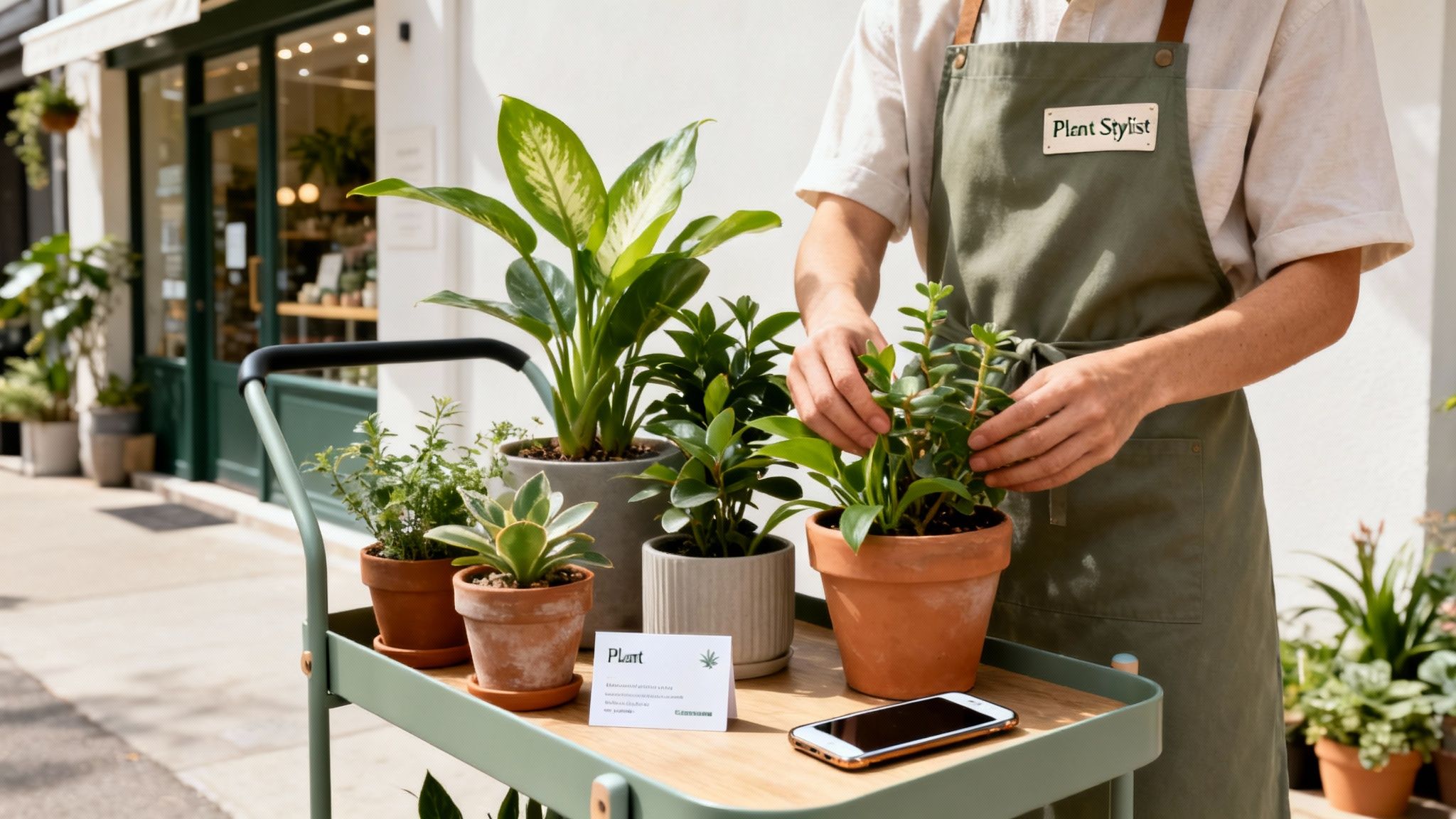
This is the really exciting part—where your passion for plants starts to look like a real, profitable business. A certificate of horticulture is your launchpad, giving you the professional credibility and hands-on skills to turn your expertise into a service people are genuinely happy to pay for. It’s the key to unlocking a whole world of modern green businesses that go way beyond just mowing lawns.
And the best bit? So many of these ideas can be kicked off with surprisingly low overhead. This makes them perfect for a side hustle that you can grow at your own pace, eventually turning it into your full-time gig. It's a chance to build a career that actually aligns with your values, gets you out in nature, and brings a bit of green joy into your community.
Modern Horticulture Business Ideas
Forget the old stereotypes about what a gardening business looks like. Today's market is bursting with cool, niche opportunities just waiting for a qualified pro to snap them up. Armed with a certificate, you could launch a business in one of these booming areas.
Indoor Plant Stylist: Offices, cafes, and homeowners are all desperate to bring the outside in, but most don’t have the time or the know-how. As a stylist, you’d consult on the perfect plants for a space, source them, and set up ongoing care plans.
Specialised Garden Consultant: This is where you can really lean into a niche. You could become the go-to expert for creating edible balcony gardens for city dwellers, designing drought-tolerant native landscapes, or establishing beautiful sensory gardens for NDIS clients.
Boutique Plant Nursery: Got a knack for propagation? Use those skills to grow and sell unique, hard-to-find plants right from your backyard. You can sell through local markets or an online store, tapping into that massive community of passionate plant collectors.
These are just a handful of ideas. The skills you pick up in a certificate of horticulture course open doors to all sorts of creative business models that fit perfectly with modern lifestyles.
From Certification to Successful Venture
Let's see how this plays out in the real world. Picture "Chloe," who finished her certificate while still working her old office job. She started a side hustle called "Urban Oases," specialising in balcony makeovers for apartment dwellers. Her formal training meant she could confidently advise on the right containers, soil mixes, and plants for windy, sun-blasted spots—solving the exact problems her clients were struggling with.
Or think about "Liam," who used his certification to start a small business creating therapeutic gardens. He combines his deep plant knowledge with a passion for wellbeing, working with local allied health professionals to design calming green spaces for their clients. That qualification gives him the authority and expertise to operate in such a specialised field.
A horticulture certificate is so much more than a piece of paper; it’s a powerful tool for building client trust. It tells people you’ve invested in your skills and are serious about delivering top-quality, reliable results.
As you start sketching out your business, don't forget to use the resources available to you. Exploring things like free online landscape design tools can be a fantastic way to visualise your ideas and create professional plans for your clients.
Tapping into a Growing Market
Your dream of a green business isn’t just a nice thought—it’s backed by a seriously strong and growing industry. In a recent financial year, Australia's horticulture sector hit a local value of $18.0 billion, a jump of $721 million from the year before. This isn't just a number; it shows a robust industry with constant demand for quality produce and green services. You can dig deeper into the industry’s impressive performance over at the Australian Bureau of Statistics.
This economic strength creates fertile ground for new businesses to sprout and thrive. Whether you want to focus on aesthetics, food production, or wellness, you're stepping into a market with proven demand and plenty of room for creative entrepreneurs like you. And if the design side of things really sparks your interest, a specialised Certificate in Garden Design could be the perfect next move to sharpen your skills and your business offering.
Choosing the Right Horticulture Course Provider
Picking a provider for your certificate of horticulture is a lot like choosing the right soil mix for a prized plant. Get it right, and you’ll see incredible growth. Get it wrong, and you’ll struggle to thrive. The quality of your education is a direct line to your skills, your confidence, and ultimately, your business success down the track.
With so many options out there—from traditional TAFE programs to super-flexible online providers—it’s crucial to make a smart choice. Think of it like hiring a personal trainer. You wouldn't just go for the cheapest option or the one with the flashiest website. You’d look for real expertise, a style that clicks with your goals, and a program you can actually stick to. The same logic applies here. You need a course that doesn't just throw theory at you, but one that genuinely nurtures your practical skills and champions your unique ambitions.
Key Factors for Your Decision
Before you even think about enrolling, you need to size up each provider against a solid set of criteria. This isn’t just a box-ticking exercise; it’s about finding the perfect partner for your learning journey. The goal is to find a course that feels less like a chore and more like the first exciting step into your new green-thumb career.
Here are the absolute non-negotiables to look for:
- Learning Format: Can you actually fit this into your life? Look for a flexible online format that lets you study around your existing work and family commitments. Rigid, in-person timetables are often a deal-breaker for side-hustlers and small business owners.
- Australian-Specific Content: Is the curriculum built for our backyard? The course must be tailored to Australian climates, native plants, and local industry conditions. Generic content from overseas just won't cut it when you're dealing with our unique ecosystems.
- Tutor Support and Community: Who’s got your back when you get stuck? Seek out providers that offer direct access to experienced tutors who can answer your questions and give proper feedback. A strong student community is a massive bonus for networking and learning from each other, too.
- Industry Recognition: Does the certificate carry weight? While it might not be a formal AQF qualification, recognition from organisations offering Continuing Professional Development (CPD) points adds serious credibility and value to what you’re learning.
Asking the Right Questions
Once you’ve got a shortlist, it’s time to play detective. Don’t be shy about contacting providers and asking the tough questions. How they respond—or don't—will tell you everything you need to know about the quality of their program and how much they actually care about their students.
A great course provider is transparent and supportive from the very first interaction. They should be eager to explain their course structure, demonstrate the value they offer, and help you determine if their program is the right fit for your goals.
Use this as your essential checklist of questions to ask before you commit:
- What are the practical, hands-on components? How am I going to apply what I learn in a real-world setting?
- Who are the tutors and what’s their industry experience? You want to learn from people who’ve actually been there and done that.
- Are there any hidden costs? Be direct and ask about materials, assessment fees, or any special software you might need.
- Can I see a sample of the learning materials? Any provider worth its salt will be proud to give you a sneak peek to show off the quality of their content.
Taking the time to choose carefully now will set the foundation for your entire horticulture career. For a more detailed breakdown, you can learn more about finding the perfect online horticulture course in our dedicated guide. At the end of the day, the right provider will do more than just teach you; it will empower you with the practical skills and genuine confidence you need to get out there and grow.
Ready to Start Your Horticulture Journey?
Feeling that little buzz of inspiration? It’s time to turn that excitement into action. Taking the first step toward your certificate of horticulture is so much easier than you might imagine. Let's break down exactly how you can go from curious reader to enrolled student.
This whole process should feel exciting, not like you're filling out a tax return. We’ll map it all out for you, step by simple step, so you can move forward feeling confident and ready to get your hands dirty (in the best way possible).
Your Simple Enrolment Roadmap
Getting started is often as simple as picking your course and hitting the "enrol" button. For practical, industry-focused certificates like these, the main prerequisite is passion. A love for plants and a genuine desire to learn are the most important qualifications you can bring.
Here’s a quick guide to get you moving:
Revisit Your 'Why': Take a moment to remember what brought you here. Is it to kickstart a side hustle, add new skills to your existing business, or finally dive into a project you’ve been dreaming about? Keeping your goal front and centre is the best motivation.
Double-Check the Course Details: Have one last look at the course outline. Does it cover the skills you need? Whether you're focused on plant propagation, soil science, or garden design, make sure it lines up perfectly with what you want to achieve.
Look Into Payment Options: Money should never be the thing that stops you. Most good providers offer flexible payment plans, letting you spread the cost over time. This makes professional training accessible without needing a big chunk of cash upfront.
Enrol and Jump In: This is often the easiest part! Most online enrolments only take a few minutes. And with self-paced courses, you can be digging into your first lesson almost as soon as you’ve signed up.
The hardest part of any journey is always that first step. By breaking it down into small, easy wins, you get rid of the hesitation and make it simple to invest in yourself and your passion.
Deciding to enrol is a direct investment in your future. It's the moment you choose to turn that love for all things green into a real, rewarding venture. With the flexibility of online learning, there has never been a better time to grow your skills and build a career surrounded by what you love.
Go on, take that first simple step today.
Frequently Asked Questions
Thinking about a qualification in horticulture often brings up a few common questions. Let's clear the air and tackle some of the things you might be wondering about, from starting a business to what online study really looks like.
Do I Need a Formal Certificate III to Start a Gardening Business?
Not at all. While a formal qualification like a Certificate III in Horticulture is a great path for certain careers, it's definitely not the only way to go, especially if you're looking to become your own boss.
An industry-accredited Certificate of Horticulture is built for exactly this purpose—to give you the practical, on-the-ground skills you need to start a small business or side hustle, fast. These courses cut straight to the chase, focusing on the core knowledge that helps you confidently take on clients and start making money.
Can I Really Learn Horticulture Effectively Online?
Absolutely, and it works incredibly well. Modern online horticulture courses are designed to be hands-on from the get-go. They use a smart mix of high-quality video tutorials, detailed digital guides, and practical assignments that you complete in your own garden, balcony, or even a local community plot.
This approach lets you learn the theory—like soil science or plant biology—and then immediately step outside and apply it. It’s this hands-on, self-paced method that builds real-world confidence and skills, all without being locked into a rigid classroom schedule.
The best online courses don't just teach you what to do; they show you how to do it in your own environment. This immediate application of knowledge is what solidifies your learning and prepares you for professional work.
What Is the Job Outlook for Horticulturists in Australia?
The future looks incredibly bright and full of potential. Australia’s multi-billion dollar horticulture industry is booming, which means there’s strong demand for skilled people in traditional roles like landscaping and nursery management, as well as some really exciting new areas.
We're seeing major growth in specialised fields. For instance, Australia's greenhouse horticulture market is set to grow from USD 936.04 million to a massive USD 1,879.54 million over the next decade. You can dig deeper into this trend with the IMARC Group's market analysis. This kind of expansion points to a huge upswing in opportunities for skilled pros and niche business owners.
How Long Does a Certificate of Horticulture Take to Complete?
The time it takes really depends on the path you choose. A formal TAFE qualification, for example, often takes between one and two years to finish because it’s built around structured terms and timetables.
On the other hand, self-paced online certificates offer a ton of flexibility. Because you’re in the driver’s seat of your own schedule, a motivated student can often complete a full industry-accredited course in just a few months. This makes for a much quicker and more efficient jump into your new green career or business.
Ready to turn your passion for plants into a profession? At Prac Skills AU, our industry-accredited Certificate of Horticulture is designed to give you the practical, real-world skills you need to succeed. Enrol today and start your journey at https://www.pracskills.com.au.