February 3, 2026
.webp)

Your Guide to an Online Horticulture Course in Australia
Discover if an online horticulture course is right for you. Explore top Australian courses, career paths, and how to choose a program that grows your skills.
Career Development
minutes
An online horticulture course is more than just a set of instructions; it's a structured program that marries the science of botany with the practical art of gardening, all delivered right to your screen. Think of it as a modern, flexible apprenticeship where you get to learn the why behind the how from seasoned industry experts, all from the comfort of your own home.
What an Online Horticulture Course Really Involves

When you enrol in an online horticulture course, you’re not just queueing up a few gardening tutorials. You’re embarking on a comprehensive learning journey, carefully designed to build your knowledge from the ground up by weaving together scientific theory and hands-on, real-world skills.
Unlike just passively watching videos, these courses offer a proper curriculum. They’re built around specific modules covering everything from plant biology to soil science, all organised in a way that lets your understanding grow naturally and progressively.
A Digital Classroom Experience
Your learning materials will typically be a rich mix of formats, designed to suit different ways of learning. You can expect to engage with:
- Private video lessons that give you a close-up look at techniques like pruning, grafting, or propagation.
- Downloadable PDFs and slides, perfect for detailed notes and quick-reference guides you can use later.
- Audio content you can listen to while you’re actually out in the garden.
- Practical assignments that get you to roll up your sleeves and apply what you’ve just learned.
This digital approach has seen a massive uptake here in Australia. As training providers made nationally accredited units like the Certificate II and III in Horticulture more accessible online, enrolments skyrocketed between 2015 and 2022, meeting a growing industry demand for skilled-up workers.
The core idea is simple: provide an educational framework that’s as robust as on-campus learning but with the flexibility modern life demands. It’s about making expert knowledge accessible to everyone, everywhere.
More Than Just Information
A quality online course is also about connection and support. Tutors are on hand to answer your questions, give you feedback on your work, and help you navigate trickier topics. For anyone starting from scratch, a good online course serves as a comprehensive beginner's guide to starting a garden, laying down all the essential foundational knowledge.
This supportive structure means you never feel like you're learning in a vacuum, helping you turn your passion into a real, tangible skill set.
What's Inside a Core Horticulture Curriculum?
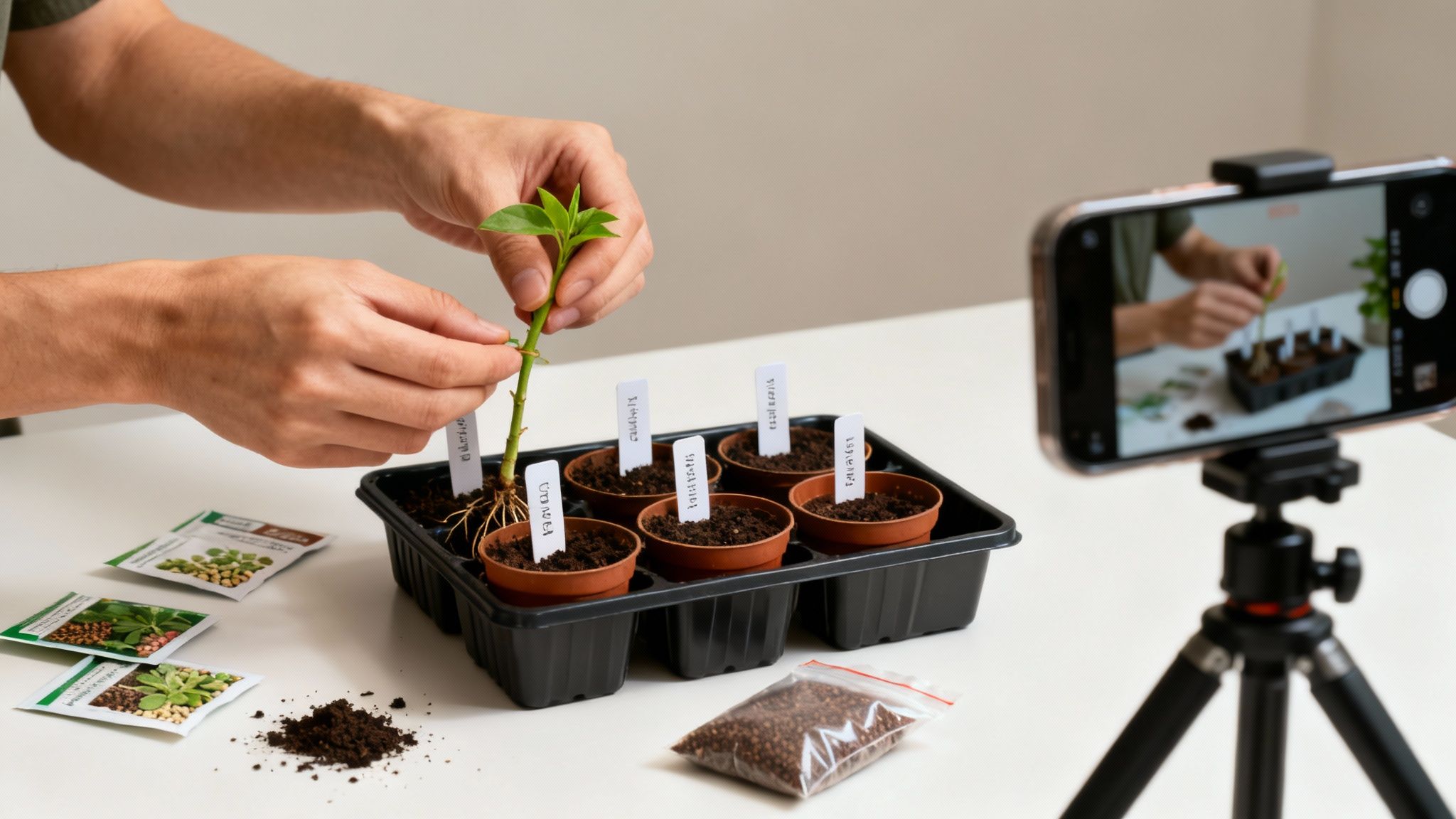
When you enrol in an online horticulture course, you’re signing up for much more than a few gardening tips. A proper course is designed to build your expertise from the ground up, blending foundational science with the kind of practical skills you’ll use out in the real world. Think of it as a journey from understanding a single seed to confidently managing an entire garden ecosystem.
Imagine you're building a house. You wouldn't start with the roof, would you? You’d pour a solid foundation first. It’s the same with horticulture. These courses begin with the core principles that govern all plant life before branching out into more specialised skills. This progressive structure ensures you’re not just following steps, but truly understanding the why behind everything you do in the garden.
From Plant Science to Pest Control
A truly comprehensive course will walk you through a series of essential modules. Each one is a building block, layering another level of expertise onto your professional skill set.
So, what can you expect to cover? Here’s a look at the types of subjects that form the backbone of a great online horticulture program.
Core Modules in a Typical Online Horticulture Course
As you can see, the real value lies in how these topics connect. You don't just learn what soil is; you learn how its health directly impacts a plant’s ability to fend off diseases or produce a bumper crop. It’s all interconnected.
Bringing Practical Skills to Life Online
One of the biggest questions people have is, "How can you possibly learn hands-on skills online?" It's a fair question, and the answer lies in cleverly designed, practical assessments that bridge that digital divide. Forget writing endless essays; you’ll be an active participant in your own learning.
For instance, an assignment might task you with designing a garden layout for a fictional client with specific needs or creating a detailed propagation schedule for a local native plant. You’ll often use photos and videos to show your work—submitting pictures of your pruning cuts or a short clip demonstrating how you test soil pH. This is how you prove you can apply theory in the real world. Even foundational tasks are covered in great detail, much like you’d find in a good beginner's guide to starting a garden.
This mix of solid theory and verified practical work is the cornerstone of programs like the Prac Skills AU Certificate in Horticulture, which is built to ensure you graduate with genuine confidence in your abilities. It’s this focus on applied knowledge that really transforms you from a keen plant lover into a capable horticulturist.
When you’re looking at online horticulture courses, probably the biggest question you should be asking is: "What is this qualification actually worth?" Getting a straight answer is the key to making sure your investment of time and money pays off with real-world opportunities.
Think of it this way: in Australia, the education landscape has some very clear lines drawn in the sand. It’s a bit like comparing a proper driver's licence to a weekend go-karting ticket. Sure, both let you drive something, but only one is officially recognised on the road and will get you a professional driving job. Horticultural qualifications are much the same—they fall into different categories that carry different weight out in the industry.
Nationally Recognised vs Non-Accredited Courses
The main difference you'll come across is between nationally recognised training and non-accredited courses.
Nationally Recognised Training: This is the formal stuff, like a Certificate II or III in Horticulture, that you'd typically get from a TAFE or a Registered Training Organisation (RTO). These qualifications are part of the Australian Qualifications Framework (AQF), which means they are recognised by employers right across the country. They're the gold standard if you're aiming for formal employment.
Non-Accredited Courses: These are often shorter, more focused programs built to teach you a specific skill. While they don't have the same formal weight as an AQF qualification, they are incredibly valuable for upskilling, diving into a personal interest, or getting a small business off the ground where practical, hands-on knowledge is what really matters.
A non-accredited course could be the perfect launchpad for someone wanting to start a boutique indoor plant styling business. On the other hand, a Certificate III is pretty much essential for landing a career in council parks and gardens. It’s all about matching the qualification to your end goal.
The Power of Industry Recognition and CPD
Beyond the official paperwork, industry recognition is a massive indicator of a course's quality. This is where a provider builds a solid reputation and fosters partnerships that employers know and trust. For anyone already working in horticulture, this recognition often ties into Continuing Professional Development (CPD).
CPD points are simply a way for industry professionals to prove they're keeping their skills sharp and up-to-date. When you see an online course with CPD accreditation, it’s a strong signal that its content is current, relevant, and respected by professional bodies. It shows you’re committed to high standards. To see how this works in practice, you can explore the details of various accreditations and partnerships that give a course its street cred in the industry.
At the end of the day, choosing the right online horticulture course means looking past the title. Whether you need a formal certificate to switch careers or a specialised course to fuel a side hustle, understanding its true value in the Australian market is the first step toward getting a great return on your investment.
Thinking about how to kickstart your horticulture career is a bit like choosing the right tool for a job in the garden. A trowel is perfect for detailed planting, but you'll want a sturdy spade for the heavy digging. In the same way, Australia’s main training pathways—online courses, on-campus study, and apprenticeships—are all brilliant ways to grow your skills, but they each suit very different lifestyles, budgets, and ways of learning.
Let's dig in and see which one might be the best fit for you.
Online vs Classroom vs Apprenticeship A Comparison
Deciding between hitting the books online, heading to a campus, or getting your hands dirty with an apprenticeship can feel like a huge decision. Each path offers a unique blend of flexibility, cost, and hands-on experience. This table breaks down the key differences to help you see which route aligns with your personal circumstances and career goals.
Ultimately, there's no single "best" option—only the one that's best for you. An online course gives you incredible freedom, a TAFE or Uni course provides structure and networking, and an apprenticeship throws you right into the thick of it. Weighing up these factors is the first step toward planting the seeds of your new career.
Let’s Break It Down: Online, On-Campus, and On-the-Job

An online horticulture course is all about flexibility. It’s designed for people who need to slot their learning around a full-time job, family life, or the chaotic schedule of running a business. For anyone wanting to switch careers or those living in regional Australia, this model is a total game-changer, smashing down geographical barriers and rigid timetables.
On the other hand, studying on-campus at a TAFE or university offers that traditional, structured classroom feel. It’s great for face-to-face interaction with tutors and classmates, helping you build a professional network right from day one.
Then there's the apprenticeship, which is a full-immersion experience. This is perfect for someone, like a school leaver, who wants to dive straight into the industry and earn while they learn. Here, the focus is almost entirely on practical, on-the-job training, with the theory backing up what you’re doing every day.
Flexibility and Lifestyle Fit
The single biggest drawcard for studying online is the freedom to learn at your own pace. You get to decide when to watch lectures, tackle assignments, or head outside to practise a new technique.
- Online Study: You can power through modules late at night, on weekends, or during your lunch break. It fits into your life, not the other way around. No commute necessary.
- On-Campus Study: This demands you show up to classes at fixed times, which can be a real juggle if you have other big commitments.
- Apprenticeship: This is a full-time job. You’re expected to be on-site during business hours, just like any other employee.
This is what makes online learning such a powerful option. It lets you invest in your professional growth without having to completely upend your life to do it.
Cost and Financial Investment
Money is always a big piece of the puzzle, and the financial commitment looks very different across these pathways.
An online horticulture course is often the most accessible entry point financially. In Australia, you’ll find everything from short, affordable professional development modules to more comprehensive qualifications at a higher price point. This variety is crucial for an industry with over 125,000 workers and a massive AU$6 billion turnover, where employers need both quick upskilling for current staff and formal qualifications for senior roles. You can get a feel for the different price points by exploring the cost structures of online horticulture courses.
On-campus courses come with tuition fees, but you also have to factor in extra costs like transport, parking, and materials. Apprenticeships flip the script entirely by letting you earn an income while you study, although the wage is naturally lower than a fully qualified worker’s.
Choosing the right path means weighing the immediate investment against your long-term career goals. An online course might offer a faster, more affordable route to starting a side hustle, while an apprenticeship builds a deep, practical foundation over several years.
Each pathway is a completely valid and valuable route into the vibrant world of horticulture. The best choice really comes down to your personal circumstances and what you want to achieve.
Turning Your Green Thumb into a Career

Finishing an online horticulture course is about so much more than just getting better at gardening. It’s about taking that passion and turning it into something real—whether that’s landing a new job, climbing the ladder in your current role, or even starting your own business from the ground up.
Think of it this way: the skills you learn are the seeds for a whole new professional life. This kind of education doesn't just polish your existing knowledge; it unlocks doors to specialised fields where genuine expertise is always in demand.
Diverse Career Pathways
With a formal qualification under your belt, you can start exploring a huge variety of roles that help shape our green spaces. Many graduates find themselves in exciting careers they’d never even considered before.
Some of the most popular paths include:
- Landscape Design: Go beyond simple flowerbeds and start creating entire outdoor environments. It's the perfect blend of artistic vision and practical plant science.
- Nursery Management: Step into a leadership role where you're managing plant stock, giving expert advice to customers, and overseeing the health of thousands of plants.
- Urban Greening Projects: Get involved in the movement to bring nature back into our cities. You could be working on anything from community gardens and green roofs to public parklands.
- Horticultural Therapy: Use your plant knowledge to create therapeutic programs that boost wellbeing in healthcare and community settings.
These aren't entry-level jobs. They require a solid grasp of plant health, soil management, and design principles—all of which are core parts of a quality online horticulture course.
Think of your qualification as a passport. It doesn't just let you visit one destination; it gives you access to a whole world of professional possibilities, empowering you to choose the path that truly excites you.
The Entrepreneurial Spirit
For a lot of people, the dream is to be their own boss. An online course gives you that perfect mix of hands-on skills and business know-how to turn your green thumb into a profitable business. It's the ideal launchpad for a great Australian side hustle or a full-time venture.
Imagine starting your own:
- Boutique Plant Nursery: You could specialise in rare indoor plants, native species, or edible gardens to create a brand that really stands out.
- Garden Design Consultancy: Offer your expertise to homeowners and businesses, designing, planning, and overseeing the creation of beautiful, sustainable gardens.
- Specialist Maintenance Service: Carve out a niche for yourself, focusing on something specific like fruit tree pruning, organic vegetable gardening, or strata garden care.
This is where your learning truly comes to life. By exploring the range of online horticulture courses available, you can find the specific program that lines up with your professional ambitions, giving you the confidence and skills to make it happen.
How to Choose the Right Horticulture Provider
With more and more online horticulture courses popping up in Australia, picking the right one can feel a bit overwhelming. But getting this decision right isn't just about the course content; it's about finding a genuine partner who will back your learning and career goals every step of the way. You need to look past the shiny course descriptions to see what the entire learning experience really offers.
Think of it like choosing the perfect nursery to source your plants. You wouldn't just grab the first pot you see. You’d check for healthy roots, chat with the staff to get their advice, and make sure they know their stuff when it comes to plants that will actually survive in your local climate. Your education provider deserves that same level of careful thought.
Key Questions to Ask Any Provider
Before you even think about enrolling, it's vital to ask some pointed questions that cut through the marketing fluff and show you the true quality of a program. Arm yourself with this checklist, and you’ll be able to find the perfect fit with confidence.
A great place to start is with the people behind the course.
- Who are the tutors? You want instructors with real-world, on-the-ground industry experience here in Australia, not just purely academic backgrounds. Those practical insights are gold.
- Is the content actually relevant to Australia? Make sure the curriculum is built around Australian climates, native plants, and the specific pests and diseases we deal with. Generic content from overseas just won't cut it for a local career.
- What does student support really look like? Find out how you can get help. Is there direct access to tutors who can answer your questions, or are you pretty much left to figure things out on your own?
- Can I see some real student reviews? Look for detailed feedback on independent platforms, not just the cherry-picked testimonials on their own website. You want an unbiased picture of what it's like to be a student there.
Choosing the right provider is the single most important step in your learning journey. A great provider doesn’t just give you information; they provide a supportive framework that builds your confidence and practical skills.
Finally, you need to get crystal clear on the practical side of things. Ask about the total course fees and whether they offer payment plans without any sneaky hidden costs. A transparent, trustworthy provider will be upfront about all the financial commitments. By asking these simple questions, you can confidently select an online horticulture course that delivers real, tangible value.
Frequently Asked Questions
As you get ready to start your learning journey, it's completely normal to have a few final questions pop up. Let's clear up some of the most common queries people have when considering an online horticulture course, so you can move forward with total confidence.
Can I Get a Job with Only an Online Certificate?
Yes, you absolutely can. While some roles, particularly with local councils, will always require nationally accredited qualifications, many employers in the private sector are far more interested in your skills and a solid portfolio. For jobs in garden maintenance, landscape design, or working in a nursery, your practical ability is what really matters.
An online certificate proves you have the foundational knowledge and shows you're serious about the industry. The trick is to document your learning. Build a portfolio packed with high-quality photos and videos of your projects—your pruning work, propagation successes, and design plans. This visual proof of your skills often speaks much louder than the certificate itself.
Many Australian small business owners in horticulture got their start with a non-accredited course. They built successful businesses because they could prove their expertise through a portfolio of excellent, real-world work, showing clients and employers exactly what they were capable of.
How Much Hands-On Experience Will I Get?
This is a really important question, and the best online providers have clever solutions. While you won’t be in a classroom workshop, your hands-on experience comes from applying what you learn in your own garden or space, with your learning assessed remotely.
This is usually done through practical assignments where you'll be asked to:
- Submit photos as evidence of tasks like soil testing, creating potting mixes, or identifying pests.
- Record short videos to demonstrate techniques, like how to properly prune a rose bush or take plant cuttings.
- Create project plans, such as designing a garden bed for a specific client brief or developing a full propagation schedule.
This approach ensures you’re not just passively reading information but are actively, physically applying it. It’s a modern and highly effective way to build and verify your practical skills.
Is There Any Government Funding for These Courses?
Generally, government funding like VET Student Loans or other subsidies is linked to nationally recognised qualifications—think Certificate or Diploma level courses offered by TAFEs and Registered Training Organisations (RTOs).
Most self-paced, non-accredited online courses aren't eligible for these specific government subsidies. However, many providers offer flexible, interest-free payment plans to make the investment much more manageable. It’s always best to check directly with the course provider to see what payment options are available for their specific online horticulture course.
Ready to grow your skills and turn your green thumb into a career? At Prac Skills AU, our courses are designed to give you the practical, real-world knowledge you need to succeed in the Australian horticulture industry. Explore our range of online horticulture courses today!