February 3, 2026
.webp)
Study Horticulture Online a Guide to Australian Courses
Ready to study horticulture online? This guide breaks down the best accredited courses in Australia, helping you grow practical skills and launch your career.
Career Development
minutes
Thinking about a career change, or maybe turning that green thumb of yours into a proper profession? Studying horticulture online is a brilliant way to get into a thriving Aussie industry, letting you learn practical, relevant skills right from home without putting your current life on hold. It’s a perfect fit for busy people looking to launch a new career, start a side hustle, or just finally get the formal knowledge behind their passion for plants.
Why Study Horticulture Online in Australia
Australia's horticulture scene is so much more than just a collection of pretty gardens; it's a massive, essential part of our national economy. If you're weighing up an online course, understanding the sheer scale of this sector shows just how much opportunity is out there. It’s a field absolutely brimming with career paths that go way beyond what you might think.
The economic stats are pretty staggering. Australia's horticulture sector is a powerhouse, hitting an incredible $16.25 billion in production value for the 2023 financial year. That makes it the second-largest rural industry in the country, right after livestock.
This vibrant industry directly employs over 60,000 people, but if you look at the bigger picture—including roles in landscaping, nurseries, and turf management—that number is closer to 125,000. The demand is real.
Flexibility That Actually Fits Your Life
Let's be honest, one of the biggest draws when you study horticulture online is the freedom it gives you. Traditional on-campus study forces your life to fit a rigid timetable, which is often a non-starter if you're juggling work, family, or other commitments. Online learning completely flips that around.
The real beauty of a self-paced online course is that it works around your schedule, not the other way around. You can smash out a module on your lunch break, study in the evening after the kids are in bed, or dedicate a weekend morning to your passion.
This setup removes huge barriers, making a career change or upskilling feel like a realistic goal instead of a logistical nightmare. Good courses are built for this, typically offering:
- 24/7 Access: All your learning materials—videos, guides, practical assignments—are there whenever you are, so you can learn when you feel most switched on.
- Self-Paced Learning: You move through the content at your own speed. This means you can really dig into a topic you find tricky or fly through something you already know.
- Aussie-Focused Content: The best courses are designed specifically for Australian conditions, focusing on our unique climates, native plants, and industry standards. You get practical knowledge you can use straight away.
So Many Career Paths to Explore
Nabbing an online horticulture certificate opens up a surprising number of doors. It’s not just about becoming a gardener (though that’s a great option!). You can find your niche in high-demand areas that fit modern lifestyles and environmental trends. The skills you learn are immediately useful, whether you’re looking for a job or want to be your own boss.
A few popular career paths include:
- Urban Farming and Sustainable Food: Get involved in the movement to create green spaces and grow food right here in our cities.
- Indoor Plant Styling: Help homes and businesses bring the outside in with curated indoor greenery—a massive trend right now.
- Landscape Design and Maintenance: Create and look after beautiful, functional outdoor areas for homes or commercial clients.
- Nursery Management: Work in a retail or wholesale nursery, growing and selling the plants that everyone loves.
Thinking about which learning style suits you best? The choice between online and on-campus study depends entirely on your personal circumstances, learning preferences, and career goals. Let's break it down.
Comparing Online vs On-Campus Horticulture Study
Ultimately, both paths can lead to a fantastic career. Online study gives you incredible flexibility and control, while on-campus learning provides a more structured, traditional experience.
By choosing to study horticulture online, you’re not just getting a piece of paper; you’re investing in practical, job-ready skills that are perfectly suited for the growing Australian market. If you want to dive deeper, you can discover more about the benefits of accredited online courses in Australia and see what makes a qualification truly valuable.
Choosing the Right Online Horticulture Course
When you first decide to study horticulture online, the sheer number of courses can feel a bit like wandering through a massive nursery without a plan. It's overwhelming. To find the right fit, it really helps to understand the main types of qualifications available in Australia and figure out how they square up with your own goals.
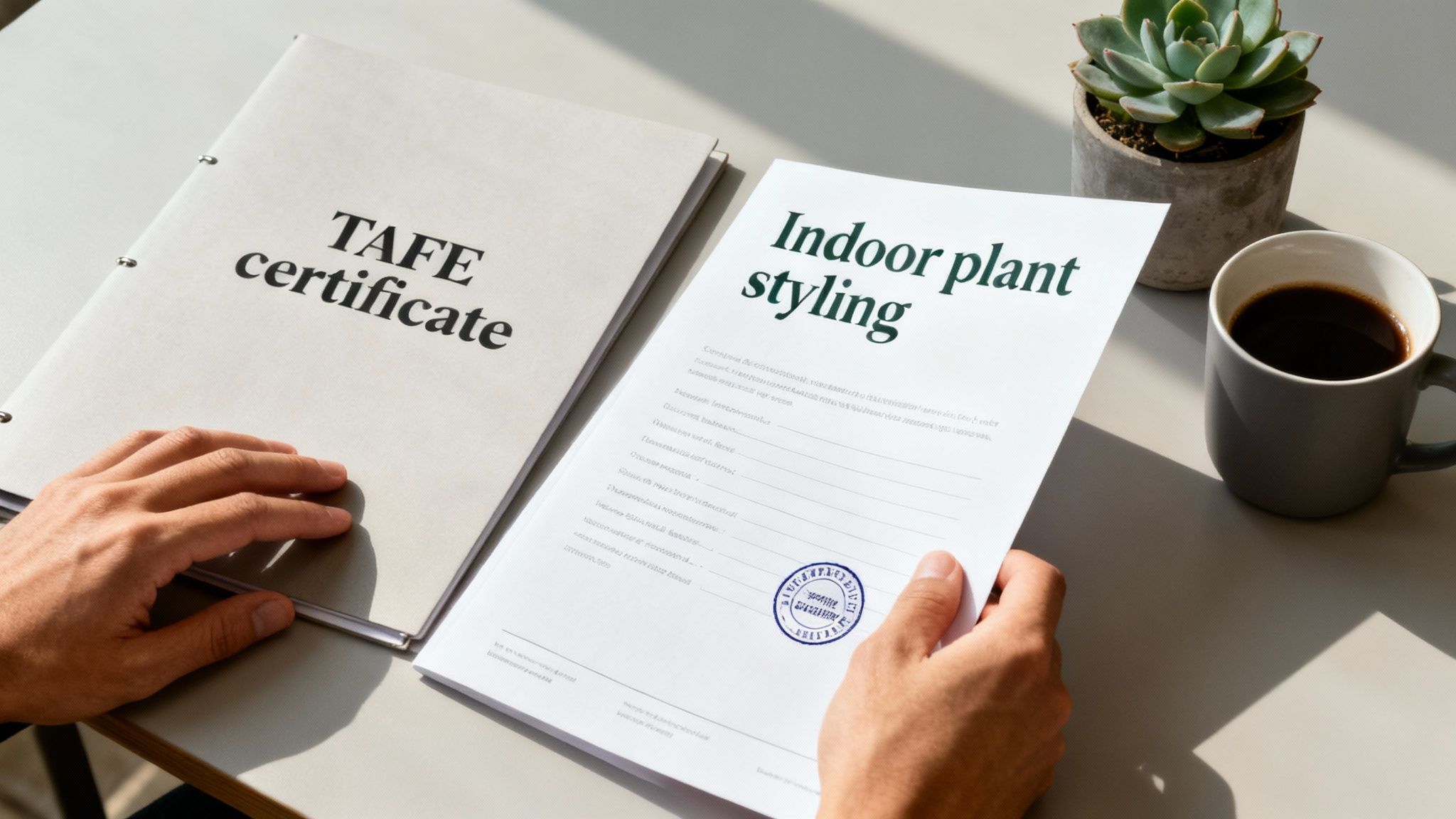
Your choice often comes down to two main paths. On one hand, you have the nationally recognised TAFE qualifications. On the other, you'll find specialised, industry-accredited certificates that focus on very specific, in-demand niches.
TAFE vs Industry-Accredited Certificates
Nationally recognised TAFE courses are part of the Australian Qualifications Framework (AQF). They’re often comprehensive, covering broad horticultural principles from the ground up. These are a solid choice if you're aiming for a formal role within a large organisation or a local council that specifically requires an AQF level.
Industry-accredited certificates are a different beast altogether. They are typically faster, much more focused, and designed for immediate, practical application. Think of courses like Indoor Plant Styling or Garden Maintenance. These are perfect if your goal is to quickly launch a side hustle, add a new service to an existing business, or simply gain expert-level skills in an area you're passionate about.
How to Check for Quality Accreditation
No matter which path you take, accreditation is your non-negotiable sign of quality. It proves that a third-party organisation has reviewed the course content and given its educational standards a big tick of approval. Without it, you’re essentially just buying information you could probably find yourself online.
When looking at non-TAFE courses, check for accreditation from reputable international bodies. A good example is the International Council for Online Educational Standards (ICOES). This gives you confidence that the course meets global criteria for excellence.
Another valuable feature to look for is Continuing Professional Development (CPD) points or hours.
CPD is a measure of ongoing learning that many professionals use to stay current in their field. A course that offers CPD points is recognised for its value in professional upskilling, which looks great on a resume and demonstrates your commitment to your craft.
What to Look for in an Australian Curriculum
Let's be blunt: the best online horticulture course for an Aussie is one made for Aussies. Generic content from overseas might cover the basics, but it won't prepare you for the unique challenges and opportunities of our local environment.
Here’s what a great Australian-focused curriculum should absolutely include:
- Climate-Specific Knowledge: Content tailored to Australian growing zones, from tropical North Queensland to temperate Tasmania.
- Native Plant Expertise: A solid focus on Australian native flora, including their care, propagation, and use in modern garden design.
- Local Pest and Disease Control: Practical advice on managing pests and diseases common in Aussie gardens, with an emphasis on biosecurity and local regulations.
- Industry-Relevant Skills: The course must teach you skills that local employers and clients are actively looking for right now.
Choosing the right program is easily the most important first step you'll take. To see some examples of courses designed with these principles in mind, you can explore a range of Australian online horticulture courses that balance proper accreditation with practical, locally relevant skills. This will give you a clear idea of what a high-quality online learning experience should offer.
Gaining Hands-On Skills From Home

It’s the big question on everyone’s mind when they decide to study horticulture online: how do you actually get your hands dirty? The great news is you don’t need a sprawling backyard to turn theory into tangible skills. Your home and local community are the perfect living laboratories.
The secret is to start a small, manageable home project that ties directly into what you’re learning. This hands-on approach cements concepts in your mind far better than just reading ever could. Think of your project as a real-world case study where you're the lead researcher.
Setting Up Your Home-Based Project
You can create a powerful learning environment even in the tightest of spaces. The aim isn’t to create a show garden, but to choose a project that lets you observe, experiment, and document the entire plant life cycle from start to finish.
Even simple ideas can be incredibly effective:
- A Balcony Vegetable Patch: Grab some pots and grow edibles like lettuce, tomatoes, or herbs. This is a crash course in container media, watering schedules, and pest management in a controlled setting.
- A Native Plant Propagation Station: Try propagating local Australian natives from seeds or cuttings. It’s a brilliant way to learn about the unique germination requirements and vegetative techniques specific to our native flora.
- An Indoor Herb Garden: Perfect for apartment living, a garden on a sunny windowsill helps you master lighting, indoor soil mixes, and harvesting. If this sparks your interest, our Certificate in Indoor Plant Styling delves deep into this specialised area.
The most important part of your home project isn't a perfect harvest; it's the process of trying, failing, and learning. Documenting a pest outbreak and how you fixed it is often more valuable to a future employer than a photo of a flawless plant.
As you get your hands dirty and start honing your skills, using a free online plant hardiness zone tool is a game-changer. It will give you a much better understanding of regional climate considerations and what will genuinely thrive in your area.
Creating a Powerful Visual Portfolio
Your smartphone is your most important tool here. A simple photo journal creates a compelling portfolio that brings your skills to life for future employers or clients—it’s tangible proof you know what you’re doing.
Start a dedicated album and make a habit of capturing everything:
- The Setup: Snap photos of your initial setup—the soil mix, pots, and your seeds or seedlings.
- Weekly Progress: Take shots from the same angle each week to create a visual timeline of growth and development.
- The Challenges: Don't hide the problems! Document pest issues, nutrient deficiencies, or watering mistakes.
- The Solutions: This is crucial. Show how you identified and fixed these issues. It demonstrates real problem-solving skills.
- The Results: Capture photos of your successful harvests, beautiful flowers, or newly propagated seedlings.
This visual diary is a powerful asset. It shows initiative and a genuine understanding of the practical challenges of horticulture—qualities that a course certificate alone can never fully convey.
This hands-on experience is especially valuable in the amenity horticulture sector. This segment—covering nurseries, turf, and landscaping—turns over $6 billion annually and employs 125,000 Australians, making it a fast-growing area with huge potential. You can see just where your practical skills could lead.
Creating a Realistic Study Routine
Let’s be honest: success in online study isn’t about forcing yourself into some rigid, unforgiving schedule. It’s about creating a flexible routine that actually works with the realities of your life. Forget trying to replicate a nine-to-five classroom—the real key is to find those little pockets of time and make them count.
This means taking an honest look at your week. If you're working full-time, your best study window might be an hour on Saturday and Sunday mornings with a coffee. If you're a parent, you might discover that 45 minutes after the kids are in bed is the most productive time you get all day.
Build a Plan for Your Actual Week
Instead of blocking out huge chunks of time you'll probably never stick to, think smaller. Break down your course modules into bite-sized tasks that feel achievable. This strategy turns an overwhelming topic like "Soil Science" into manageable goals you can actually tick off.
For example, a typical week could look something like this:
- Monday Evening: Watch the 20-minute video lecture on soil composition while cooking dinner.
- Wednesday Lunch Break: Read through the downloadable PDF notes on nutrient management.
- Friday Morning: Listen to the audio lesson on your commute.
- Saturday Afternoon: Spend an hour completing the practical soil testing exercise in your garden.
This approach keeps you moving forward without having to sacrifice your entire weekend. It’s all about consistency, not cramming.
Use Different Learning Formats
One of the biggest perks of a well-designed online course is the sheer variety of learning materials. Staring at text for hours is a fast track to burnout, so mix it up to keep your brain engaged and make learning stick, no matter where you are.
Don't just read—listen, watch, and do. Engaging with the material in different ways helps you absorb and retain information much more effectively. It turns study from a chore into an interactive experience.
Think about how you can integrate learning into your day. Download audio lessons to listen to while you're walking the dog or doing housework. Watch practical demonstration videos on your tablet while you’re relaxing on the couch. Use the downloadable guides as quick references when you’re out in the garden. By using every tool at your disposal, you can create a dynamic and effective study routine that fits seamlessly into your life. This flexibility is what makes it possible to gain new skills without putting everything else on hold.
Turning Your Horticulture Skills Into a Career

Finishing your online horticulture course is a massive achievement, but really, it’s just the starting line. Now comes the exciting part: turning all that knowledge into real-world opportunities right here in Australia. Whether you're dreaming of being your own boss or landing a fantastic job, the trick is to get strategic about showing off your new skills.
The good news is, the Australian market has plenty of room for new talent. You don't need a huge pile of cash to get started, either. Many successful horticulture careers begin as a side hustle, letting you build up a client base and your confidence at the same time.
Launching Your Own Horticulture Business
Starting a small business is one of the best ways to put what you’ve learned into action immediately. There's a growing demand for specialised green services, especially in cities and suburbs where people love having beautiful, functional outdoor spaces but just don't have the time or know-how.
Think about what you enjoyed most during your studies and build a service around that. You could offer:
- Garden Maintenance and Consulting: This could be anything from regular upkeep and seasonal clean-ups to one-off consultations for homeowners needing a bit of expert advice.
- Indoor Plant Styling: So many local businesses, cafes, and even residential clients want to bring the outside in. You can be the one to curate and install their indoor plant collections.
- Specialised Niche Services: Why not focus on a specific area you love? You could become the go-to expert for native garden design, edible garden setups, or transforming tiny balconies into lush retreats.
If you found yourself drawn to more specialised fields like fruit cultivation, your practical skills could open doors in orchard management. This includes understanding modern, efficient methods for complex jobs like orchard spraying services.
Don't forget, your hands-on project portfolio is your single greatest marketing tool. Use clear, high-quality photos of your work and share them on social media and in local community groups. It’s the visual proof that will attract your first clients.
Securing Employment in the Industry
If your goal is to join an established organisation, how you present your online qualification is everything. Employers at nurseries, landscaping firms, and local councils are looking for people who have both knowledge and initiative. Just listing your certificate on a resume won't cut it. You need to bring it to life.
Your resume and cover letter should tell a story, highlighting the practical outcomes of your study. Instead of just saying you completed a course, describe the hands-on projects you tackled. Talk about how you successfully propagated native seedlings or managed a pest outbreak in your own veggie garden. These details make your skills tangible.
When you get to the interview, be ready to explain why you chose to study horticulture online. Frame it as a proactive choice that demonstrates self-discipline and a real passion for the field. Make it clear you weren't just passively learning; you were actively applying every concept in real-world settings. This combination of a recognised certificate and a documented portfolio proves you’ve got the skills and drive to be a valuable team member from day one.
Common Questions About Online Horticulture Study
Diving into a new field always throws up a few questions, and it’s smart to get them sorted before you commit. Deciding to study horticulture online is an exciting move, but it’s completely natural to have a few things you’re wondering about.
Let’s clear up some of the most common queries people have when looking at online horticulture courses here in Australia. This way of learning is built for modern life, but you probably want to know how it all translates into real skills and a genuine career path.
Can I Get a Real Job with an Online Horticulture Certificate?
Absolutely. The truth is, many roles—especially in specialised fields like garden maintenance, nursery work, and plant styling—value proven skills just as much, if not more, than formal qualifications.
An industry-accredited online certificate shows employers you have the knowledge. But when you pair it with a solid portfolio of your hands-on projects, you’re showing them you also have the initiative and practical ability to get the job done. These courses are designed to build job-ready skills that are in demand right now, cutting straight to what you need to start a side hustle or step into a new role.
How Do I Get Practical Experience If My Course Is Online?
This is a big one, and it’s simpler than you think. The best online courses are structured to get you applying what you learn right away. You don’t need a massive property to get started.
You can begin with a dedicated project at home, like a vertical garden on your balcony, or even get involved with a local community garden. Lots of students start by offering to help friends and family with their landscaping projects, which is a fantastic way to build confidence and get real-world feedback.
By simply documenting your work with photos and notes, you start building a tangible portfolio. This real-world proof of your abilities often speaks louder to employers or potential clients than a certificate alone.
What Is the Difference Between a TAFE Course and an Accredited Certificate?
A TAFE qualification is a nationally recognised credential that fits into the formal Australian Qualifications Framework (AQF). Think of it as a more traditional, structured pathway.
In contrast, an industry-accredited certificate is often more specialised and designed for rapid upskilling in a specific niche, like Indoor Plant Styling or garden design. This makes it the perfect choice if your goal is to quickly launch a side business or add a new, profitable service to what you already do. It’s a faster, more flexible path to gaining practical, marketable skills without the longer-term commitment of a formal TAFE program.
How Much Time Do I Need to Commit Each Week?
That’s the beauty of self-paced learning—you’re in the driver’s seat. There are no fixed weekly hours you need to clock.
Most students find their sweet spot by dedicating between 5-10 hours per week, but you can easily scale that up or down depending on what’s happening in your life. With long access periods to the course materials (usually around 12 months), you can learn at a comfortable and sustainable pace. It completely removes the stress of rigid deadlines, making it ideal for balancing study with work, family, and everything else.
Ready to grow your passion into a profession? At Prac Skills AU, our accredited, self-paced online horticulture courses are designed for busy Australians. Start learning practical skills today!