
February 2, 2026
.webp)

Animal Assisted Therapy AAT Your Guide to a Fulfilling Career
Discover your career in Animal Assisted Therapy AAT. This guide covers the benefits, qualifications, and real-world applications in Australia.
Career Development
minutes
When you hear the term Animal Assisted Therapy (AAT), it's easy to picture someone simply petting a friendly dog to feel better. But that’s only a tiny piece of a much bigger, more professional picture. True AAT is a formal, structured therapeutic approach where a specially trained animal is a core part of a client's treatment plan, guided by a qualified health professional.
Think of it less as a casual visit and more as a clinical tool designed to achieve specific goals, whether they're physical, social, emotional, or cognitive.
What Exactly Is Animal Assisted Therapy?

The best way to understand AAT is to see it as a professional partnership. At its heart, it’s a trio: a qualified human therapist, a client with clear therapeutic goals, and a carefully selected and trained animal. In this dynamic, the animal isn’t just a passive presence; it’s an active participant—a living, breathing co-therapist that can help break down barriers, build trust, and spark engagement in ways that traditional therapy sometimes can't.
This highly structured and intentional approach is precisely what sets AAT apart from other everyday interactions with animals. It’s not just a feel-good moment; it's a planned session where progress is documented and outcomes are the priority.
The Core Components of AAT
For any interaction to be officially recognised as AAT, it must tick a few crucial boxes. These core components are the bedrock of professional and ethical practice here in Australia and around the world.
- Goal-Directed: Every single session is built around measurable objectives that are part of the client's formal treatment plan.
- Led by a Professional: A qualified health or human service provider who has expertise in AAT must be the one to lead, guide, and document the entire process.
- Specially Trained Animal: The animal must meet strict criteria for health, temperament, and behaviour. It's not just any pet; it's an animal specifically trained for therapeutic work.
- Documented Progress: Just like any other clinical intervention, therapists track and record the client's progress toward their goals.
Getting these distinctions right is vital for anyone looking to build a career in this field. They define the professional standards and ethical lines that separate a hobby from a health practice.
AAT vs Other Animal Interactions at a Glance
It's easy to get AAT confused with other positive animal encounters, like a volunteer bringing a pet to a nursing home or just cuddling your own cat. This table breaks down the key differences to clarify what makes AAT a unique, clinical intervention.
As you can see, while all these interactions can be beneficial, only AAT qualifies as a formal therapy with clinical rigour.
Who Benefits from Animal Assisted Therapy?
The power of animal assisted therapy aat is its incredible versatility. It has found a place in countless settings, helping people from all walks of life find new pathways to healing and growth, especially those who may not respond as well to conventional methods.
AAT is particularly effective for individuals facing challenges with communication, emotional regulation, and social interaction. The non-judgmental presence of an animal can create a safe space for vulnerability and connection, fostering breakthroughs that might otherwise be difficult to achieve.
From children with developmental disorders to veterans managing PTSD and seniors in aged care, the results are real and tangible. A session might be the catalyst for a non-verbal child to speak their first words to a therapy dog, or it might help an elderly patient regain fine motor skills by gently grooming a cat. The applications are incredibly diverse, with proven success in areas like Animal Assisted Therapy for ASD, where animals help improve social skills and reduce anxiety.
Perhaps one of the most powerful indicators of its effectiveness is its ability to keep clients coming back. In animal-assisted psychotherapy, dropout rates are a remarkably low 11.2%. This figure is especially compelling when you compare it to the 20-30% dropout rates often seen in standard psychological programs across Australia, highlighting just how engaging and impactful this approach can be.
The Science Behind AAT's Powerful Benefits

The incredible impact of Animal Assisted Therapy (AAT) is so much more than just heartwarming stories. When a therapy dog rests its head on a client's lap, or a cat starts purring nearby, something profound is happening under the surface. It’s a complex dance of biology and psychology, and it produces real, measurable changes that make AAT a powerful, science-backed intervention.
When we interact with an animal, our brains often respond by releasing a cocktail of helpful neurochemicals. The simple act of stroking a dog’s fur can boost levels of oxytocin—often called the "love hormone"—which fosters feelings of trust, connection, and empathy. These are the very foundations of a strong therapeutic relationship.
At the same time, this interaction helps dial down cortisol, our primary stress hormone. High cortisol levels are linked to anxiety and a host of other health problems. By naturally lowering it, AAT helps create a physiological state of calm, making it far easier for clients to open up, engage in therapy, and work through difficult emotions.
Psychological and Emotional Advantages
The psychological perks of AAT are huge and well-documented. For a client grappling with social anxiety, for instance, the quiet presence of an animal can be a game-changer. It acts as a social buffer, creating a shared, neutral focus that takes the pressure off maintaining eye contact or constant conversation.
This helps build a safe and accepting space where clients feel comfortable enough to be vulnerable. Imagine a veteran managing PTSD; they might find it easier to talk about traumatic events while petting a therapy dog, as the rhythmic, grounding sensation helps regulate their emotional state in the moment.
The presence of a therapy animal can transform a clinical setting from an intimidating space into a welcoming one. This simple shift helps break down defensive barriers, encouraging clients to become more vulnerable and receptive to the therapeutic process.
While Animal Assisted Therapy is a formal, structured intervention, its power is rooted in a simple truth we all recognise: for many people, the bond with a pet is a huge boost for mental wellbeing. This speaks to the inherent mental health benefits of companion animals.
Cognitive and Social Gains
Beyond just emotional support, AAT delivers tangible cognitive and social benefits, especially for people with certain neurological or developmental conditions. It's been a particularly bright spot in aged care, where therapy animals have shown remarkable success supporting patients with dementia.
Interacting with an animal can spark old memories, encourage conversation, and reduce feelings of agitation or confusion. A quiet visit can bring moments of clarity and connection, dramatically improving a resident's quality of life and engagement with the world around them.
The same goes for kids. In educational settings, children with autism spectrum disorder (ASD) often show incredible improvements in focus and communication during AAT sessions.
- Improved Focus: The animal’s presence can help anchor a child's attention, making it easier for them to concentrate on therapeutic tasks.
- Enhanced Communication: Children who are non-verbal or have limited speech may feel more motivated to communicate with or about the animal.
- Skill Development: Activities like grooming a dog or feeding a rabbit help develop fine motor skills and a sense of responsibility.
Home-grown research backs this up. A comprehensive review by Animal Therapies Limited (ATL) looked at 27 local studies and found that 37% of psychological outcomes showed significant positive effects. Just as importantly, there were zero negative impacts reported, reinforcing that AAT is a safe and reliable tool for Australian practitioners. You can learn more about these findings on Australian AAT effectiveness.
Understanding Different Therapy Animals and Their Roles
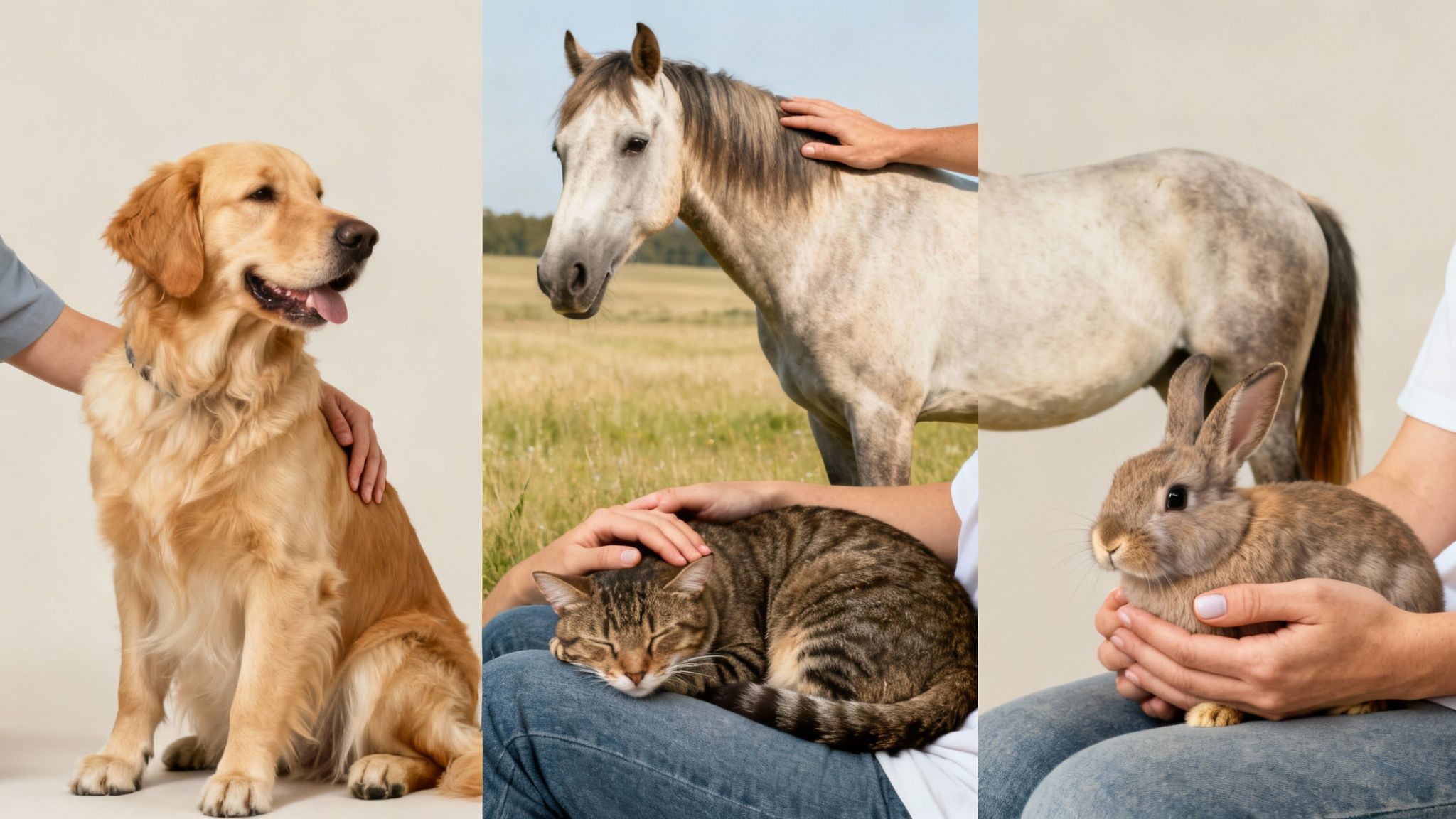
When you picture animal assisted therapy aat, a friendly Labrador probably comes to mind. But the reality is much more diverse. The "co-therapist" in a session might have paws, hooves, or even just a twitching nose.
What matters most isn't the species, but the animal's individual temperament and how its unique qualities match a client's specific therapeutic goals. Think of it like a specialist choosing the right tool for a job. A lively, playful dog could be perfect for motivating a child in physiotherapy, while a calm, intuitive cat might be the ideal companion for someone processing trauma.
For anyone serious about a career in AAT, understanding this variety is non-negotiable. Your choice of animal partner will shape everything—from the clients you work with to your entire business model.
The Canine Co-Therapist: Dogs in AAT
There’s a good reason dogs are the face of animal therapy. Their innate sociability, eagerness to please, and expressive nature make them incredibly versatile partners.
Dogs can be involved in a huge range of activities, from simply encouraging a client to get up and go for a walk, to providing deep pressure therapy for someone in the midst of a panic attack. Their ability to form strong bonds and read human emotions is exceptional, making them brilliant at building rapport when other methods fall short.
If this is the path for you, getting a solid grounding in canine behaviour is the best place to start. A deep understanding of animal handling is crucial, and you can explore what that involves in our guide on how to become a dog trainer in Australia.
Equine-Assisted Therapy: The Power of Horses
Equine-assisted therapy partners with horses to tackle both physical and psychological challenges. The rhythmic, three-dimensional movement of a horse actually mimics the human gait, which can help clients improve their balance, posture, and core motor skills.
On a psychological level, working with an animal as large and powerful as a horse demands trust, clear communication, and a great deal of self-awareness. It can be a game-changer for veterans with PTSD or individuals working through issues of control and self-confidence. Of course, running an equine therapy practice requires significant space and resources, making it better suited to practitioners in rural or semi-rural settings.
Horses act as mirrors, reflecting a client's emotional state without judgment. This immediate, honest feedback provides a unique opportunity for individuals to see how their behaviour impacts others and to practise new ways of regulating their emotions and building relationships.
Feline and Small Animal Roles
They might be less common in the field, but cats and smaller animals like rabbits or guinea pigs play a vital role in certain AAT settings. Their contributions are often quieter, but no less profound.
- Cats: With their calm, independent nature, cats are ideal for one-on-one sessions where a less demanding presence is needed. The simple act of a cat purring on a client's lap can significantly lower blood pressure and reduce anxiety, making them perfect for aged care facilities or quiet clinical environments.
- Rabbits and Guinea Pigs: These small animals are fantastic for helping clients develop empathy and nurturing skills. Their gentle, non-threatening nature makes them approachable for individuals who might be intimidated by larger animals. They are often used in school programs to teach responsibility or in settings with clients who have experienced neglect.
Each animal brings a distinct set of skills to the therapeutic partnership. By understanding these differences, you can start to envision the type of AAT practice that not only aligns with your professional goals but also resonates with your personal passion for animal welfare and human healing.
Your Roadmap to Becoming an AAT Practitioner in Australia
Turning a deep love for animals and a genuine desire to help people into a fulfilling career is an incredible journey. For anyone dreaming of working in animal assisted therapy (AAT) in Australia, the path is a mix of solid education, specialised training, and a bit of business smarts. It’s about so much more than just having a friendly pet; it's about building a credible, ethical, and effective therapeutic practice from the ground up.
This roadmap will walk you through the essential steps, from getting the right qualifications to handling the practical side of launching your own AAT service. Think of it like building a house: you need a strong foundation, a well-designed structure, and all the right permits to make sure it’s safe and built to last.
Building Your Professional Foundation
Before you even think about bringing an animal into the picture, you need a primary qualification in a relevant human services field. This is the absolute bedrock of your practice. AAT is an adjunct to therapy, not a replacement for it. This means you first have to be a qualified professional who is simply adding AAT to your existing toolkit.
This foundational qualification can come from a few different areas, each offering a unique entry point into the world of AAT.
- Healthcare and Allied Health: This is a common pathway and includes professions like psychology, occupational therapy, physiotherapy, social work, or counselling.
- Education: Teachers and special education professionals are perfectly positioned to integrate AAT into school settings to support students with diverse learning needs.
- Animal Welfare: While it's less common for someone in this field to be the lead therapist, a background in animal training or veterinary nursing provides an excellent base, especially for those supporting AAT programs.
This initial qualification is non-negotiable. It gives you the core skills in client assessment, professional ethics, and therapeutic techniques that are essential to practise safely and effectively in Australia. If you're just starting out, exploring an online animal care course can be a fantastic first step to get a handle on the animal welfare side of things.
Gaining Specialised AAT Training and Certification
Once your human services qualification is sorted, the next move is to get specialised training in animal assisted therapy. This is where you really dive into the specific theories, techniques, and ethical considerations of bringing an animal into your practice.
Australian organisations like Animal Therapies Ltd (ATL) or Lead The Way offer excellent training and certification programs. These courses get into the nitty-gritty of what makes AAT work.
Specialised AAT training isn't just about teaching an animal new tricks. It’s about learning to be a skilled facilitator who can read the subtle cues of both the client and the animal, ensuring the interaction is safe, goal-oriented, and genuinely therapeutic for everyone involved.
During this training, your animal partner will also go through a rigorous assessment. This ensures they have the right temperament, obedience, and resilience for therapeutic work. They need to be calm, predictable, and genuinely enjoy interacting with all sorts of people in different environments.
Essential Business and Ethical Considerations
Let's be clear: launching an AAT practice means you're running a business. This requires careful planning and a sharp eye for detail to ensure you operate legally, ethically, and sustainably.
First up, and this is a big one, is professional indemnity and public liability insurance. It's absolutely critical. You must have coverage that specifically mentions working with animals in a therapeutic setting, as a standard policy almost certainly won't cover this specialised work.
Next, you need a solid business plan. This should map out who your target clients are, the services you’ll provide, your fee structure, and how you'll market yourself. You'll also need to create clear policies for everything from animal welfare and client consent to hygiene protocols and risk management. Holding yourself to the highest ethical standards will not only protect your clients and your animal partner but will also build a reputation for professionalism and trust—the cornerstones of any successful AAT business.
Starting your journey into Animal Assisted Therapy is an exciting prospect. To help you keep track of the key steps, here’s a simple checklist to guide you.
Your AAT Career Pathway Checklist
Following this checklist will help ensure you build your AAT practice on a strong, professional, and ethical foundation, setting you up for a long and rewarding career.
How AAT Is Making a Difference Across Australia

Across Australia, animal assisted therapy (AAT) is moving beyond theory and into practice, creating profound change in hospitals, schools, aged care homes, and private clinics. It’s in these everyday settings that the true power of the human-animal bond comes alive, offering new hope where traditional methods sometimes fall short.
These real-world applications showcase just how versatile and impactful AAT can be. By exploring these examples, you can begin to see the diverse career and business opportunities waiting for qualified practitioners in this rapidly growing field.
A Calming Presence in Clinical Settings
Picture a children's ward in a busy hospital. The air is thick with anticipation and nerves as young patients wait for surgery. Now, imagine a certified therapy dog and its handler walking into the room. The dog’s quiet confidence and gentle nature instantly shift the atmosphere, calming pre-surgery jitters and offering a welcome distraction.
But this is more than just a comforting moment; it's a targeted therapeutic intervention. In these environments, AAT is used to:
- Lower anxiety and blood pressure in patients before medical procedures.
- Motivate participation in physiotherapy, using activities like throwing a ball or walking the dog.
- Provide crucial emotional support during difficult treatments or extended hospital stays.
The animal acts as a unique bridge, helping healthcare professionals build rapport with patients who might be scared, withdrawn, or in pain.
Building Confidence in Educational Environments
Schools are also discovering the incredible benefits of bringing AAT into the classroom. One of the most successful applications is in literacy programs, where children who find reading a challenge are invited to read aloud to a therapy dog.
For a child with learning difficulties or social anxiety, the fear of making a mistake in front of their peers can be paralysing. A dog, however, doesn’t correct or criticise. It just listens patiently, creating a completely safe, pressure-free space for the child to practise and build confidence. This simple interaction can dramatically improve reading fluency, boost self-esteem, and reshape a child’s entire attitude towards learning.
The non-judgmental companionship of a therapy animal can unlock a child's potential. It replaces fear with curiosity and anxiety with confidence, creating an ideal environment for growth and learning.
Reconnecting and Healing in Aged Care
In aged care facilities, AAT is a powerful tool against the loneliness and cognitive decline that can deeply affect residents. A visit from a therapy animal can spark memories, encourage conversation, and bring moments of pure, uncomplicated joy.
For residents living with dementia, interacting with an animal can be especially meaningful. The simple, sensory act of stroking a cat’s fur or feeling a dog’s gentle nudge can reduce agitation, lift moods, and provide a rare moment of clarity and connection. It’s a gentle way to help residents re-engage with the world, significantly improving their quality of life.
Supporting Mental Health Journeys
Perhaps one of the most significant impacts of AAT is in mental health, particularly for veterans and others managing post-traumatic stress disorder (PTSD). Equine-assisted therapy, for example, helps individuals learn about trust, boundaries, and emotional regulation by working alongside horses.
This hands-on, experiential approach is incredibly effective at keeping people engaged in their treatment. In fact, Australian research into equine-assisted therapy found that 69% of participants in a 12-week program completed their full treatment. This is a massive leap compared to the 32% completion rate in standard therapy groups. As you can discover in the full research about AAT's impact, this striking difference highlights just how powerful AAT can be in helping people stay committed to their healing journey.
Putting Animal Welfare and Ethics First
When we bring an animal into a therapeutic setting, we’re not just using a clinical tool—we’re working with a living, feeling partner. This simple truth is the absolute foundation of ethical and effective Animal Assisted Therapy. Building a reputable AAT service means making a non-negotiable commitment to the ‘do no harm’ principle, a promise that extends equally to both your human client and your therapy animal.
This dual responsibility is what really separates the professionals from the enthusiasts. It’s not enough for an animal to just be well-behaved; they have to genuinely enjoy the work, be free from stress, and have their needs put first, always. Treating your animal partner with the utmost respect isn’t just a nice idea—it’s essential for building a practice that is sustainable, trusted, and truly therapeutic.
The Animal's Right to Thrive
An ethical AAT practice doesn’t just happen during a session. It starts long before, with the careful selection of an animal that has the right temperament—one that is naturally calm, confident, and sociable. From there, it’s all about specialised training that uses positive reinforcement, creating a relationship built on trust, not just commands.
But most importantly, it means you are your animal’s constant advocate. This looks like:
- Recognising Stress Signals: Learning to spot the subtle signs of fatigue or anxiety is crucial. Things like yawning, lip licking, or avoiding eye contact are whispers that it's time to end the session before stress escalates.
- Limiting Workloads: Just like for us, a therapy session is mentally and emotionally demanding for an animal. You have to ensure they get plenty of downtime and are never, ever overworked.
- Providing Choice: A therapy animal should always have the option to walk away. Successful interaction is based on their voluntary choice to engage, not on being forced to participate.
A therapy animal that is happy, healthy, and engaged is far more effective than one that is merely compliant. Their wellbeing is directly linked to the therapeutic outcome for the client. Prioritising the animal is not a compromise; it’s a core component of the therapy itself.
Ensuring Client Safety and Informed Consent
Of course, that same profound ethical responsibility extends to your human clients. As a practitioner, your job is to create an environment that is physically and emotionally safe for every single person you work with. This always starts with obtaining informed consent, which means clearly explaining the potential benefits and any possible risks of AAT before therapy begins.
Clients need to understand exactly what the interaction involves and must have the right to decline or stop at any point, no questions asked. On top of that, rigorous hygiene protocols and solid risk management plans are non-negotiable for protecting everyone involved. A deep understanding of animal behaviour is critical, and if you’re working with dogs, knowing how to respond in an emergency is a must. Building these skills through a dedicated canine first aid training course is a practical, professional step every practitioner should take to be prepared for any situation.
Ultimately, a strong ethical framework is the invisible structure that protects everyone: the client, the practitioner, and the animal partner. It is the very cornerstone of a professional practice that honours the unique, powerful bond at the heart of AAT.
Of course. Here is the rewritten section, crafted to sound completely human-written and natural, following the provided style guide and examples.
Answering Your Questions About Animal Assisted Therapy
As the field of animal assisted therapy (AAT) continues to gain traction across Australia, more and more passionate individuals are asking how they can turn their love for animals into a professional calling. It's an exciting prospect, but it naturally comes with a lot of questions. Let's clear up some of the most common queries to give you a clearer picture of what this rewarding career path involves.
One of the first things people ask is whether they can simply bring their beloved family pet along to sessions. While the bond you share is incredibly special, every animal, regardless of its background, must go through a rigorous, independent assessment. This process is all about making sure they have the right temperament and resilience for the unique demands of therapeutic work.
Do I Need to Be a Psychologist to Practise AAT
This is a really important question, and we hear it all the time. The short answer is no, you don't have to be a psychologist. However, you must hold a primary qualification in a relevant human services field. This could be social work, occupational therapy, counselling, or even education.
Think of AAT as an advanced tool you add to your existing professional toolkit, rather than a standalone profession. The animal is there to assist you in delivering therapy that falls within your qualified scope of practice.
Can I Use My Own Pet as a Therapy Animal
It’s definitely a possibility, but your pet has to pass the same stringent, objective assessment as any other potential therapy animal. This isn't just red tape; this evaluation is absolutely critical for ensuring the safety and wellbeing of both your clients and your animal.
The assessment process looks for a few key traits:
- A calm, predictable temperament, even when faced with sudden noises or unexpected actions.
- A genuine enjoyment of interacting with new people in different settings.
- A high level of obedience and responsiveness to your cues as the handler.
This process ensures that the animal isn't just tolerating the work but is actively thriving in its therapeutic role—a cornerstone of ethical AAT practice.
What Are the Startup Costs for an AAT Business
Launching an AAT business takes more than just passion; it requires a solid financial plan. Costs can vary quite a bit depending on your specific services, but there are some key expenses that are universal for anyone starting a practice in Australia.
Planning your budget is a crucial first step in building a sustainable AAT business. Your initial investments in training, insurance, and proper equipment are non-negotiable for establishing a professional and ethical service from day one.
Here’s a look at some of the essential startup costs you can expect:
- Specialised AAT Training and Certification: This is for both you and your animal partner.
- Professional Indemnity and Public Liability Insurance: Make sure your policy specifically covers working with animals.
- Business Registration and Setup: This includes getting your ABN and potentially some legal advice.
- Animal-Related Expenses: Think high-quality gear, ongoing vet checks, grooming, and food.
- Marketing and Website Development: You’ll need a way to connect with your first clients.
Careful financial planning is what will turn your professional dream into a successful, long-term reality.
Ready to take the next step in your animal care career? Prac Skills AU offers practical, self-paced online courses designed for busy Australians. Explore our range of industry-recognised certificates to build the skills you need for a fulfilling future. Learn more at https://www.pracskills.com.au.