February 3, 2026
.webp)
How to Become a Dog Trainer Australia: A Practical Path to Certification
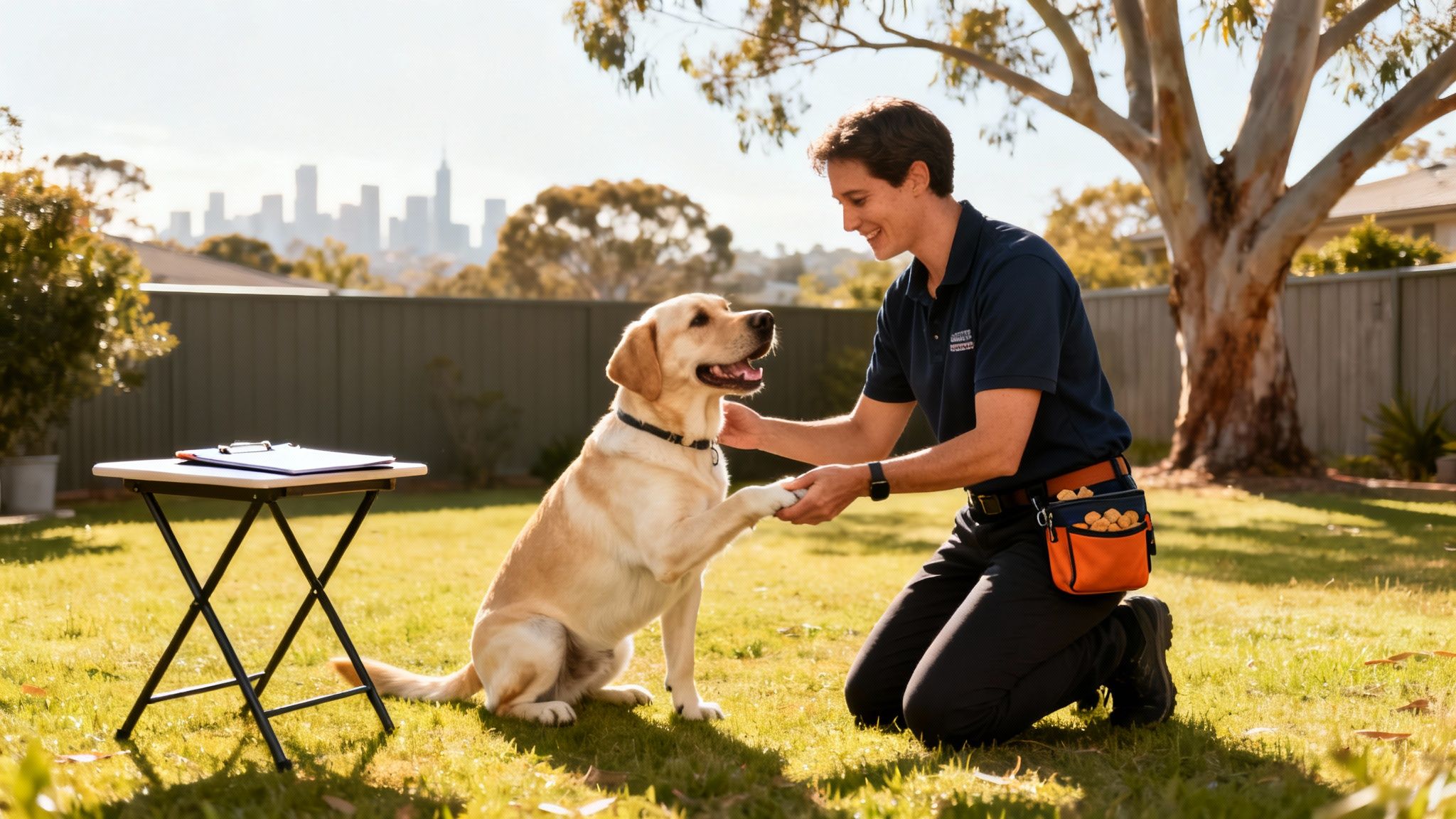
Discover how to become a dog trainer australia with practical courses, hands-on experience, and a clear step-by-step plan to start your career.
Career Development
minutes
So, you're thinking about becoming a dog trainer in Australia? That's fantastic. The first thing to know is that it's about much more than just a love for dogs. To do it right, you need a nationally recognised qualification like a Certificate IV in Companion Animal Services, a heap of hands-on experience, and a good handle on the business basics, like getting an ABN and the right insurance. It’s a real mix of animal science, practical skill, and a bit of entrepreneurial grit.
Your Path to a Career in Dog Training
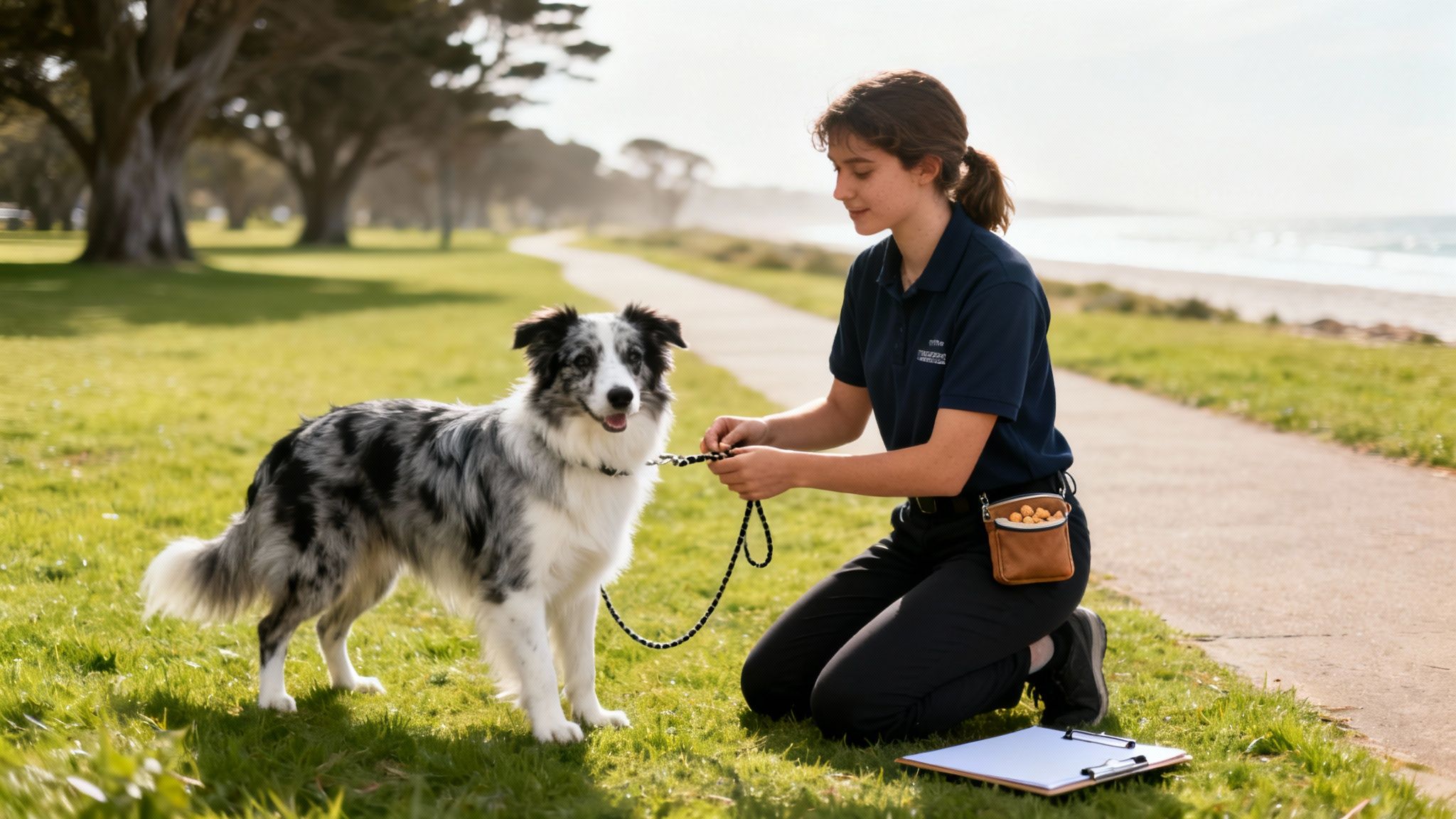
Jumping into a dog training career is an amazing move, but let's be clear: it’s not just playing with puppies all day. It takes a serious commitment to understanding how animals think and learn, a genuine passion for teaching people, and the drive to build a real business. This isn't a field where you can just put up a flyer and call yourself a trainer; your credibility and competence are everything.
And the timing couldn't be better. With 69% of Australian households owning pets—and dogs leading the pack at 48%—the demand for skilled, professional trainers is through the roof. People's lives are busy, and they're looking for experts to help them build a better bond with their dogs. This means clients are smarter and more selective than ever, seeking out trainers who use ethical, science-backed methods.
The Modern Dog Trainer's Role
A great modern trainer is part animal behaviourist, part life coach, and part small business owner. The old-school, dominance-based training methods are on their way out, thankfully. Today, it’s all about positive reinforcement and truly understanding canine behaviour. Your job goes way beyond teaching a dog to "sit" and "stay."
You'll quickly find yourself:
Coaching the Human: A massive part of your job is actually teaching owners how to communicate with their dogs. You're not just training an animal; you're building a stronger, healthier relationship between a dog and its family.
Solving Behavioural Puzzles: You’ll be the go-to person for tackling common but tricky issues like separation anxiety, leash reactivity, or resource guarding. This takes a lot of patience and sharp analytical skills.
Running a Business: From marketing yourself and managing your finances to making sure you've got the right insurance coverage, the business side of things is just as important as your dog-handling skills.
The best trainers figure out early on that they're in the people business just as much as they're in the dog business. Your ability to listen, educate, and empower dog owners is what will truly set you apart and get lasting results.
This guide is your realistic blueprint for what it takes. It’s more than a checklist; it’s about giving you a genuine feel for the dedication required to build a career based on respect for both animals and the people who love them. If you're just dipping your toes in, getting a feel for the industry with an introductory animal care course online can be a brilliant first step.
Getting Your Dog Training Qualifications and Courses Sorted
So, you're ready to jump into the professional world of dog training. It all starts with building a rock-solid educational foundation. While passion for dogs is the fuel, a formal qualification is the engine that will power a successful and ethical career.
Here’s the thing about the dog training industry in Australia: it’s unregulated. Technically, anyone can hang up a shingle and call themselves a trainer. But the real pros—the ones who build a stellar reputation—do it on the back of recognised credentials.
This is where a nationally recognised qualification becomes your most valuable asset. The journey of how to become a dog trainer in Australia truly begins with a credential like the Certificate IV in Companion Animal Services. It’s currently the highest-level VET qualification available specifically for dog trainers in the country.
A course at this level goes deep, equipping you with both the theory and the practical skills you need to handle everything from puppy preschool to private behaviour consults, all grounded in modern, positive reinforcement methods. You can get more insight into this benchmark qualification on the Dogs Australia website.
It’s absolutely crucial to understand that not all courses are created equal. You’ll want to enrol with a Registered Training Organisation (RTO), as these are the only providers accredited to deliver nationally recognised training. This distinction is vital for your credibility and opens up far more career opportunities down the track.
Choosing the Right RTO and Course
Once you start looking, you’ll find a few providers offering dog training certifications. Two of the most respected names in Australia are the Delta Institute and the National Dog Trainers Federation (NDTF). Each has a slightly different approach, but both are well-regarded RTOs that produce competent, knowledgeable trainers.
To make the right choice for you, dig into what each course actually covers. A robust curriculum should go way beyond just teaching basic obedience commands. Look for modules on these key areas:
Learning Theory: This is the science behind how dogs learn, covering the nuts and bolts of classical and operant conditioning.
Canine Ethology: You need to understand the natural behaviour of dogs to properly interpret their actions and meet their needs.
Positive Reinforcement Techniques: You’ll learn how to effectively use rewards-based methods to teach behaviours and build a powerful human-animal bond.
Client Communication and Coaching: A huge part of the job is teaching people. The course has to equip you to coach owners with empathy and clarity.
Class Management Skills: It's a real skill to run a group class safely and effectively, keeping multiple dogs and owners engaged and learning.
Business Fundamentals: Some courses will even touch on the basics of setting up and running your own small dog training business.
Remember, the goal of a good course isn't just to teach you how to train a dog. It’s to teach you how to think like a trainer—how to observe, assess, and create tailored training plans for any dog and owner you meet.
The Power of Industry Accreditation
Once you've got your certificate, the next smart move is to align yourself with a professional body. Joining an organisation like the Association of Pet Dog Trainers (AAPDT) Australia or the Pet Professional Guild Australia (PPGA) is about more than just adding a logo to your website.
It’s a public declaration of your commitment to a professional code of ethics.
These associations have strict membership criteria. They'll often require you to hold specific qualifications and stick to humane, science-based training principles. For potential clients, seeing that accreditation is a huge mark of trust. It tells them you’re a qualified professional who is serious about ethical practices and ongoing learning.
Understanding the Difference in Qualifications
When you're researching, you might come across all sorts of different "certificates." It’s important to know what you're looking at.
Ultimately, investing in the right education sets the entire trajectory of your career. It gives you the skills, knowledge, and credibility needed to build a thriving business and make a real, positive impact on the lives of dogs and their people.
For those ready to take the next step, you might be interested in our guide on the Certificate IV in Dog Training to see exactly what the curriculum involves.
Getting Real-World Dog Handling Experience
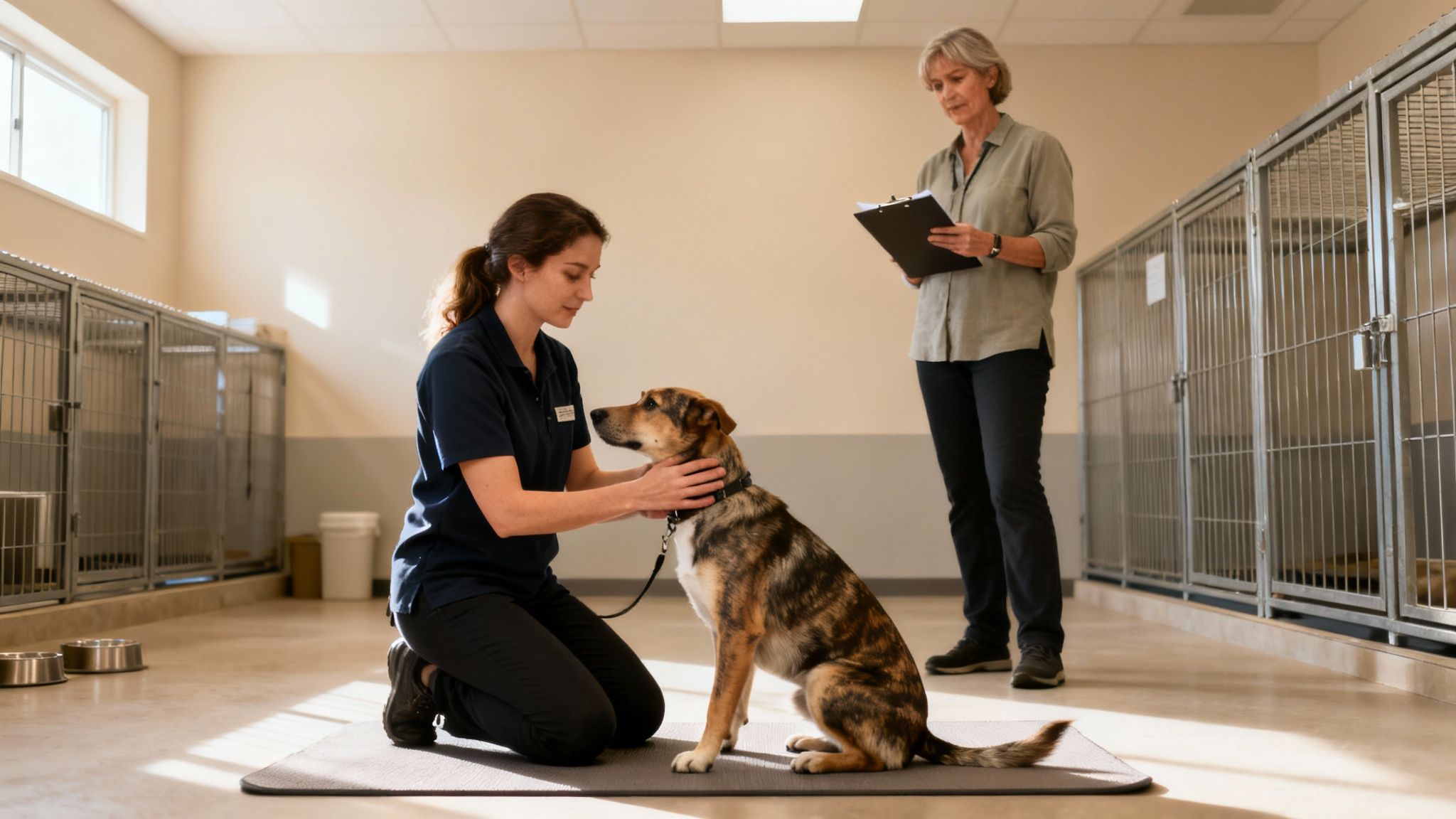
Formal qualifications are brilliant for teaching you the ‘what’ and the ‘why’ of dog training. But the real magic—the ‘how’—happens out in the field. Textbooks simply can't prepare you for the subtle shift in a dog's posture right before a reaction, or the feel of a perfectly timed reward. It's this hands-on time that builds the intuition separating a good trainer from a truly great one.
Many reputable courses, like the Certificate IV, know this well. They often mandate a minimum number of practical hours, usually around 100 supervised hours. This isn't just about ticking a box; it’s where you make the crucial leap from student to genuine practitioner.
Think of it as your apprenticeship. This is your chance to observe, learn, and put your knowledge into practice under the watchful eye of someone who’s seen it all. You'll meet more breeds, temperaments, and behavioural quirks than any single course could possibly cover.
Finding Opportunities to Gain Experience
So, where do you find these invaluable hours? The key is to be proactive and professional. Australia has plenty of avenues for aspiring trainers to get their hands dirty—literally and figuratively.
Your mission is to find places where you can safely interact with a wide range of dogs and see experienced handlers in their element.
Here’s where to start looking:
Volunteering at Animal Shelters: Places like the RSPCA or your local council pound are gold mines of experience. You’ll be working with dogs from all walks of life, many of whom are stressed and showing challenging behaviours. It’s an incredible environment for learning to read canine stress signals and practice calm, confident handling.
Assisting an Established Trainer: Find a local, certified trainer whose methods you respect and reach out. Offer to help with setting up classes, doing admin, or even cleaning up in exchange for the chance to shadow their sessions. Watching how they manage a lively group class or navigate a tricky one-on-one consult is an education in itself.
Finding a Formal Mentorship: This is the gold standard of practical learning. A mentorship is a more structured arrangement where a senior trainer takes you under their wing. A great mentor won't just let you watch; they'll gradually give you more responsibility, offer constructive feedback, and guide your professional development.
The most important thing at this stage is to be a sponge. Watch everything, ask good questions, and listen more than you speak. You're there to learn from the dogs and the professionals who have been doing this for years.
What to Focus On During Your Practical Hours
Once you’ve landed a placement, it’s time to soak up as much as you can. This isn’t just about logging hours; it's about building a deep, practical skillset that will be the foundation of your entire career.
Make it your goal to work with as many different dogs as possible. A high-drive Kelpie learns very differently from a sensitive Greyhound. A boisterous Labrador puppy presents a whole other challenge compared to a nervous rescue dog. Every single interaction teaches you something new about adapting your approach.
Your practical hours could involve working on critical safety skills, such as teaching reliable recall and preventing dogs from running away. Being well-rounded also means being prepared for the unexpected. Knowing how to handle an emergency is a non-negotiable part of being a professional, which is why a Certificate in Canine First Aid & CPR is an excellent skill to have in your toolkit.
Key Skills to Develop
Here’s a checklist of what you should be actively trying to learn and practise during your hands-on hours:
Observing Canine Body Language: Get fluent in reading the subtle cues. A lip lick, a yawn, a flash of 'whale eye'—these are the whispers you need to hear before a dog feels the need to shout.
Practising Leash Handling Skills: Learn to use the leash as a tool for communication, not just a tether. Practise keeping it loose and learn how to manage a dog that pulls without resorting to force.
Perfecting Timing and Reinforcement: Pay close attention to how seasoned trainers mark and reward behaviour. That split-second timing of a clicker or a "Yes!" followed by a treat is what makes training click.
Learning Client Communication: Listen to how trainers talk to owners. You’ll quickly realise they spend as much time coaching the human as they do the dog, using empathy, clear instructions, and encouragement to set their clients up for success.
This time in the trenches is where your confidence is built. It takes all that theory from the books and cements it into real, practical knowledge, preparing you for the dynamic, unpredictable, and incredibly rewarding reality of being a dog trainer in Australia.
Setting Up Your Dog Training Business
Alright, this is the exciting part. You're taking your passion and turning it into a real, legitimate business. This is where all your hard-earned skills meet structure, transforming your expertise into a sustainable career. It can feel like a huge step, but if you break it down, it's completely manageable.
The first thing you need to do is make it official. That starts with registering for an Australian Business Number (ABN). Think of it as your business's unique fingerprint—it's an 11-digit identifier that the government and other businesses use to recognise you.
Applying for an ABN is free through the Australian Business Register (ABR). Getting one legitimises your services and is absolutely essential for sending out invoices and sorting out your taxes.
Getting a Handle on Your Tax Obligations
With your ABN sorted, the next thing on your mind will likely be the Goods and Services Tax (GST). Here’s the deal in Australia: you are only legally required to register for GST if your business has a turnover of $75,000 or more a year.
Most new trainers won't hit this threshold right away. But, you can choose to register for GST voluntarily even if you're earning less. The upside is you can claim GST credits back on your business purchases. The flip side is you'll have to charge GST on your services and lodge regular Business Activity Statements (BAS), which adds a layer of admin.
You'll also need a business name. This is your brand! Make it memorable, professional, and a reflection of your training philosophy. Before you get too attached, do a quick search to make sure another business hasn't already snagged it and check that the website domain is available.
Why You Absolutely Need the Right Insurance
Let me be blunt: this is non-negotiable. You're working with animals and their people, and no matter how careful you are, accidents can happen. Good insurance is the safety net that protects you, your clients, and your entire business from the unexpected.
One single incident without the right cover could put you out of business before you've even really started.
Imagine a dog in your puppy class accidentally trips someone in the park, or a client claims your advice actually made their dog's behaviour worse. These are the exact scenarios insurance is designed for.
You'll need two key policies at a minimum:
Public Liability Insurance: This is your shield if someone (a client or a member of the public) gets injured or their property is damaged because of your business activities.
Professional Indemnity Insurance: This covers you if a client claims you were negligent or that your professional advice was flawed and caused them a loss—for example, their dog's behaviour didn't improve or even worsened.
Having the right insurance isn't just about covering your back financially; it's a huge sign of professionalism. It tells clients you're a serious operator who takes responsibility and has planned for things going wrong. That builds massive trust.
Budgeting for Your Startup Costs
The good news is that starting a dog training business doesn't require the huge capital outlay that many other ventures do. But you will have some essential costs to get off the ground, and mapping them out now will save you a lot of financial stress later.
Your initial expenses will generally fall into a few main buckets.
Don't forget that things like insurance and association memberships are recurring annual costs. Smart trainers factor these into their pricing right from the start to make sure the business is sustainable in the long run.
Once you’re ready to get everything in order, using a comprehensive checklist for starting a dog training business can be a lifesaver. It ensures you tick every box and build your new career on a solid foundation.
How to Market Your Services and Find Clients
You’ve got the qualifications, the insurance is sorted, and you're ready to dive in. Now for the bit that really builds a career: finding people who actually need your skills.
Don't worry, marketing yourself isn't about becoming a slick salesperson. It's about building trust and showing off your expertise so that dog owners in your community know you're the person to call when they need help.
The great news? You don't need a massive budget to get started. Effective marketing for a new dog trainer in Australia is all about being genuine, helpful, and visible in the right places.
Building Your Digital Shopfront
Before you do anything else, you need a simple, professional online presence. Think of your website as your digital business card and portfolio, all rolled into one. It doesn't have to be complicated—a clean, easy-to-navigate site that clearly states who you are, what you offer, and how to get in touch is perfect.
Next up, pick one or two social media platforms you can really commit to. For dog trainers, Instagram and Facebook are goldmines because they're so visual. Use them to share genuinely useful content that shows what you know and helps you connect with potential clients.
Here are a few content ideas that work wonders:
Quick Training Tips: Share short videos showing how to teach a simple cue like "touch" or "drop it." People love actionable advice.
Client Success Stories: With their permission, of course, post a before-and-after video or a glowing testimonial from a happy client.
"Ask the Trainer" Sessions: Go live for a Q&A or just ask your followers to submit questions you can answer in your posts or stories.
Behind-the-Scenes: Show little snippets of a group class in action or a clip of you getting ready for a private session.
This approach positions you as a helpful expert, not just another business trying to sell something. You're giving away value for free, and that builds trust long before someone even thinks about booking you.
The Power of Local Networking
While a digital presence is vital, you should never underestimate the power of old-fashioned, real-world connections. Your most powerful marketing tool will often be a warm referral from another trusted pet professional.
Make it your mission to build relationships with the key players in your local pet community.
Go introduce yourself to the staff at local veterinary clinics, groomers, and independent pet supply stores. Drop off a small stack of professional-looking business cards and a flyer that outlines your services. When you chat with them, frame the conversation around how you can help their clients—this creates a mutually beneficial relationship where everyone wins.
A single referral from a trusted local vet can be more valuable than a hundred social media likes. Vets and groomers see dogs and their owners every single day, and their recommendation carries immense weight.
Setting Your Prices with Confidence
Pricing your services can feel pretty daunting at first, but it doesn't have to be. The key is to be clear, fair, and confident in the value you're providing.
Start by researching what other certified trainers in your area are charging to get a baseline, but don't just copy them. Your pricing should reflect your specific qualifications, your level of experience, and exactly what you're offering.
Here’s a quick look at some typical pricing structures in the Australian market to give you a starting point:
Be completely transparent about your pricing on your website. Clearly list what each service includes—things like follow-up notes or phone support—so clients know exactly what they're paying for. This clarity avoids any confusion down the line and helps build the professional trust that turns inquiries into loyal clients.
Common Questions About a Dog Training Career
Thinking about a new career is always exciting, but it naturally comes with a lot of questions. And when that career involves working with dogs and their humans, those questions tend to mix practical worries with the day-to-day realities of the job.
Let's dive into some of the most common queries we hear from aspiring trainers in Australia.
What Can I Expect to Earn?
Let’s talk numbers. The income for a dog trainer in Australia can swing quite a bit depending on your experience, where you’re based, and whether you’re running your own show or working for someone else. It's not a get-rich-quick career, but you can absolutely build a comfortable living doing something you're passionate about.
To give you a ballpark idea, a trainer just starting out might charge:
$80 to $150 per hour for one-on-one private sessions.
$25 to $50 per dog for a spot in a group class.
A self-employed trainer working full-time with a consistent flow of clients can earn a solid income, especially once their reputation starts to build. Your earning potential really climbs when you specialise in sought-after areas like aggression, separation anxiety, or assistance dog training. In those fields, true expertise is gold.
Do I Need a University Degree?
Short answer: no. A university degree isn't a must-have to become a professional dog trainer in Australia. The industry really values practical, hands-on skills and applied knowledge you get from vocational training.
The qualification that clients, employers, and professional associations really look for is a Certificate IV in Companion Animal Services or a similar certification from a Registered Training Organisation (RTO). These courses are built specifically to give you the skills you need on the ground.
That said, a degree in a related field like animal behaviour or zoology can be a massive advantage, especially if your long-term goal is to become a clinical animal behaviourist tackling complex psychological cases.
What Are the Biggest Challenges for New Trainers?
Every new trainer quickly learns that this job is about so much more than just dogs. One of the biggest hurdles is getting good at the human side of the equation. You have to learn how to communicate with empathy, manage client expectations, and coach people through their own moments of frustration. It’s a skill just as critical as your dog handling.
Another big one is the business itself. If you're self-employed, building a steady client list while juggling scheduling, invoicing, and marketing can feel like a full-time job in itself. It requires a completely different skillset to training, but it's non-negotiable for long-term success.
And finally, a challenge many people don't see coming is the emotional toll. You'll face tough situations—dogs with severe behavioural problems, owners who are completely overwhelmed. Learning to build professional resilience and set firm personal boundaries is absolutely key to creating a sustainable, rewarding career.
Getting past these hurdles means committing to lifelong learning, finding mentors who've been there before, and working on your people skills with the same passion you put into your animal training.
At Prac Skills AU, we provide career-focused online courses that give you the practical, real-world skills you need to succeed. Our self-paced programs are designed for busy Australians, helping you achieve your goals faster. https://www.pracskills.com.au