February 3, 2026
.webp)
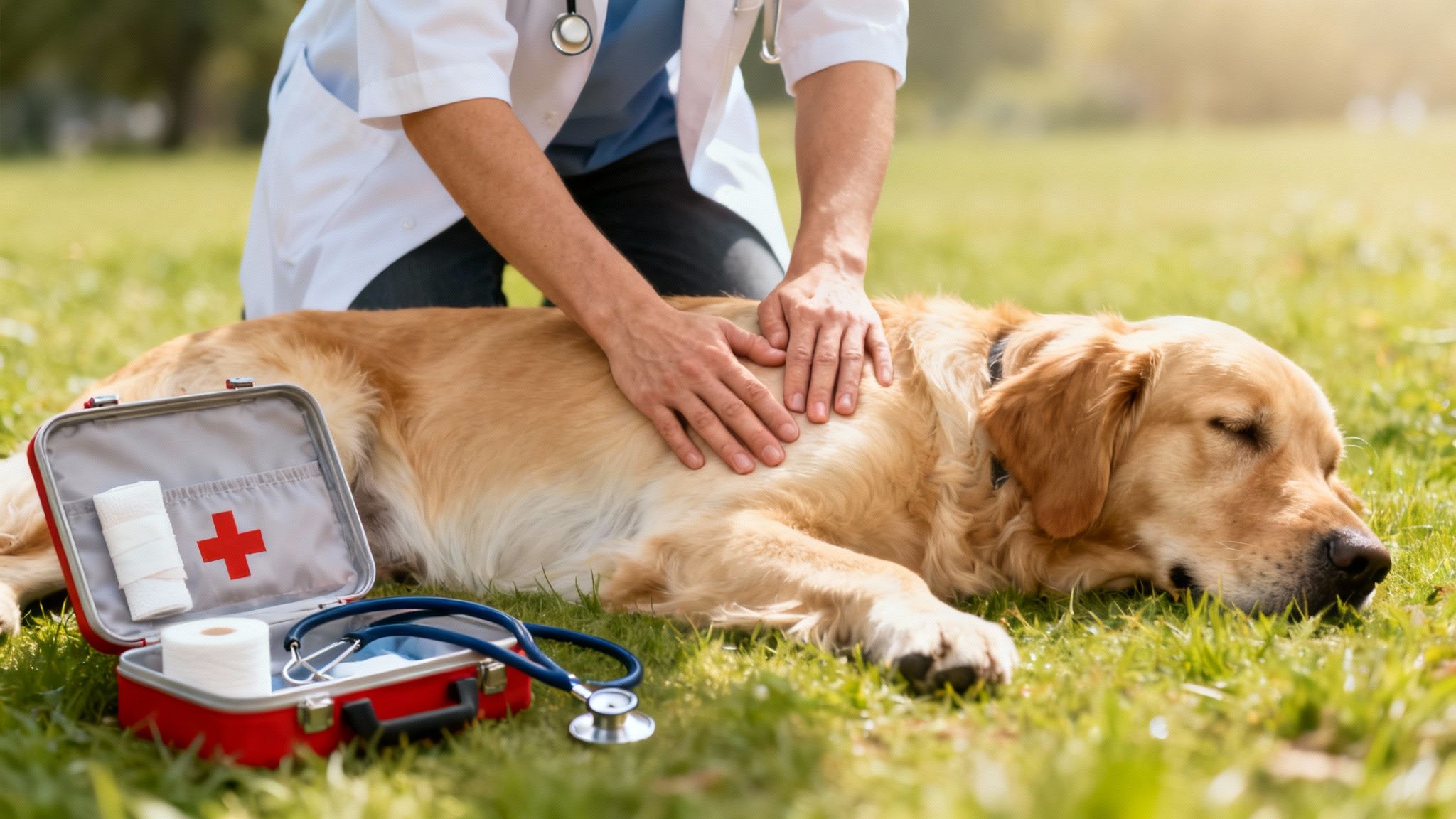
Mastering Canine First Aid Training for Every Pet Owner
Unlock essential life-saving skills with our guide to canine first aid training. Learn CPR, wound care, and how to handle emergencies with confidence.
Career Development
minutes
It’s a perfect day out, and then the unthinkable happens. A dog suddenly collapses from heatstroke or starts choking on a toy. In those terrifying moments, canine first aid training is what gives you the power to act, providing critical care in the precious time it takes to get to a vet. This isn’t just some niche skill for professionals—it’s a fundamental responsibility for anyone who truly loves and cares for dogs.
Why Canine First Aid Training Is an Essential Skill
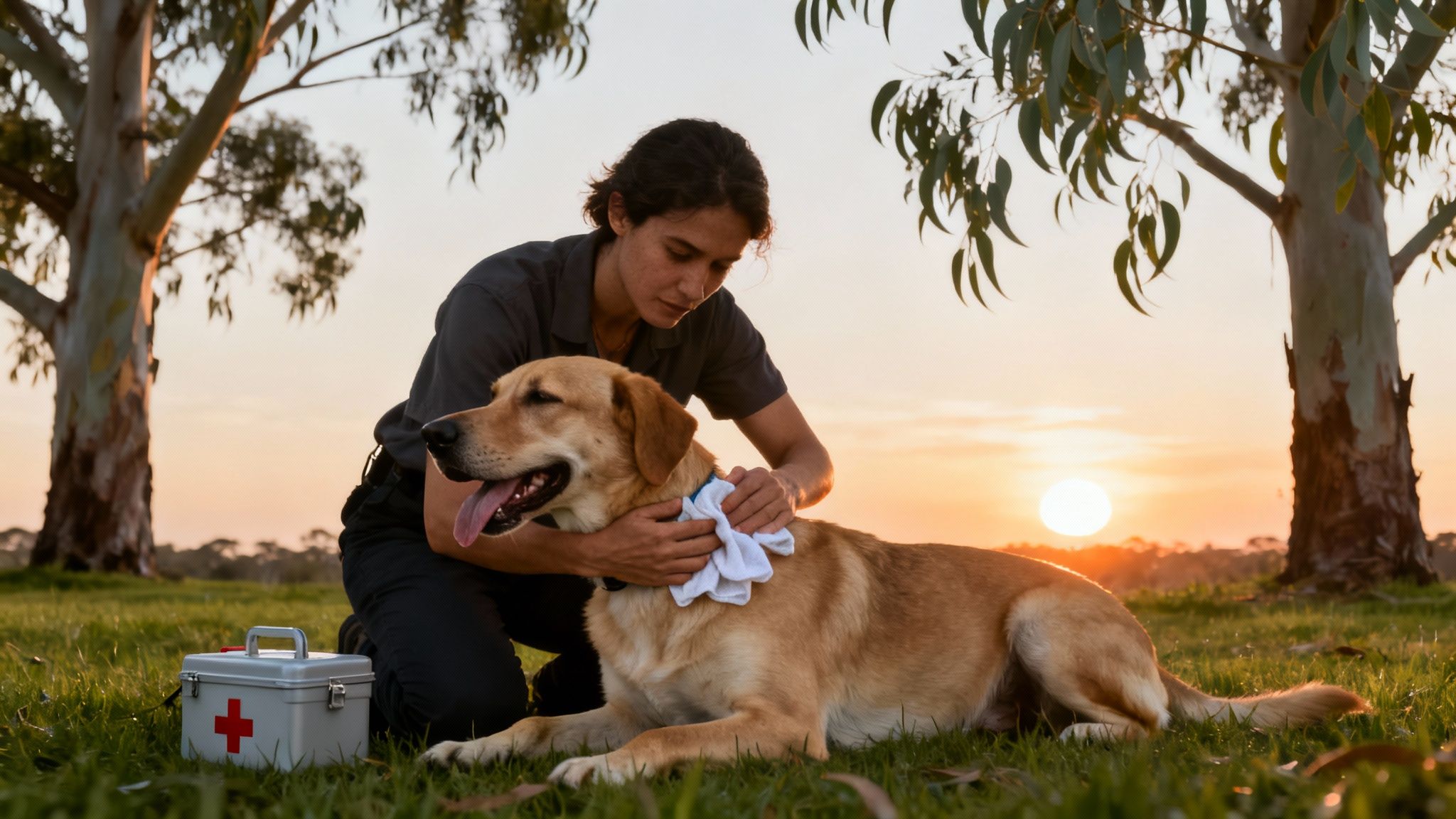
Imagine being the first responder for your furry best friend. It’s a powerful thought, but one that carries a heavy weight. Canine first aid training is the bridge between that heart-stopping panic and taking calm, purposeful action. It gives you a clear head and steady hands when every single second counts.
This kind of training goes far beyond basic pet care. It provides you with a proper framework for assessing and managing emergencies, ensuring you don't accidentally do more harm than good. It’s about knowing how to safely handle an injured animal that might be scared and in pain, and how to perform life-saving procedures until you can reach a veterinarian.
Preparing For Real-World Emergencies
Here in Australia, our dogs face a staggering array of emergencies every year. Heatstroke is one of the biggest killers during our scorching summers. In fact, around 40% of canine emergency presentations to vet clinics involve environmental hazards like heat exposure, which can escalate terrifyingly fast in temperatures that often soar past 35°C in states like Queensland and New South Wales.
This is exactly where your skills become not just helpful, but potentially life-saving.
Knowing how to recognise the early signs of heatstroke, control severe bleeding, or perform CPR can dramatically improve a dog’s chances of survival. It empowers you to be an advocate for their wellbeing in the most critical moments.
Confidence In a Crisis
Ultimately, the goal of canine first aid training is to build your confidence. The knowledge you gain helps you distinguish between a minor issue and a true emergency that needs immediate veterinary attention. This is a skill set that benefits every dog owner, but it's especially crucial for those working in professional roles.
Of course, being truly prepared means having the right tools on hand, not just the skills. Understanding 8 Essential Items You Should Have In Your Dogs Emergency Kit makes all the difference. And for those looking to take their professional journey even further, check out our guide on https://www.pracskills.com.au/blog/how-to-become-a-dog-trainer-australia.
So, What Exactly Is Canine First Aid?
When you hear "canine first aid," your mind might jump to complex medical procedures or something you see on TV vet shows. But the reality is much simpler, and honestly, far more empowering. Think of it exactly like the first aid courses you’d take for humans—it’s about becoming the first responder in an emergency, the calm presence who knows what to do before the professionals arrive.
This isn’t about performing surgery on the kitchen floor or trying to diagnose a rare illness. Far from it. Canine first aid training gives you the real-world skills to keep a dog stable, stop their condition from getting worse, and get them to a vet safely. You become the crucial link between the accident and expert medical care.
The goals are straightforward but incredibly important. You'll learn how to preserve life, prevent further injury, and give a dog the best possible chance of a full recovery. It’s all about swapping panic for a clear, actionable plan.
What You'll Actually Do as a First Aider
Let's make this real. Imagine you’re on a bushwalk and your dog gets a nasty cut on their paw. Without training, your first instinct might be to panic, maybe even make things worse by accident.
With first aid skills, you know exactly what to do. You’ll know how to safely muzzle a dog who might bite out of fear, how to properly clean the wound, apply the right pressure to stop the bleeding, and bandage it securely for the trip to the vet clinic. That's the difference.
You’re not trying to replace the vet; you’re making their job easier and giving your dog the best possible odds.
Canine first aid is the immediate care given to an injured or suddenly ill dog. It’s all about providing temporary, urgent help until a vet can take over, and it can genuinely make all the difference in the final outcome.
This training takes the mystery out of emergencies. Whether you’re dealing with a minor allergic reaction or a scary seizure, you learn to spot the signs, prioritise your actions, and use life-saving techniques. It’s about building a kind of muscle memory, so when the adrenaline kicks in, your hands already know what to do.
What First Aid Is Not
It’s just as important to understand where the line is. Being certified in first aid doesn't make you a veterinarian. You won't be diagnosing conditions, prescribing medication, or performing any invasive procedures. Trying to do so isn't just dangerous, it can also be illegal. The training is very clear about your role, making sure you act effectively but always within your scope.
Think of yourself as a paramedic for pets. A paramedic stabilises a patient at the scene and keeps them safe during transport, but they don't perform the surgery once they get to the hospital. Your role is identical: provide immediate, stabilising care on the way to the expert.
Canine First Aid vs Veterinary Care: A Clear Distinction
To make it crystal clear, let's break down the distinct but complementary roles of a first aid provider and a veterinarian. One can't fully succeed without the other in an emergency.
Ultimately, canine first aid training is an investment in being prepared. It turns you from a helpless bystander into a capable first responder, giving you the confidence and skills to protect the dogs in your care when they need you the most.
The Core Skills You Will Master in Your Training
A quality canine first aid course is so much more than theory. It's about equipping you with a powerful toolkit of life-saving skills you can actually use when things go wrong. Forget just memorising facts from a book; this is about building the muscle memory and confidence to act calmly and effectively when it matters most.
Think of it this way: you become the first line of defence in an emergency. The training gives you the ability to stabilise your dog and stop their condition from getting worse while you get them to a vet. Let’s dive into the essential, hands-on techniques you’ll learn, starting with the basics and moving through to critical situations.
Mastering Canine CPR and Rescue Breathing
One of the most intimidating yet vital skills taught in any proper canine first aid training is Cardiopulmonary Resuscitation (CPR). While you might know the basics for humans, applying it to a dog is a whole different ball game. The right training completely demystifies the process.
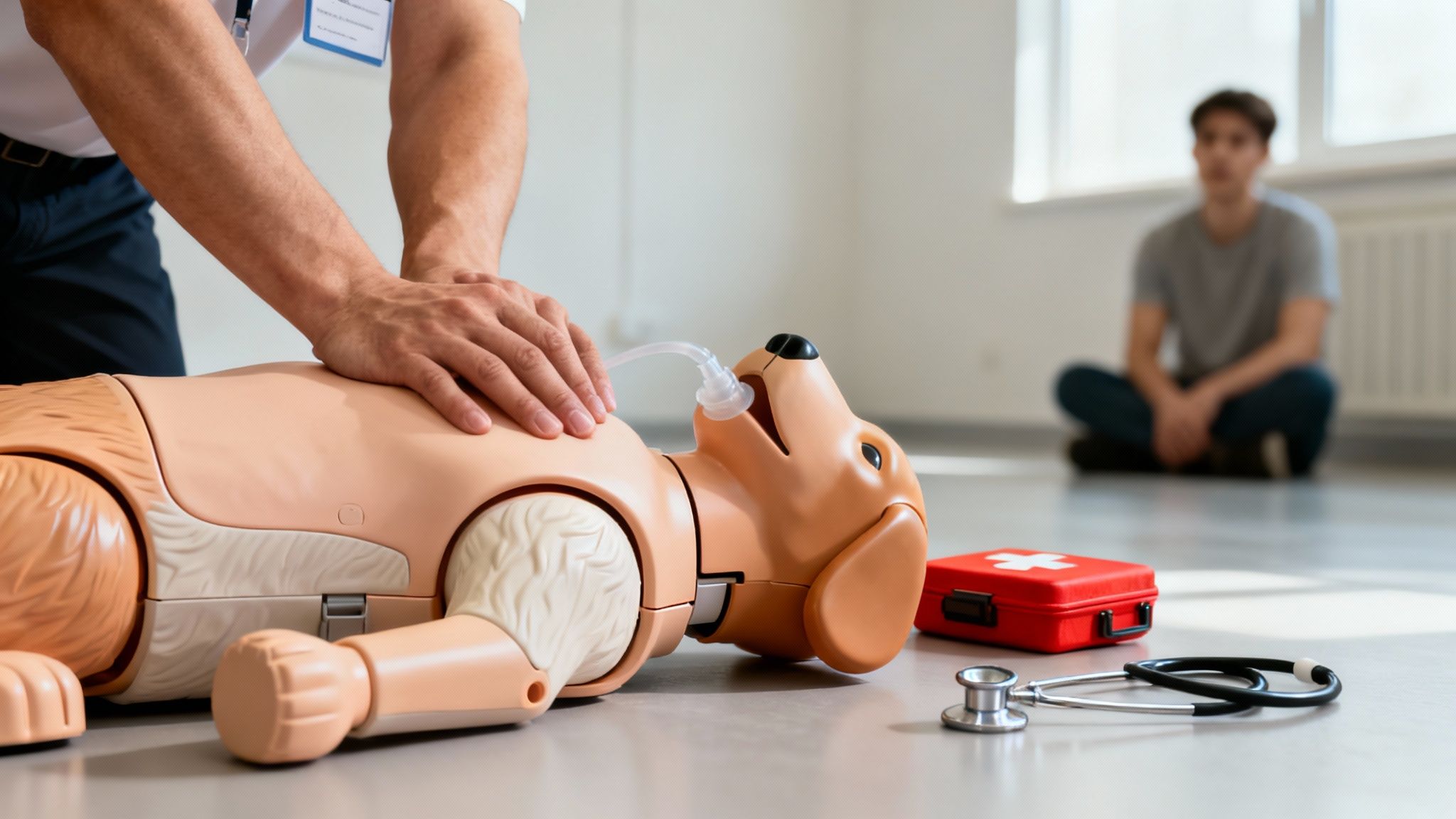
You'll learn how to accurately find a pulse and check for breathing on a dog, which is trickier than it sounds. Courses use realistic dog mannequins, giving you the chance to practise chest compressions with the right hand placement and pressure for dogs of all sizes, from a tiny Chihuahua to a massive Great Dane.
Crucially, you'll also master rescue breathing, understanding how to properly seal their muzzle to deliver effective breaths. It’s this hands-on practice that builds the confidence you need to perform under pressure, ensuring you can act decisively in a worst-case scenario.
Effective Wound Care and Bleeding Control
From a torn paw pad on a bushwalk to a much more serious injury, knowing how to manage wounds is a cornerstone of first aid. Your training will give you a clear, step-by-step approach for assessing and treating all sorts of injuries.
First, you'll learn how to clean wounds properly to minimise the risk of infection. More importantly, you'll gain the life-saving skills needed to control bleeding.
This includes:
- Applying Direct Pressure: Learning the correct technique using sterile gauze or a clean cloth to stop blood flow.
- Using Pressure Points: Identifying key arterial pressure points to slow severe bleeding in a limb.
- Proper Bandaging: Mastering how to apply pressure bandages that are tight enough to work but not so tight they cut off circulation.
These skills are invaluable, especially when you consider the statistics. Trauma from road accidents claims around 10,000 Australian dogs every year. In these situations, where fractures and wounds make up 35% of emergency cases, rapid actions like splinting and controlling bleeding can boost survival rates by 80% in that critical window before reaching a vet.
Recognising and Managing Life-Threatening Shock
Shock is a silent killer that can follow any serious injury or illness, yet many pet owners have no idea how to spot its subtle signs. It’s a life-threatening condition where the circulatory system fails, starving vital organs of oxygen.
A huge part of your canine first aid training is learning to identify the symptoms of shock.
You'll be taught to look for pale gums, a rapid but weak pulse, shallow breathing, and a general listlessness or confusion in the animal. Recognising these signs early is absolutely critical for a positive outcome.
Once you spot the signs, you'll learn the immediate steps to manage it. This involves keeping the dog warm, elevating their back legs to improve blood flow to the brain, and keeping them as calm as possible while you rush them to emergency care. This one skill can dramatically improve their chances.
Handling Common Australian Emergencies
While the first aid basics are universal, a truly valuable course is tailored to the specific dangers your dog might actually face here. In Australia, that means being prepared for a unique set of hazards that you just don't see in other parts of the world.
Your training will cover exactly how to manage these local emergencies:
- Snake Bites: You'll learn the crucial do's and don'ts, like how to apply a pressure immobilisation bandage correctly and why it's so important to keep the dog still to slow the venom's spread.
- Tick Paralysis: The training will teach you how to do a thorough tick search, recognise the progressive signs of paralysis, and understand the extreme urgency of getting to a vet.
- Heatstroke: You will learn to spot early warning signs, such as excessive panting and dark red gums, and master the correct cooling techniques to safely lower a dog's body temperature without overdoing it.
Beyond these major threats, the training will give you the knowledge to respond effectively to a range of other scenarios, including how to address common dog emergencies like vomiting and diarrhea before professional help is available. This practical, localised knowledge makes sure the skills you learn are directly relevant to your daily life, giving you a clear plan for the real dangers you might face on your next walk.
How Accreditation Elevates Your Pet Care Business
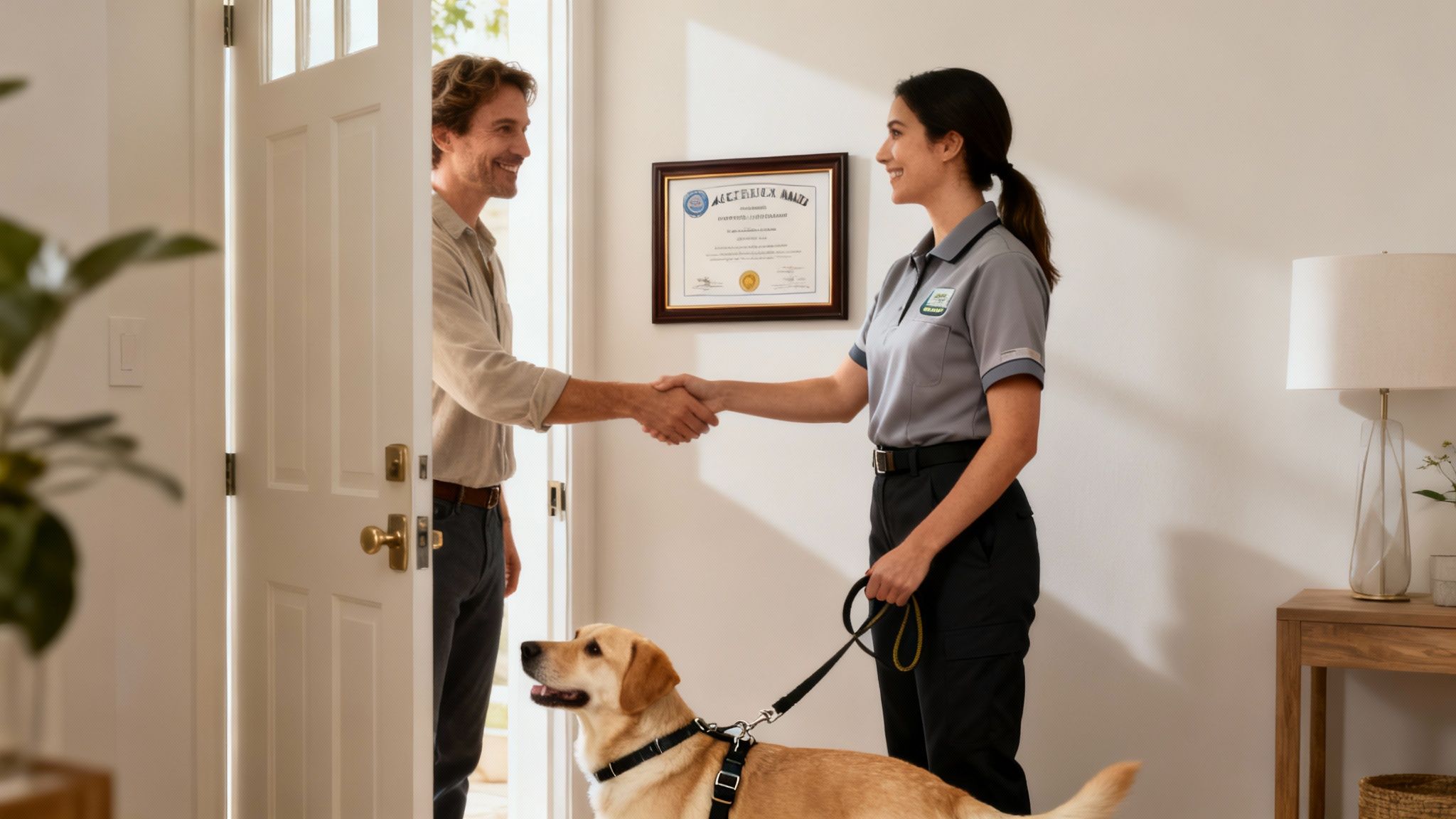
If you’re running a pet care business in Australia—whether you're a dog walker, groomer, or pet sitter—you know the competition can be fierce. In a crowded market, simply loving dogs isn’t enough to set your business apart. This is where formal, accredited canine first aid training becomes one of your most powerful assets.
It’s so much more than a piece of paper. Think of an accredited certificate as an instant signal of your professionalism and dedication. It tells potential clients that you’re serious about their pet's safety and have put in the work to handle an emergency.
This simple step immediately lifts you above casual hobbyists and less-prepared competitors. It positions you as a trusted expert who operates at the highest standard of care.
Building Unshakeable Client Trust
Imagine you’re choosing between two pet sitters. One says they’re "great with dogs." The other proudly displays an accredited Canine First Aid and CPR certificate right on their website. Who are you going to trust with your furry family member? It’s a no-brainer.
Accreditation offers tangible proof of your competence. It gives pet owners incredible peace of mind, knowing the person looking after their dog is not only caring but also highly capable. That trust is the absolute bedrock of a successful service business, creating loyal clients who re-book and rave about you to their friends.
In the pet care industry, trust is your most valuable currency. An accredited canine first aid certificate is a direct investment in building that trust, demonstrating a commitment to safety that clients can see and value.
This level of preparedness shows you’ve considered the worst-case scenarios and have a clear plan to manage them. It's a proactive approach to pet safety that says a lot about your professionalism and dedication to your craft.
A Powerful Marketing and Insurance Tool
Beyond building trust, that certificate becomes a key piece of your marketing. You can feature it front-and-centre on your website, social media profiles, and business cards. It’s a clear, compelling reason for new clients to choose you over anyone else.
On top of that, many professional liability insurance providers in Australia look very favourably on formal qualifications. Holding an accredited certificate can sometimes lead to better insurance premiums, and in some cases, it might even be a requirement to get covered. It shows insurers that you're a lower-risk client because you’re trained to mitigate and handle emergencies effectively.
Having a recognised qualification isn't just about personal skill; it's a strategic business move. It’s always a good idea to learn more about how to check for valuable accreditations and partnerships to ensure your training is properly recognised in the industry.
The Professional Edge for Business Growth
Ultimately, investing in accredited canine first aid training is an investment in the long-term health and growth of your business. It elevates your reputation, attracts discerning clients who are happy to pay for quality care, and cements your professional standing.
Here’s how it all comes together in real-world business benefits:
- Increased Credibility: You're seen as an expert, not just another animal lover.
- Competitive Advantage: It gives you a clear point of difference in a busy marketplace.
- Enhanced Client Confidence: Pet owners feel secure leaving their animals with you, leading to glowing reviews and more referrals.
- Professional Development: It proves your commitment to ongoing learning and maintaining the highest standards.
This training is an investment that pays for itself again and again—not just in a crisis, but in the day-to-day confidence it gives both you and your clients.
How to Choose the Right Canine First Aid Course

With more and more options popping up, picking a canine first aid training course that actually delivers can feel a bit overwhelming. How do you cut through the noise to find a program that gives you genuine, life-saving skills you can trust? It’s a big decision—the quality of your training directly shapes how confident and capable you'll be when a crisis hits.
The right course isn't about finding the cheapest or quickest option. It’s about finding practical, easy-to-digest instruction that you can actually remember and use under pressure. This guide will walk you through the key things to look for, helping you choose a high-quality program that fits your needs and gives you skills you can count on.
Evaluate the Course Content and Relevance
First things first, the curriculum has to be thorough and, most importantly, relevant to where you live. A generic course might spend ages on frostbite, but here in Australia, you’re far more likely to face a snake bite or heatstroke. You need a program built for Australian conditions.
A solid curriculum should always cover these core areas:
- Emergency Assessment: How to safely approach an injured dog and run through a primary survey to check vitals like breathing and circulation.
- Life-Saving Techniques: Hands-on instruction for canine CPR, rescue breathing, and what to do if a dog is choking.
- Wound and Bleeding Control: Skills for managing everything from minor cuts to serious arterial bleeds, including how to bandage properly.
- Common Australian Hazards: Specific modules on dealing with snake bites, tick paralysis, heatstroke, and common local poisonings.
A course's value isn't measured by how many topics it lists, but by how well it prepares you for the real-world emergencies you're most likely to encounter. Local relevance is non-negotiable.
Compare Delivery Formats and Learning Styles
How you learn best is a huge piece of the puzzle. Most providers offer two main formats: in-person workshops or online, self-paced courses. Each has its own perks, depending on your schedule and how you prefer to learn.
In-person workshops are brilliant for hands-on practice. There's nothing quite like getting direct feedback from an instructor as you practise CPR on a mannequin. If you thrive in a structured, interactive setting, this is probably the format for you.
On the other hand, online courses offer incredible flexibility. If you're juggling a job, family, or your own business, being able to learn at your own pace is a game-changer. Good online programs use detailed videos, animations, and downloadable guides to show you exactly what to do. The ability to re-watch a tricky procedure like applying a splint until it clicks is a massive plus. You can find excellent online options, like our comprehensive Certificate in Canine First Aid & CPR, designed for busy Australians.
Check for Accreditation and Reputation
Accreditation is your quality guarantee. It means the course has been vetted by an independent body and meets proper educational standards. For professionals in the pet industry, Continuing Professional Development (CPD) points are especially important, as they show a real commitment to staying on top of your game.
Before you sign up, do a bit of digging. Look for genuine student reviews and testimonials online. What are people really saying about their experience? A provider with a strong, positive track record is far more likely to deliver a course that's worth your time and money. A good reputation is built on clear communication, supportive instructors, and content that genuinely helps people succeed.
By carefully weighing up these factors, you can find a canine first aid training course that gives you the skills and confidence to protect the dogs in your care.
Your Canine First Aid Questions Answered
Taking the leap into canine first aid training is a fantastic move, whether you’re a devoted pet owner or a professional in the dog care world. But it's completely normal to have a few questions before you dive in. We’ve pulled together the most common ones we hear to give you clear, straightforward answers and help you feel totally confident about your next step.
Think of this as your final check-in before you get the skills to be a hero for the dogs in your life.
How Long Does a Canine First Aid Certificate Last?
This is one of the most important questions we get asked. In Australia, there isn't a single, government-mandated expiry date for canine first aid certificates. The accepted industry best practice, however, is to refresh your knowledge and skills every one to three years.
But why the refresher? Simple: veterinary medicine and first aid protocols are always getting better. A technique considered best practice a few years ago might have been updated with a more effective approach. Regular updates ensure your skills stay sharp, current, and genuinely life-saving.
Most quality courses will give you access to all the learning materials for at least 12 months, which is perfect for hopping back in for a quick review. For professionals like pet sitters or dog walkers, staying current is even more critical. Many Continuing Professional Development (CPD) programs require regular updates to keep your credentials valid, making a refresher course an essential part of your professional life.
Is an Online Course as Effective as In-Person Training?
This really comes down to your personal learning style and lifestyle, as both formats have their perks. But a high-quality online course can be just as effective as a face-to-face workshop, especially if you’re juggling a busy schedule.
The biggest win for online learning is its incredible flexibility. You can learn at your own pace, fitting lessons around work, family, or other commitments without having to worry about travel or sticking to someone else’s timetable.
A well-designed online course uses detailed videos, clear diagrams, and downloadable guides to walk you through practical skills like bandaging, splinting, and even CPR. The ability to pause, rewind, and re-watch a complex procedure as many times as you need is a massive advantage that you just don't get in a live class.
For self-motivated learners and professionals who need to get certified without hitting pause on their business, a comprehensive online program is an incredibly practical and effective solution.
Do I Need Prior Medical Experience to Enrol?
Absolutely not. This is a common myth that holds too many people back. A good canine first aid course is designed for everyone, from first-time dog owners with zero medical background to seasoned pros in the pet care industry.
The curriculum is built from the ground up. It starts with the absolute fundamentals, like how to check a dog’s vital signs (think heart rate and breathing) and how to safely approach an animal that’s injured and scared. From there, the course progressively builds on these basics, guiding you into more advanced skills like CPR and managing shock.
Everything is explained in simple, clear language, free from confusing jargon. The only thing you really need to bring is a genuine desire to learn how to keep dogs safe. The course will take care of the rest.
How Does This Certificate Help My Pet Sitting Business?
For anyone running a pet sitting, dog walking, or grooming business, an accredited Canine First Aid certificate isn't just a piece of paper—it's a complete game-changer. It’s a powerful tool for building trust, credibility, and a standout reputation.
Right away, it shows potential clients that you are serious and fully prepared to handle an emergency. In a crowded market, this is what sets you apart from the casual hobbyist. You can proudly display your certification on your website, social media, and flyers as a clear signal of your professionalism.
Beyond marketing, it can also be a key factor in securing professional liability insurance, sometimes even leading to lower premiums. Ultimately, this certificate gives your clients invaluable peace of mind and gives you the confidence to manage a crisis calmly and effectively, protecting both the dogs in your care and your hard-earned reputation.
At Prac Skills AU, we provide accredited, practical online courses designed for busy Australians. Our Certificate in Canine First Aid & CPR equips you with the life-saving skills you need, all at your own pace. Enrol today and gain the confidence to protect the animals in your care. Learn more and get started with Prac Skills.