February 3, 2026
.webp)

A Guide to Growing Australian Native Ferns
Discover the essential guide to growing Australian native ferns. Learn expert tips on identification, care, styling, and how to create a thriving fern garden.
Career Development
minutes
If you’ve ever wandered through a misty Australian rainforest, you’ve felt the ancient presence of native ferns. They’re more than just plants; they’re a direct link to Australia’s prehistoric past, survivors from the supercontinent of Gondwana. From the giant tree ferns that create a living canopy to the delicate fronds clinging to a damp rock face, these plants are foundational to our country's wild places.
Why Australian Native Ferns Belong in Your World
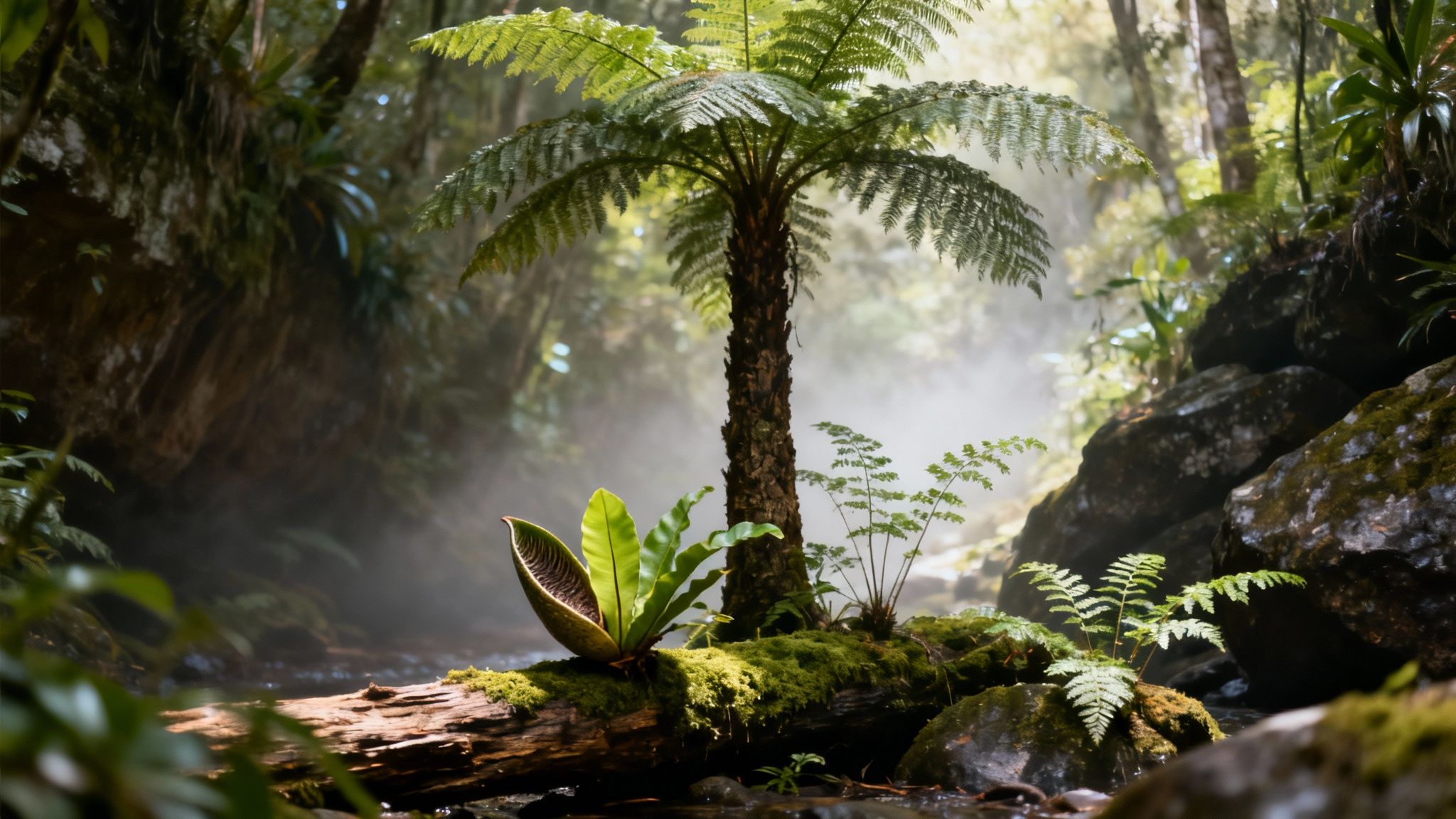
Step into the lush, ancient world of Australia's native ferns. These remarkable plants are far more than just background greenery; they are living fossils and the quiet architects of our natural landscapes. Their evolutionary story stretches back to when Australia was part of Gondwana, making them a deep connection to the continent's primeval history.
Their diversity is simply stunning. Picture the towering tree ferns creating a cathedral-like canopy in a misty gully, or the fine, lacy fronds of a maidenhair fern surviving on a shaded cliff. This variety isn't just for show—it speaks volumes about their incredible resilience and adaptability over millions of years.
A Rich and Unique Flora
Australia’s native ferns are a huge part of what makes our biodiversity so special. The country is home to around 460 species across 112 genera. What's truly remarkable is that 166 of these species—that's roughly 36%—are endemic, meaning you won’t find them growing wild anywhere else on Earth.
This uniqueness is a direct result of Australia’s long geographic isolation. If you want to dive deeper into the numbers, the Australian National Botanic Gardens' research on fern diversity is a fantastic resource.
"To cultivate a native fern is to connect with a piece of Australia's deep ecological history. These plants are not just decorations; they are storytellers of a time long past, thriving in the present."
When we bring these plants into our homes and gardens, we’re doing more than just adding a splash of green. We become custodians of a small piece of this incredible natural heritage. This guide is here to spark that curiosity and give you the hands-on skills to grow these natural wonders yourself.
We'll walk you through everything, from simple appreciation to confident care. Here’s what we’ll cover:
- Identification: Learn how to tell common species apart by their unique fronds and features.
- Cultivation: Master the right site and soil conditions for ferns to thrive, indoors and out.
- Propagation: Discover simple techniques to grow your collection from spores or divisions.
- Landscaping: Get inspired with creative ideas for styling your spaces with native ferns.
Whether you dream of creating a serene fern gully in your backyard or just want to add some natural elegance to your living room, understanding these plants is the first step. Let's get started.
How to Identify Common Australian Native Ferns
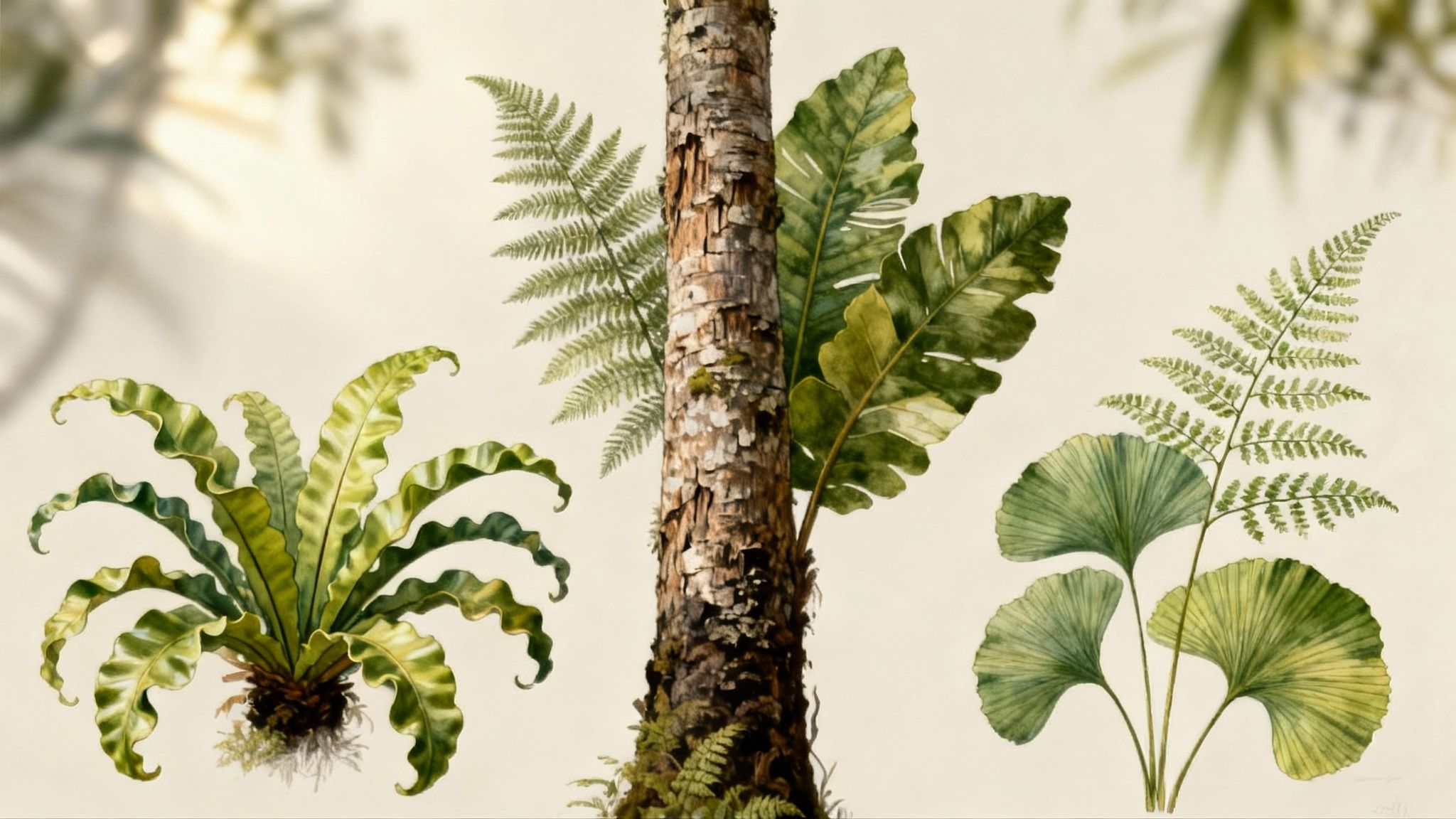
Learning to identify native Aussie ferns can feel a bit like trying to learn a new language. At first, you’re just looking at a sea of green. But once you know what to look for, you’ll start to see the distinct personalities in each plant. The good news is, you don’t need to be a botanist to get the hang of it.
Think of it like telling different gum trees apart. You don’t need to know the Latin name to see that one has smooth, white bark and another has that classic, stringy texture. Fern identification works the same way—you just need to train your eye to spot a few key features like frond shape, texture, and where it likes to grow.
The Canopy Dwellers: Epiphytes
Epiphytes are the clever opportunists of the plant world. Instead of putting roots down in the soil, they make their home high up on tree branches or rock faces, perfectly positioned to catch rainwater and falling leaves for nutrients.
The most iconic of these has to be the Bird's Nest Fern (Asplenium australasicum). Its name gives the whole game away. The fronds grow in a rosette, forming a central "nest" that brilliantly collects water and organic debris. Look for its wide, leathery fronds that are whole, not divided, a bit like bright green banana leaves.
Another absolute showstopper is the Staghorn Fern (Platycerium superbum). It’s a fascinating plant that produces two very different types of fronds:
- Shield Fronds: These are the sterile, papery, roundish fronds that clamp the fern to its host tree. They act as a protective shield for the roots and help catch food.
- Antler Fronds: These are the fertile fronds that everyone loves. They fork and arch outwards just like a magnificent set of antlers and can grow to be truly enormous.
These ferns are just made for vertical gardens or mounting on boards as living art, perfectly mimicking their natural treetop lifestyle.
The Forest Giants: Tree Ferns
Tree ferns are like living fossils, giving our wet forests that majestic, almost prehistoric atmosphere. They aren't true trees with woody trunks; their "trunk" is actually a thick, fibrous mass of roots and the bases of old, dead fronds.
The Rough Tree Fern (Cyathea australis) is one of the most common and toughest species you'll find. You can easily identify it by the rough, bumpy texture at the base of its fronds, which are covered in sharp, dark brown scales. It’s a relatively fast grower that can create an incredible statement in a shaded garden corner.
By contrast, the Soft Tree Fern (Dicksonia antarctica) has a much gentler feel. Its trunk is covered in soft, brown hairs, and the bases of its fronds are smooth to the touch. It’s a slower grower but is incredibly long-lived—some specimens have been around for several hundred years.
Tree ferns are a direct link to Australia's Gondwanan past. Their fossil records date back over 150 million years, meaning they were a food source for dinosaurs long before they became a feature in our gardens.
The Delicate Groundcovers
Spreading across the forest floor, groundcover ferns add a gorgeous layer of soft, intricate texture to the landscape. These species are typically smaller and more delicate, thriving in the dappled light and moist soil found under the canopy of larger trees.
The Maidenhair Fern (Adiantum aethiopicum) is perhaps the most beloved of all. It’s instantly recognisable with its delicate, fan-shaped leaflets that float on thin, wiry black stems. Its lacy appearance gives it an air of elegance, but be warned—it demands consistent moisture to stay looking its best.
Another popular choice is the Fishbone Fern (Nephrolepis cordifolia). It gets its common name from the way its small leaflets, or pinnae, are arranged so neatly along the central stem, just like a fish skeleton. It's incredibly hardy and spreads via underground runners, making it a fantastic choice for filling in bare, shaded spots in the garden.
Sometimes, just knowing a fern's general 'type' is half the battle in figuring out what it is. To help you get started, here's a quick cheat sheet for a few popular native species you're likely to encounter.
Quick Identification Guide for Popular Native Ferns
By breaking Australian native ferns down into these simple groups—canopy dwellers, forest giants, and groundcovers—identification becomes much less intimidating. You can quickly narrow down what you’re looking at based on where and how it's growing, turning a confusing wall of green into a collection of fascinating individuals.
Creating the Ideal Environment for Your Ferns
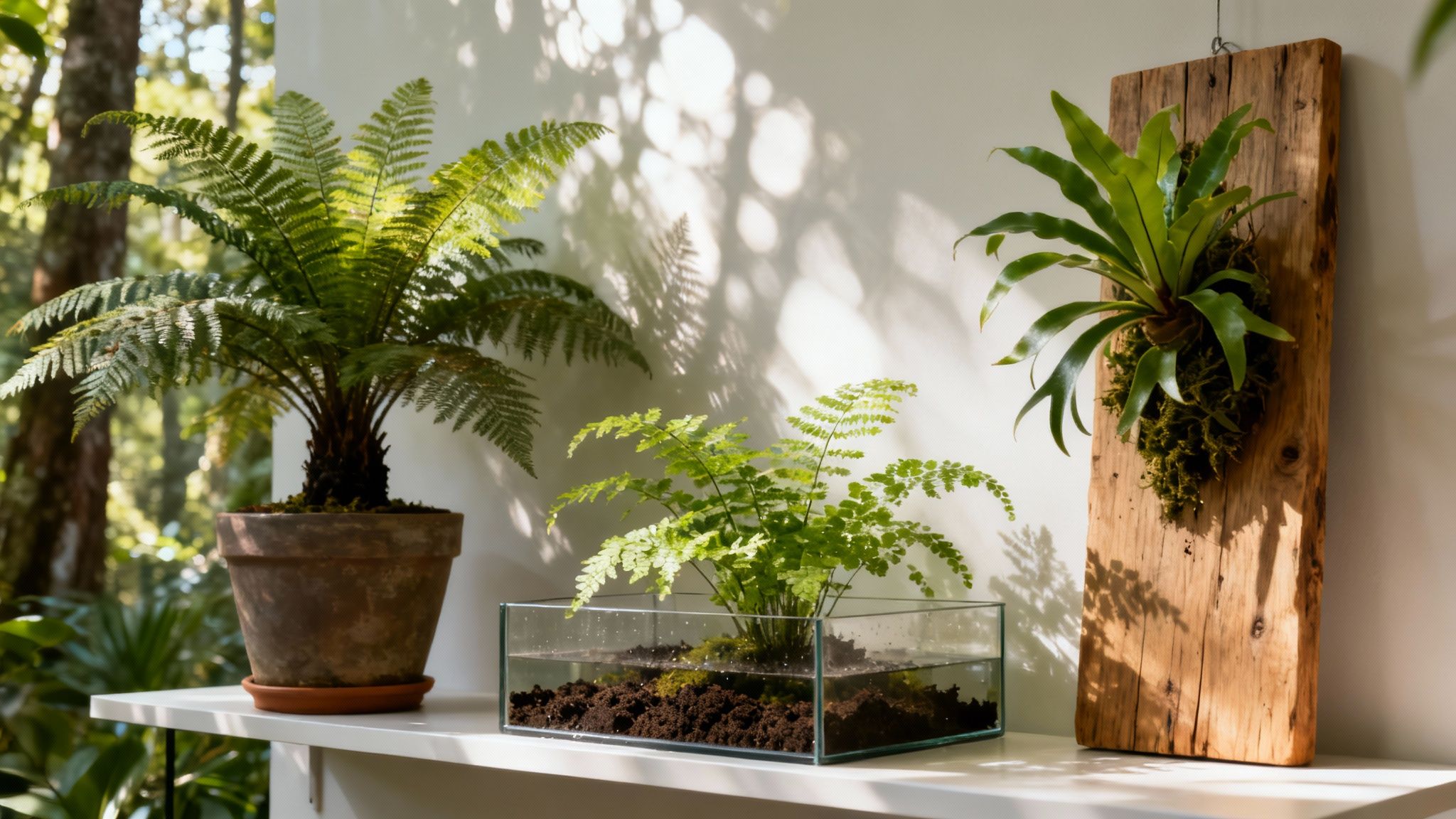
Here's the secret to growing truly spectacular Australian native ferns: it's not about complicated feeding schedules or fancy fertilisers. It's about being a good mimic. Your one job is to recreate the cool, damp, and sheltered world of a forest floor or a rainforest gully—the exact places where these plants evolved to thrive.
Think of yourself as an architect designing a custom home for your fern. If you get the core elements right—light, soil, water, and humidity—you're laying a solid foundation for a healthy plant, whether it lives indoors or in a shady garden spot. Get this right, and you’ll have a happier, more resilient fern and a much easier time as a gardener.
Understanding the Perfect Light
When you hear that ferns love "dappled light," just picture the way sunlight filters down through a dense canopy of trees. It's bright, but it's never harsh or direct. That's the sweet spot. Pop a fern in direct sun, and its delicate fronds will scorch and turn crispy brown in no time.
For an indoor fern, this might mean placing it near an east-facing window that catches the soft morning sun, or maybe a few feet back from a brighter north-facing window. Outdoors, the perfect home is tucked under larger trees or shrubs that act as a natural umbrella. Just be careful not to swing too far the other way into deep, dark shade; they still need enough light to photosynthesise and produce those lush, green fronds.
A common mistake is thinking low light means no light. Ferns are understory plants, but they absolutely need energy from the sun. Not enough light usually results in sad, leggy growth and fronds that look pale and yellowish.
Crafting the Ideal Soil Mix
Ferns can't stand heavy, compacted clay soil. It’s just not their thing. Back in their native habitat, they’re used to growing in rich, loose, and airy soil full of decomposing leaves and bark. This kind of soil is brilliant because it holds onto moisture without ever getting waterlogged, which is the number one enemy of fern roots.
Whether you're potting up a fern or planting one in the garden, your goal is a soil that's both moisture-retentive and free-draining. You can whip up a fantastic, all-purpose mix with just a few simple ingredients.
- Premium Potting Mix: Start with a high-quality, peat-free mix as your base (50%).
- Organic Matter: Mix in some good compost or well-rotted leaf mould (25%) for nutrients and water retention.
- Aeration: Finally, add perlite or coarse sand (25%) to keep things light and improve drainage.
This simple recipe does a great job of mimicking that loamy, humus-rich soil they love. To really help your native ferns flourish, it’s worth learning how to improve soil quality naturally, as this will create the perfect foundation for long-term health. Chucking a layer of organic mulch on top is also a game-changer. If you want to know what to use, you can explore the different https://www.pracskills.com.au/blog/types-of-mulch suitable for Aussie gardens.
Mastering Watering and Humidity
Humidity is probably the most critical piece of the puzzle, especially for those really delicate species like Maidenhair ferns. Most Australian homes are quite dry inside, thanks to heaters and air conditioners, which can suck the life out of fern fronds. At the same time, the soil needs to stay consistently moist—never let that root ball dry out completely.
Here are a few easy tricks to boost the humidity and nail your watering routine:
- Group Plants Together: Plants release moisture into the air as they "breathe." Huddling your ferns together with other houseplants creates a lovely, humid little microclimate for everyone.
- Use a Pebble Tray: Pop your pot on a shallow tray filled with pebbles and a little water. As the water evaporates, it raises the humidity right around your fern. The trick is to make sure the pot is sitting on the pebbles, not in the water.
- Mist Regularly: A quick spritz with a spray bottle every day or two gives a temporary humidity boost, just like morning dew in the forest.
- Water Correctly: Give your fern a good, deep drink until water runs out of the drainage holes. Then, leave it alone until the top inch or so of soil feels slightly dry to the touch before watering again. This keeps the roots happy without drowning them.
A Practical Guide to Fern Propagation and Care
Growing your collection of Australian native ferns is one of the most rewarding parts of the journey. Forget thinking of it as a complicated botanical experiment—it’s more like helping your plants start a family. With just a little patience, you can multiply your favourite species and turn one treasured fern into an entire clan.
For the home gardener, the two most straightforward methods are division and spore collection. Each technique works best for different types of ferns, so knowing which to choose is your first step. For clumping ferns like the classic Fishbone or delicate Maidenhair, division is your go-to. For others, like tree ferns, growing from spores is a fascinating process that lets you watch the entire fern life cycle unfold.
Multiplying Your Ferns by Division
Division is easily the quickest and simplest way to propagate most groundcover and clumping ferns. The best time to get your hands dirty is in early spring as new growth starts to poke through. This gives the new plants a full season to settle in and establish themselves.
- Prepare the Plant: Gently ease the parent fern out of its pot or lift it from the garden bed. Try to be as gentle as possible to avoid disturbing the roots too much.
- Separate the Clumps: Take a look at the root ball and you'll likely see natural sections or crowns. Often, you can just tease these apart with your fingers. If you're dealing with a tougher, more matted root system, a clean, sharp knife will do the trick to cut the clump into smaller pieces.
- Ensure Viability: This is the most important part. Each new piece must have a healthy chunk of rhizome (that's the thick, root-like stem) and at least one or two green fronds still attached. This ensures it has enough energy stored up to push out new growth.
- Replant Immediately: Pop each new division into a pot with a fresh, suitable soil mix. Give them a good drink of water and tuck them away in a humid, sheltered spot out of direct sun until you see signs of life.
This method gives you mature, established plants almost instantly, taking all the guesswork out of propagation.
Growing Ferns from Spores
Growing ferns from spores is definitely a longer game, but it’s an incredibly cool experience. Spores are those tiny, dust-like specks you find on the underside of mature fronds. They’re housed in little structures called sori.
To collect them, just place a frond that has ripe, brownish sori onto a piece of white paper. Leave it in a dry, still spot for a few days, and the spores will drop off, leaving a fine powder. You can then sow this "spore dust" thinly over the surface of a sterilised, moist seed-raising mix in a clean pot.
Cover the pot with a plastic bag or a lid to create a mini-greenhouse, find a spot with bright, indirect light, and then… you wait. It can take months, but eventually, you’ll see a green, mossy film develop on the soil. That's the very first stage of new fern life.
Long-Term Health and Seasonal Care
Beyond just making more ferns, consistent care is what keeps them looking lush and vibrant all year round. Pruning is dead simple: just snip off any brown or yellowing fronds right at their base. This not only keeps the plant looking tidy but also directs its energy towards fresh, healthy growth.
Repotting is generally needed every two years or so, or whenever the fern becomes root-bound. You'll know it's time when you see roots starting to creep out of the drainage holes or the plant's growth seems to have stalled. When you do repot, choose a container that's only slightly larger than the current one to avoid overwhelming the roots with too much soil. For more in-depth advice on plant maintenance, have a look at our guide on how to care for indoor plants.
A crucial part of keeping native ferns happy is implementing effective pest and disease management strategies to fend off any unwanted visitors. Proactive care is always your best bet. Regularly check the fronds for signs of common pests like aphids or scale, and tackle them early with an organic insecticidal soap.
Styling Your Home and Garden with Native Ferns
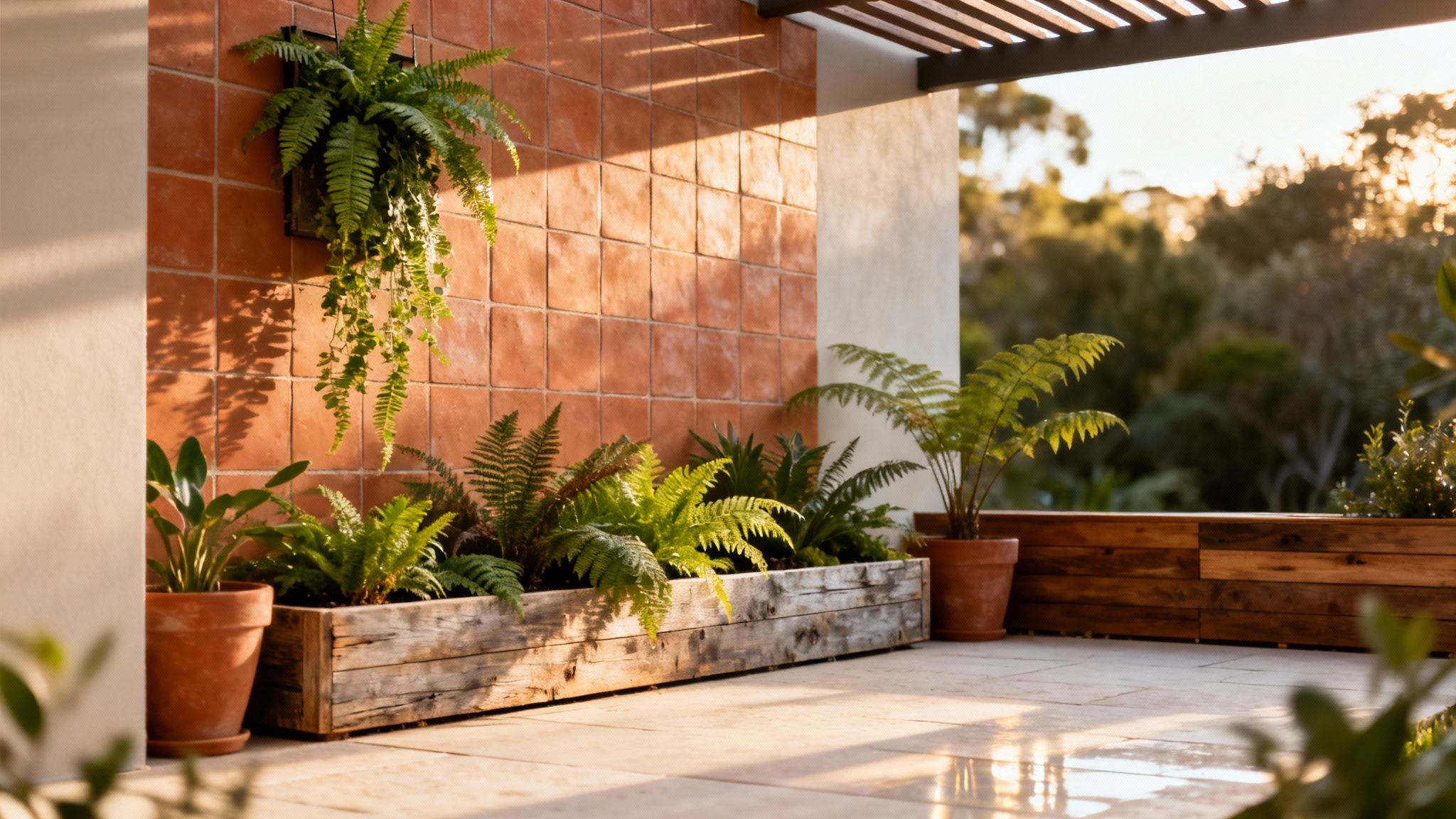
Once you've got a solid grasp of what Australian native ferns need to thrive, you can move past simple care and start getting creative. Styling with native ferns isn't just about filling an empty corner with a plant; it's about using their incredible forms, textures, and growth habits to set a mood or solve a design puzzle.
Think of your ferns as living sculptures. The bold, almost architectural fronds of a Bird's Nest Fern can create a stunning focal point in a minimalist room. In contrast, the soft, weeping habit of a Maidenhair Fern can instantly soften the hard lines of a modern bathroom. It’s all about playing matchmaker—finding the right fern for the right place to completely elevate your space.
Creating a Lush Outdoor Fern Gully
One of the most satisfying garden projects you can tackle is creating your own mini fern gully in a shaded, forgotten corner of your yard. It's the perfect way to transform a damp, neglected spot into a tranquil, green retreat that feels like a slice of a natural rainforest floor.
To get started, scout out an area that gets consistent dappled light. Under the canopy of established trees or along a shaded southern wall is often ideal. The key is protecting your future gully from the harsh afternoon sun.
- Layering is Everything: Begin with taller species at the back to create height and a sense of enclosure. The Rough Tree Fern (Cyathea australis) or Soft Tree Fern (Dicksonia antarctica) are perfect for this.
- Fill the Mid-Ground: Next, bring in mid-sized clumping ferns like the Rasp Fern (Doodia aspera) to add chunky texture and fill out the middle space.
- Add Delicate Groundcovers: Finish it off with spreading groundcovers. The Fishbone Fern (Nephrolepis cordifolia) or Gristle Fern (Blechnum cartilagineum) will create a lush, green carpet that beautifully ties the whole design together.
The goal is to build layers of green, just as you would find in nature. This approach not only looks beautiful but also helps create a humid microclimate where every plant helps support the others.
Bringing Greenery Indoors with Style
Indoors, native ferns bring a palpable sense of calm and a vital connection to the natural world. They're incredibly versatile and can slot into just about any interior design style, from bohemian to contemporary. The trick is to think beyond simply plonking a pot on a windowsill.
For anyone looking to really deepen their skills, completing a Certificate in Indoor Plant Styling can provide the structured knowledge to turn a passion into a professional service.
The Bathroom Oasis
Bathrooms are often the dream indoor environment for ferns that love humidity. The steam from showers creates a perfect microclimate that species like the delicate Maidenhair Fern absolutely adore. Pop one on a vanity or hang a basket fern from the ceiling for an instant spa-like vibe.
The Vertical Garden Feature
Epiphytic ferns like the mighty Staghorn (Platycerium superbum) or Elkhorn (Platycerium bifurcatum) are born for vertical displays. Mounting one on a piece of reclaimed timber creates a breathtaking piece of living art that makes a bold statement on any wall. This technique brilliantly mimics their natural habit of growing on tree trunks in the wild.
Patios and Balconies
Even a tiny urban balcony can become a green sanctuary. Grouping several potted ferns of varying sizes and textures creates a dense, jungle-like effect that feels incredibly immersive. Use deep containers to give their roots plenty of room and protect them from drying out too quickly. Tucking a few smaller pots of Maidenhair or Fishbone ferns around the base of a larger potted tree fern creates a cohesive, layered look that maximises impact in a small space, turning any outdoor area into a private, leafy escape.
When it comes to bringing Australian native ferns into your garden, there's a responsibility that goes far deeper than just good horticulture. You're becoming a custodian of our unique, and often fragile, ecosystems.
The golden rule is refreshingly simple: always, always get your ferns from a reputable nursery. Never be tempted to take them from the wild.
Wild harvesting, which is often illegal, can be absolutely devastating. When you remove even a single plant, you're disrupting a delicate local habitat, impacting the wildlife that relies on it, and potentially pushing a rare or endangered species one step closer to disappearing forever. Poaching is a very real threat to many native plants, and by choosing to buy from a legitimate source, you're taking a stand against this destructive trade.
The Hidden Dangers of Wild Collection
Beyond the obvious harm to wild populations, there are plenty of other risks that come with "rescuing" a plant from the bush. When you dig up a plant from its natural home, you can accidentally bring unwanted passengers along with it—pests, diseases, or even the seeds of invasive weeds.
This can have disastrous consequences, harming the plants you already have or, even worse, escaping into your local environment.
Think of it this way: choosing a nursery-grown fern is a conscious decision to support sustainable horticulture. It’s your guarantee that the plant you bring home is healthy, disease-free, and hasn’t been ripped out of a habitat where it was playing a vital ecological role.
The Australian plant trade also underscores why making informed choices is so important. Alongside our incredible native species, a lot of introduced plants are sold, and some of them pose a serious invasion risk. In fact, research shows that some traded ferns, like the common Adiantum raddianum, have a high chance of escaping gardens and naturalising in the bush, where they out-compete our native flora.
By focusing on Australia's own endemic species, you help build a sustainable market that values and protects our unique natural heritage. If you're curious, you can learn more about the complexities of Australia's fern trade to see the bigger picture.
How to Find an Ethical Source
Finding a responsible supplier is actually easier than you might think. Your best bet is to look for nurseries that specialise in Australian native plants. These growers are usually passionate about conservation and can give you a wealth of information about a plant's origin and how to care for it.
Here are a few green flags to look out for:
- Proper Labelling: Good growers will always label their plants clearly with both the common and the scientific name.
- Healthy Plants: The ferns should look vigorous and well-cared-for, with no signs of pests or disease.
- Knowledgeable Staff: The people working there should be able to confidently answer your questions about where the plant comes from and its ideal growing conditions.
Making these ethical choices does so much more than just help you build a beautiful fern collection. You're actively investing in the preservation of Australia's incredible biodiversity, making sure these ancient, beautiful plants will be around for generations to come.
Your Top Native Fern Questions Answered
Even the most seasoned plant lovers run into a few hurdles now and then, and Australian native ferns are no exception. Let's tackle some of the most common questions that pop up, giving you clear, straightforward answers to get your ferns thriving again.
Why Are My Maidenhair Fern Fronds Turning Brown and Crispy?
Ah, the classic Maidenhair dilemma! If you've ever asked this, you're in good company. This issue almost always comes down to two culprits: low humidity and inconsistent watering. These ferns naturally grow in deeply sheltered, damp forest gullies, so they're programmed to expect constant moisture in the air and soil.
Your mission is to recreate that humid environment. A simple trick is to place the pot on a pebble tray filled with water. You could also mist the fronds daily or cluster it with other houseplants to create a little humid microclimate. When it comes to watering, the key is consistency. Keep the soil moist but never waterlogged. Letting it dry out completely, even just once, can spell the end for its delicate fronds.
Are Australian Native Ferns Safe for My Pets?
A fantastic question for any responsible pet owner. The great news is that many of our most popular Australian native ferns are considered non-toxic to cats and dogs. This makes them a brilliant, worry-free choice for greening up a home with furry family members.
Some well-known safe options include:
- Bird's Nest Fern (Asplenium australasicum)
- Fishbone Fern (Nephrolepis cordifolia)
- Staghorn and Elkhorn Ferns (Platycerium species)
Still, it's always smart to double-check the specific fern you're bringing home. While most common natives get the green light, some exotic fern varieties sold in nurseries can be toxic. When in doubt, stick with a verified non-toxic native species for total peace of mind.
Can I Really Grow Australian Tree Ferns on a Balcony?
Absolutely! A potted tree fern can turn an ordinary balcony into a lush, jungle-like escape. Species like the Rough Tree Fern (Cyathea cooperi) or the Soft Tree Fern (Dicksonia antarctica) can live quite happily in large pots for many years.
The secret here is scale. You'll need a large, deep container to give the root system enough room to grow and ensure excellent drainage. You’ll also need to be extra vigilant with watering, as pots on a sunny or windy balcony dry out far more quickly than garden beds.
To keep them happy outside their natural environment, a regular feed with a balanced liquid fertiliser during the spring and summer growing season is a must. This provides the essential nutrients they'd normally get from the forest floor.
What’s the Best Way to Water My Indoor Ferns?
The golden rule for watering most native ferns is consistently moist, never soggy. It’s a fine line to walk, but getting it right is crucial. Overwatering is just as deadly as underwatering and is a fast track to root rot—one of the biggest fern killers out there.
Water your fern thoroughly until you see water flowing freely from the pot's drainage holes. This ensures the entire root ball gets a good drink. Then, don't water it again until the top inch or two of the soil feels slightly dry to the touch. You’ll find you need to water less often in winter when the plant's growth naturally slows down. Pro tip: using rainwater or filtered water is a great move, as it prevents mineral salts from building up in the soil over time.
Ready to turn your passion for plants into a professional skill? Prac Skills AU offers a range of online, self-paced courses, including our popular Indoor Plant Styling certificate, designed specifically for Australians. Learn more and enrol today at https://www.pracskills.com.au.