February 3, 2026
.webp)
Graphic Design Courses: Elevate Your Skills and Career
Explore top graphic design courses and compare certificates, diplomas, and degrees to boost your career. Enroll today and start learning.
Career Development
minutes
A graphic design course is your ticket into a seriously creative career, teaching you the art of communicating ideas visually with colour, typography, and imagery. These programs cover everything from short online certificates for grabbing some quick, practical skills to comprehensive university degrees for a deep dive into design theory.
Your First Step Into a Creative Career
Thinking about a career in graphic design can feel like standing in front of a blank canvas—it's exciting, but maybe a little intimidating. The good news? It's more accessible than ever, especially for busy Australians juggling work and life. This guide is your roadmap, whether you're a small business owner who needs to whip up your own visuals, a professional looking to add a new skill to your toolkit, or an aspiring freelance designer.
Our goal is to pull back the curtain on the world of design education. We’ll help you find a course that fits your budget, schedule, and, most importantly, your ambitions. We'll walk through the different learning paths available and show you how to turn that creative spark into a practical, in-demand skill set.
Finding Your Path in Design
Choosing a course is like picking the right tool for a job. You wouldn't use a paintbrush to hammer a nail, right? In the same way, your personal and professional goals will point you toward the best educational path.
- For the Small Business Owner: A short, hands-on course can get you creating sharp social media graphics and marketing materials fast. It gives you control over your brand’s visual identity without a massive time commitment.
- For the Career Changer: A diploma or an intensive online program is perfect. These give you the structured learning and portfolio pieces you'll need to apply for junior designer roles with real confidence.
- For the Aspiring Art Director: A university degree offers that deep dive into design theory, history, and critical thinking. It builds a solid foundation for taking on leadership roles in the creative industry.
Understanding these differences is the first step to making a smart choice. The right program doesn't just teach you software; it teaches you how to think like a designer and solve visual problems like a pro.
By aligning your education with your specific goals, you transform learning from a simple task into a strategic investment in your future. It’s about gaining not just skills, but the right skills for the job you want.
At Prac Skills, we're all about providing practical, job-ready education that actually fits into your life. For instance, our range of creative arts courses is designed specifically with Australian learners in mind, offering self-paced modules you can access anytime. This approach empowers you to gain valuable skills that can open new doors and reshape your professional journey, one design at a time.
Is Graphic Design a Good Career Choice in Australia?
Thinking about investing in your education is a big step, and it's smart to ask the big question: is it actually worth it? When it comes to graphic design, the answer is a definite yes. The demand for skilled designers in Australia isn't just a hunch; it's a solid, growing force that's reshaping industries right across the country.
From nimble tech startups to established retail giants, businesses of all shapes and sizes now get it: strong visual communication is non-negotiable for success. This simple fact is driving a huge surge in demand. Think about it—every website you visit, every app on your phone, and every ad you scroll past was brought to life by a designer. As companies fight for your attention, the need for professionals who can cut through the noise with compelling visuals has never been higher. This creates a stable and genuinely exciting career path for anyone with the right creative and technical skills.
The Numbers Don't Lie
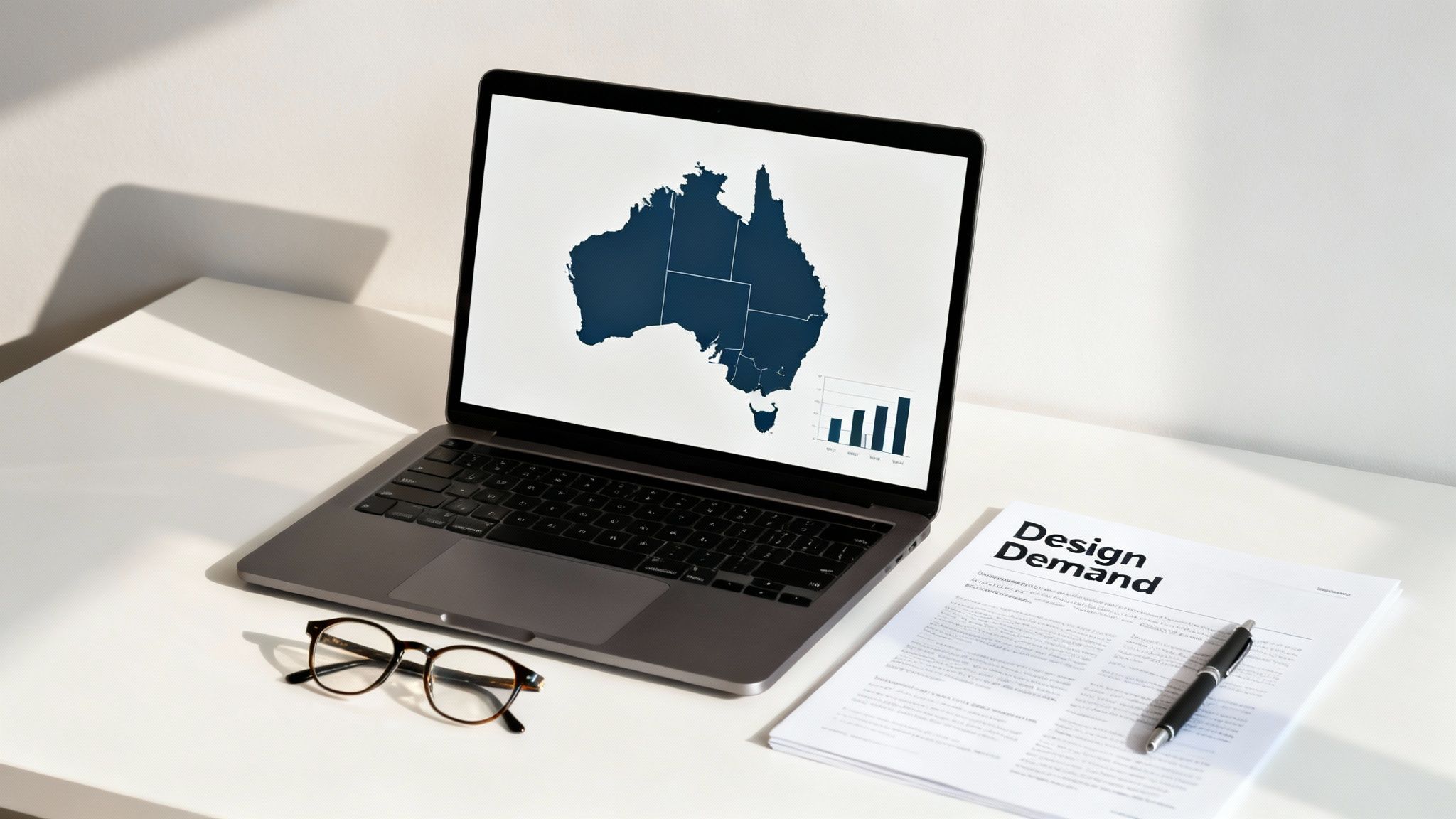
This isn’t just a feeling in the air; the stats back it up. Australia’s creative sector is buzzing with employment growth, particularly in roles tied to digital media and branding. Businesses are on the hunt for designers who can help them build a powerful online presence and connect with customers in a way that feels authentic.
In fact, the Australian Government projects an impressive 21.7% increase in demand for graphic designers between 2021 and 2026. That translates to an estimated 13,900 new job opportunities—a clear sign of a healthy and expanding profession. This growth isn't just happening in one city, either. It’s spread across the country’s biggest economic hubs, with New South Wales leading the way (37.7% of jobs), followed closely by Victoria (31.4%) and Queensland (16.6%).
If you want to dig deeper into the industry's potential, check out these graphic design career insights in Australia. The data is clear: pursuing a graphic design course is a strategic move that lines up your skills with a documented, growing market need.
What a Modern Designer Actually Does
The role of a graphic designer has exploded far beyond just whipping up logos. Today, it’s a dynamic career with all sorts of specialisations, meaning you can find a corner of the industry that perfectly fits your interests and strengths.
A modern design career could see you working in:
- User Interface (UI) Design: Crafting the look and feel of websites and apps to make them beautiful and easy to navigate.
- User Experience (UX) Design: Focusing on the entire user journey, making sure a product is not just usable but genuinely enjoyable.
- Brand Identity Design: Building the whole visual world for a company—logos, colour palettes, typography—to tell a consistent and compelling story.
- Motion Graphics: Bringing static designs to life with animation for videos, social media, and ads.
This evolution means there are more paths to a successful career than ever before. Whether you see yourself working in-house for a big brand, joining a buzzing agency, or striking out on your own, the opportunities are there for the taking.
A career in graphic design is no longer just about artistic talent; it's about becoming a visual problem-solver. Companies hire designers to help them communicate more effectively, and that skill is a valuable asset in any industry.
Thriving as a Freelancer
One of the biggest draws of a design career is the incredible potential for freelance work. The gig economy is booming in Australia, and designers are perfectly placed to take advantage of it. Businesses constantly need project-based help—from a new brochure to a complete website redesign—without the commitment of a full-time employee.
This gives you the freedom to take control of your career, pick the projects that truly excite you, and build a work-life balance that actually works for you. A solid foundation from a quality graphic design course provides the portfolio and confidence you need to land your first clients and build a sustainable freelance business. It's a career path that offers both creative fulfillment and true professional freedom.
How to Choose the Right Graphic Design Course
With a sea of graphic design courses out there, figuring out which one to pick can feel pretty overwhelming. Let's cut through the noise. This is your guide to making a smart decision that actually lines up with what you want to achieve.
Think of it like choosing the right tool for a job. A sledgehammer and a scalpel are both useful, but you wouldn't use one where you need the other. The key is to start with your end goal in mind. Are you hoping to quickly design a logo for your new business, or are you aiming to be an art director in five years? Nailing down that answer is the single most important step.
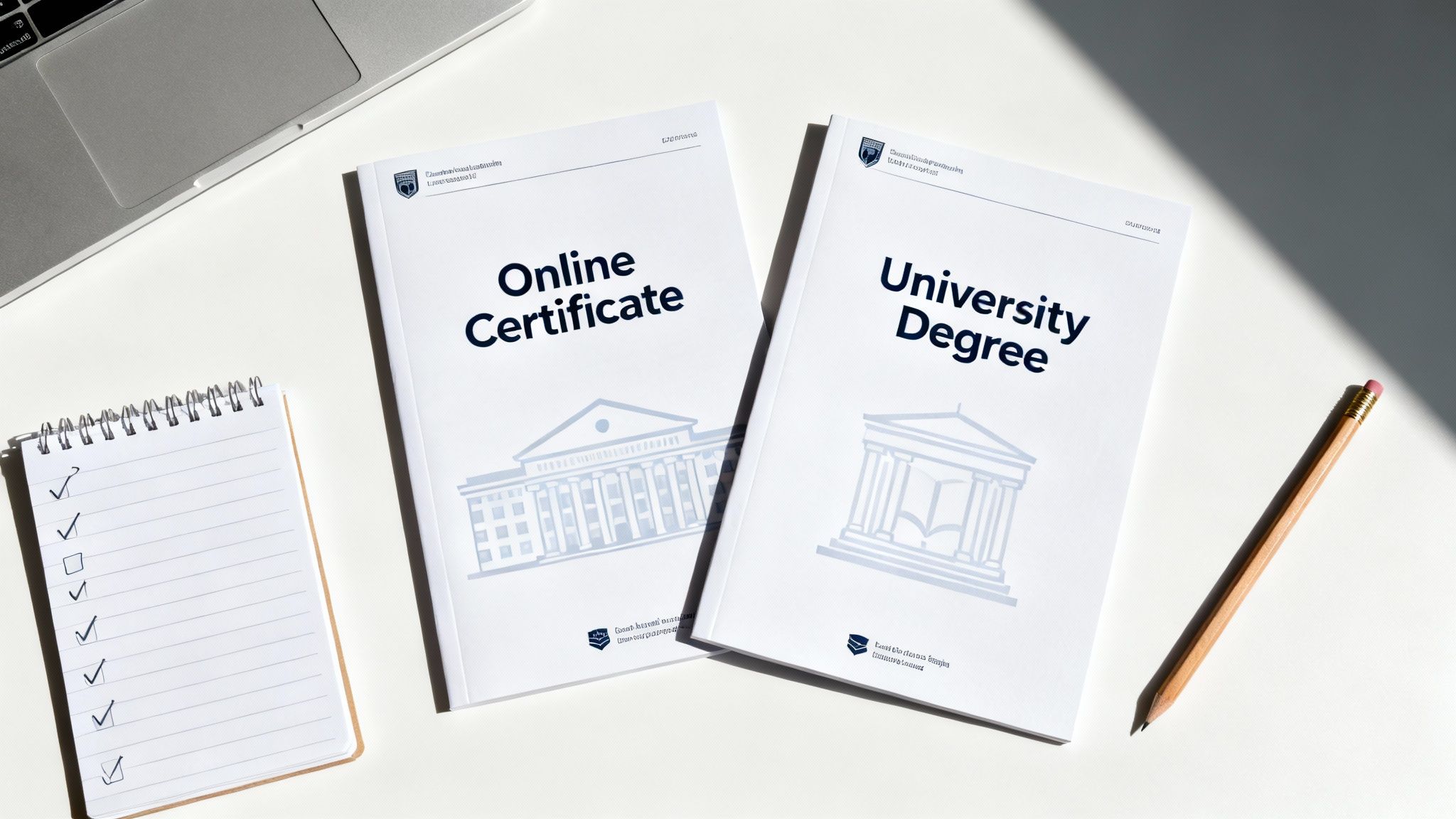
Match Your Goal to the Right Course Type
In Australia, learning paths generally fall into a few key categories, and each is built for a different purpose. Getting your head around these will help you invest your time and money where it counts.
Short Online Certificates: This is your fast track to practical, job-ready skills. Perfect for small business owners, marketers, or anyone who needs to start creating quality visuals right now without the long-term commitment of a formal degree. They get straight to the point, focusing on essential software and design principles.
Vocational Diplomas (TAFE or Private College): A diploma digs deeper, offering a more structured education than a certificate. It’s a fantastic middle-ground option that equips you with a solid portfolio and the credentials to land junior designer roles in agencies or in-house teams.
University Degrees (Bachelor's or Master's): If you're after a deep, theoretical understanding of design, this is your path. A degree is ideal for aspiring art directors, design managers, or academics. It covers design history, critical thinking, and advanced concepts alongside the practical stuff.
To help you visualise the options, here's a quick comparison of what you can expect from the different graphic design courses available in Australia.
Comparing Graphic Design Course Options in Australia
Each path offers unique benefits, so the "best" one really depends on where you are now and where you want to go.
Think About Your Learning Style and Budget
Beyond your goals, your personal preferences and financial situation are huge factors. Do you thrive in a structured classroom with firm deadlines, or do you need the freedom to learn at 2 AM after the kids are asleep?
Self-paced online courses, like the ones we offer at Prac Skills, are built for busy Australians who need to fit learning around their lives. This model gives you the power to move at your own speed without the pressure of a rigid schedule.
And of course, there's the budget. Costs can range from a few hundred dollars for a focused online certificate to tens of thousands for a university degree. It's vital to find a course that gives you the value you need without causing financial stress. Thankfully, many providers offer flexible payment options, making a great education more accessible. By understanding what different Australian accredited online courses offer, you can make a much more informed decision.
Choosing a graphic design course isn't about finding the "best" one. It’s about finding the one that is best for you—your life, your budget, and where you see yourself in the future.
Key Questions to Ask Before You Enrol
Before you hit that "enrol" button, take a moment to ask yourself a few final, clarifying questions. This quick check-in will make sure you’re making a choice you feel confident about.
- What skills do I really need to learn right now? (e.g., Adobe Illustrator for logos, Canva for social media posts).
- How much time can I honestly commit each week? Be realistic to avoid burning out.
- What's the main thing I need to get from this course? (e.g., a professional portfolio, a formal qualification, CPD points).
- Does the course focus on practical, real-world projects? The best learning comes from doing things you can actually use.
- What kind of support is there if I get stuck? Look for access to instructors, student communities, or good resource libraries.
By walking through these questions, you can filter out the options that aren't a good fit and zero in on the course that will truly help you get where you want to go.
What Skills You Will Actually Learn
Ever wondered what really happens inside a graphic design course? Let's pull back the curtain. A quality course isn’t just about learning software; it’s about learning a new way of seeing the world and solving visual puzzles. It gives you the "why" behind every creative choice, transforming you from someone who just makes things look nice into a strategic visual communicator.
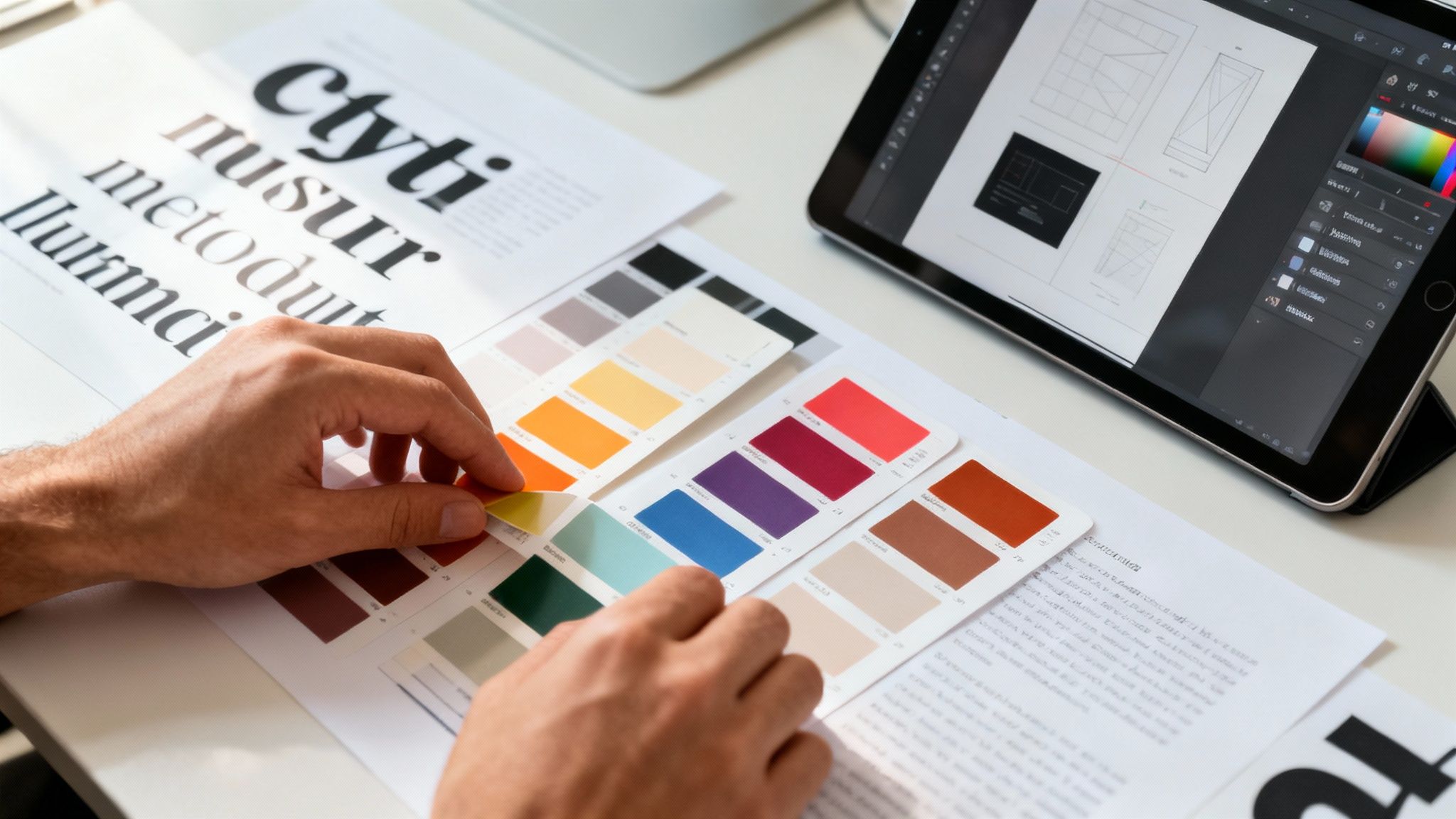
The journey starts by building a rock-solid foundation. You'll move beyond personal taste and start speaking the universal language of design. This means truly understanding how specific colours can trigger emotions, why certain fonts feel authoritative while others feel playful, and how to arrange elements on a page to guide a viewer's eye exactly where you want it to go.
Mastering the Core Building Blocks
Before you can dream up a stunning logo or a professional website, you need to get comfortable with the fundamentals. At the heart of any decent graphic design education is learning and applying the fundamental principles of design, which essentially act as the grammar for your visual language.
You can expect to cover these essential areas:
- Colour Theory: This is more psychology than your old primary school art class. You’ll learn how to build harmonious colour palettes and use them to influence mood and perception—an absolutely crucial skill for branding and marketing.
- Typography: Here you'll discover the art of arranging type. You’ll get skilled at selecting and pairing fonts that boost readability and convey a specific personality, whether it's for a corporate report or a music festival poster.
- Layout and Composition: This is all about creating balance, flow, and hierarchy. It’s the skill that ensures your designs are clear, organised, and actually get their intended message across effectively.
These concepts are the bedrock of everything you will ever create. They are the rules you have to learn inside and out before you can start to creatively break them.
Gaining Technical Software Proficiency
Of course, theory needs a practical outlet. A huge part of any modern graphic design course is getting hands-on with the industry-standard tools that bring your ideas to life. This means diving deep into the powerful software suites that professional designers use every single day.
Think of design software as your digital toolbox. The more tools you master and the better you understand how they work together, the more creative and complex projects you can confidently take on.
You'll typically gain proficiency in programs like:
- Adobe Illustrator: The absolute go-to for vector graphics. This is where you’ll build logos, icons, and illustrations that can be scaled to the size of a billboard without losing a drop of quality.
- Adobe Photoshop: The undisputed king of photo editing and raster graphics. You’ll learn to retouch images, create complex digital art, and design web graphics like social media posts and website banners.
- Adobe InDesign: Essential for both print and digital layouts. This program is your best friend when it comes to designing multi-page documents like brochures, magazines, and interactive PDFs.
Mastering these tools is pretty much non-negotiable for working in the Australian design industry, whether you’re aiming to be an employee or a freelancer.
Turning Theory into Tangible Projects
The best graphic design courses don't just throw theory and software tutorials at you in isolation; they bridge the gap by getting you to apply your new knowledge to real-world projects. This is where the learning truly clicks into place and you start building a portfolio that actually proves what you can do.
Your assignments will likely involve creating the kind of assets businesses need every day. This could mean designing a complete brand identity package for a fictional company—from the logo and business cards right through to the social media templates. You might also tackle projects like designing a mobile app interface, creating a digital advertising campaign, or laying out an engaging infographic.
These projects are specifically designed to simulate the challenges you'll face in a professional setting. They teach you how to work from a creative brief, meet deadlines, and translate a client's goals into a polished final product. Ultimately, this practical experience is what gives you the confidence—and the portfolio pieces—to get hired or win your first clients.
Right, let's talk numbers. When you’re thinking about a graphic design course, two questions probably jump to the front of the queue: "How much will it cost?" and "What can I actually earn afterwards?"
It’s smart to see this as more than just a course fee. Think of it as a direct investment in yourself—one that equips you with skills you can turn into a real, reliable income.
The cost of getting started in graphic design here in Australia can vary quite a bit. You could dip your toes in with a self-paced online certificate for a few hundred dollars, which is a great low-risk way to begin. On the other end of the scale, a full university degree is a much bigger commitment, running into tens of thousands. Each option is built for a different goal, but they all point in the same direction: making a living from your creativity.
From Course Fees to Career Earnings
The true worth of any course isn’t the certificate you get at the end; it’s the doors it opens. Once you've got the skills and a portfolio to show for it, you can start tapping into a surprisingly strong Aussie job market for designers. The career path has a clear and rewarding trajectory, with your salary growing as you gain more experience and find your niche.
For example, a junior graphic designer just starting out in Australia can expect to make around $58,500 per year. A few years down the track, a mid-career designer is looking at an average of $73,032 annually. And for the seasoned pros—the senior designers with specialist skills—salaries often push past $98,000 and even up to $115,000 per year. It’s a solid progression. You can get a deeper look into Australian salary data for designers to see the full picture.
The Lucrative World of Freelancing
One of the best things about a career in design is the freedom to go it alone. Freelancing gives you complete control over your schedule and, more importantly, your income. Many designers test the waters by freelancing on the side before making the leap to full-time.
Think of freelancing as running your own small business. Your skills are the product, and every project you complete builds your reputation and allows you to charge more for your time and expertise.
The freelance market in Australia is thriving. Designers can charge an average daily rate of $659, and a full-time freelancer’s median weekly earnings sit around $1,500. This shows that building your own client list can be a seriously rewarding path and deliver an excellent return on what you spent on your education. Learning the right skills is the first step to building your own arsenal of high income skills that clients will happily pay a premium for.
Ultimately, whether you prefer the security of a permanent role or the flexibility of freelancing, a quality graphic design course gives you the practical, real-world abilities to build a career that’s both creatively fulfilling and financially stable.
Why Prac Skills Is Built for Practical Learners
We’ve all heard it: theory is great, but practical skills are what really pay the bills. That single idea is the foundation of every graphic design course we offer. We looked around and saw so many Australians—busy professionals, parents juggling a million things, ambitious side-hustlers—getting shut out of learning opportunities because of rigid timetables and generic content that just didn’t apply here.
So, we built Prac Skills to be the answer.
Our entire learning model is designed for real life. With 24/7 access to all your course materials, you’re the one in the driver's seat. You get to learn at your own pace, squeezing in study sessions whenever it works for you—whether that’s on your lunch break or late at night after everyone else has gone to bed. There are no fixed deadlines or schedules trying to force you into a box.
Tailored for the Australian Market
A lot of online courses take a one-size-fits-all approach, but let’s be honest—the Aussie design scene has its own flavour. We have unique trends, different client expectations, and specific market demands. A generic course built for a US or European audience just isn't going to give you that local edge.
This is where our content stands apart. We focus on the skills and knowledge that are directly relevant to making it right here in Australia. It means you’ll be creating designs that actually connect with local audiences and meet the needs of Australian businesses. It's a detail that might seem small, but it makes a massive difference when you’re out there looking for jobs or pitching to local clients.
Choosing a course with Australian-focused content is like having a local guide. It helps you navigate the market more effectively, ensuring the skills you gain are not just theoretical but immediately applicable and valuable in your own backyard.
Credentials That Build Credibility
In a crowded market, recognised credentials are what make you stand out from the pack. That’s why our graphic design courses are accredited by both CPD (Continuing Professional Development) and ICOES (International Council for Online Educational Standards).
These accreditations aren’t just fancy logos; they serve a very real purpose:
- They give your resume a serious boost: It shows potential employers that your skills have been checked and verified by respected, independent bodies.
- They provide professional recognition: Earning CPD points is a must-have in many industries for keeping your professional standing up to date.
- They build trust with clients: For freelancers, having an accreditation is a powerful signal of quality and professionalism that can help you land more work.
This makes sure that the time and money you invest in learning translates directly into real-world credibility, opening more doors for your career.
We’re Here to Remove the Roadblocks
We genuinely believe everyone deserves the chance to learn valuable new skills without unnecessary stress or financial risk. To make that happen, we’ve built a learning environment that’s all about empowering you with confidence.
We offer flexible, no-deposit payment plans to make our courses affordable for everyone, and our dedicated support team is always there to help if you get stuck. Plus, with a 7-day money-back guarantee, you can enrol with complete peace of mind. You can be sure your investment is protected. At Prac Skills, we’re committed to giving you a practical, accessible, and risk-free way to hit your creative and professional goals.
Common Questions About Graphic design Courses
Even after you’ve done your research, it’s completely normal to have a few lingering questions before you commit to a graphic design course. Let's clear up some of the most common ones we hear from aspiring designers, so you can feel confident you’re making the right move.
One of the biggest hurdles for people is the old classic: "Do I need to be a great artist or know how to draw?" The short answer is a definite no. Graphic design is much more about communication and problem-solving than it is about being a fine artist.
Sure, drawing skills can be a handy bonus, but they’re not a dealbreaker. Most courses are geared towards teaching you the core principles of design and how to master the software. It’s about learning to use colour, typography, and layout to get a message across effectively, not about becoming a master illustrator overnight.
Can I Get a Job Without a University Degree?
Absolutely. While a university degree offers a solid theoretical foundation, the Australian design industry places a massive value on a strong, practical portfolio. Plenty of successful designers, especially freelancers and those working in modern agencies, have built incredible careers off the back of vocational diplomas or online certificates.
Your portfolio is your single most powerful asset. It's the tangible proof of your skills and your creative thinking. Employers and clients want to see what you can do, and a portfolio packed with high-quality, real-world projects often speaks louder than a qualification on its own.
Ultimately, your ability to deliver fantastic work is what will open doors for you. Any course that helps you build a killer portfolio is an excellent investment, no matter what format it comes in.
How Much Time Should I Dedicate to Learning?
This really comes down to the type of graphic design course you choose and your personal goals. A self-paced online certificate might only need 5-10 hours per week, which is perfect for slotting in around a full-time job. A more intensive diploma or a full-blown degree, on the other hand, is going to demand a much bigger time investment.
The key is to be realistic about what you can manage. Consistency beats cramming every single time. Even dedicating a few focused hours each week will build momentum and help you steadily master new skills. The best path is the one that actually fits the time you can honestly commit.
Ready to turn your creative spark into a practical, in-demand skill set? At Prac Skills AU, our courses are designed for busy Australians who need flexible, job-ready training. Explore our creative arts courses today and start building your future with confidence.