February 3, 2026
.webp)

7 Ways to Make Money From Home Australia in 2026: A Practical Guide
Discover 7 proven ways to make money from home Australia. Our 2026 guide covers freelancing, ecommerce, and AI art with practical steps to get started.
Career Development
minutes
The landscape of work has fundamentally shifted, and for many Australians, the desire to generate income from the comfort of home is no longer a dream-it's a practical necessity. Whether you're aiming to launch a full-time career, build a flexible side hustle, or simply find more balance, the opportunities to make money from home in Australia are more diverse and accessible than ever before. But navigating this new world requires more than just ambition; it demands a clear, actionable plan tailored to the Australian market.
This guide cuts through the noise. We're not talking about get-rich-quick schemes or vague advice. Instead, we've curated a list of seven practical, proven avenues for earning an income from your home office, spare room, or kitchen table. For each method, we'll break down exactly what it is, who your ideal customers are, and what you can realistically expect to earn.
We'll also cover the crucial details you need to get started correctly:
- Startup Costs: A transparent look at initial investment.
- Legal & Tax (AU): Essential info on ABNs, GST, and your obligations.
- Quick-Start Plan: A 30/90 day action plan to build momentum.
To give you an extra edge, we'll highlight specific micro-training and courses designed to equip you with the practical, job-ready skills needed to succeed faster. Let's explore how you can build a sustainable income stream from home, right here in Australia.
1. Launch a Creative Business with AI Art
The explosion of AI art generation has unlocked an exciting new frontier for those looking to make money from home in Australia. This isn't about complex coding; it's about using powerful, accessible AI tools like Midjourney, Stable Diffusion, or DALL-E to bring creative visions to life and then monetising those digital assets. It represents a modern blend of artistic intuition and technological leverage, perfect for a home-based business.
What Is It and Who Is the Target Audience?
An AI art business involves generating unique images based on text prompts ("prompt engineering") and selling them in various formats. You are essentially the creative director, guiding the AI to produce specific styles, themes, and compositions.
Your target market is surprisingly broad and includes:
- Small Businesses & Startups: Companies needing affordable, custom logos, social media graphics, or website visuals without the high cost of a graphic designer.
- Content Creators & Bloggers: YouTubers and bloggers requiring unique thumbnail images, article illustrations, or branding assets.
- Individuals & Etsy Shoppers: People looking for custom print-on-demand products like t-shirts, mugs, posters, or personalised digital portraits.
- Authors & Game Developers: Indie creators who need concept art, character designs, or book cover illustrations on a tight budget.
Earning Potential & Startup Costs
Earnings can vary significantly based on your niche and marketing efforts.
- Beginner: Selling individual art pieces on platforms like Etsy or Fiverr could net $100 - $500 per month.
- Intermediate: Offering design packages (e.g., a social media branding kit for $250) or running a successful print-on-demand store could generate $500 - $2,000+ per month.
Startup costs are refreshingly low compared to traditional businesses.
- AI Tool Subscription: Midjourney costs approx. $15 - $120 AUD per month. Some platforms offer limited free trials. To get started with generating unique visuals for your creative business, explore options like a free AI art generator.
- Platform Fees: Etsy listing fees, or commission rates on freelance sites (e.g., Upwork's 10%).
- Optional: Adobe Photoshop or Canva Pro subscription for minor edits and text overlays.
Legal & Tax Considerations (Australia)
When you start earning, you're operating as a sole trader. You must register for an Australian Business Number (ABN), which is free. You are also required to declare all income to the ATO and may need to set aside money for tax. If your annual turnover exceeds $75,000, you must register for and charge GST.
Quick Start Plan: Your First 30 & 90 Days
First 30 Days:
- Choose Your Tool: Sign up for an AI art generator like Midjourney and master the basics of prompt writing.
- Define Your Niche: Decide what you'll create. Will it be fantasy landscapes, minimalist logos, or pet portraits?
- Build a Portfolio: Generate at least 20 high-quality examples of your work.
- Set Up Shop: Create a profile on Etsy, Fiverr, or a dedicated Instagram account.
First 90 Days:
- Refine Your Offerings: Based on initial interest, create specific product packages (e.g., "5 Custom Blog Post Images").
- Engage and Market: Actively post on social media, engage with potential clients, and consider running small ads.
- Gather Testimonials: Complete your first few orders and ask for reviews to build social proof.
- Explore Print-on-Demand: Integrate your Etsy store with a service like Printify to sell physical products without holding inventory.
2. Become a Freelancer on Upwork
Tapping into the global freelance economy is one of the most direct ways to make money from home in Australia, and Upwork stands as a dominant marketplace to do just that. It connects skilled Australian freelancers with a vast pool of international and local clients seeking digital services. From virtual assistance to web development, it provides a structured environment to build a professional service-based business from your home office.

What Is It and Who Is the Target Audience?
Upwork is a freelance platform where businesses post jobs and freelancers bid on them by submitting proposals. It covers almost every digital skill imaginable, from writing and graphic design to marketing and data analysis. The platform facilitates contracts, communication, and secure payments for both hourly and fixed-price projects.
The target audience for Australian freelancers on Upwork includes:
- International Startups & SMEs: Companies in the US, UK, and Europe looking to hire skilled talent, often valuing the high quality of work and professional communication from Australian freelancers.
- Australian Businesses: Local companies seeking flexible, remote support for specific projects without the overhead of hiring a full-time employee.
- Marketing Agencies: Agencies that need to outsource specialised tasks like copywriting, SEO, or social media management.
- Entrepreneurs & Solopreneurs: Individuals who need help with administrative tasks, website updates, or creative work on a project-by-project basis.
Earning Potential & Startup Costs
Your income on Upwork is directly tied to your skills, experience, and the time you invest.
- Beginner: New freelancers might start with lower-rate projects to build a portfolio, earning around $200 - $800 per month part-time.
- Intermediate: With a solid profile and positive reviews, you could earn $1,500 - $4,000+ per month, securing higher-value, ongoing contracts.
Startup costs are minimal, making it an accessible entry point.
- Profile Setup: Creating a profile is free.
- Connects: Upwork uses a virtual currency called "Connects" to apply for jobs. You receive some free Connects monthly, but will likely need to purchase more, costing approx. $0.23 AUD per Connect.
- Service Fees: Upwork charges a sliding scale service fee, starting at 20% for the first $500 billed with a client, which reduces as your lifetime billings with that client increase.
Legal & Tax Considerations (Australia)
As a freelancer on Upwork, you are operating as a sole trader. You will need a free Australian Business Number (ABN) to manage your business affairs. It is crucial to declare all your Upwork income to the ATO. If your annual freelance turnover reaches $75,000, you are legally required to register for GST and include it in your pricing.
Quick Start Plan: Your First 30 & 90 Days
First 30 Days:
- Build Your Profile: Create a professional profile. Focus on a clear headshot, a compelling bio highlighting your expertise, and a strong portfolio of your best work.
- Define Your Niche: Instead of being a "writer," be a "writer for SaaS companies." Specialisation helps you stand out.
- Send Targeted Proposals: Apply for 5-10 highly relevant jobs per week. Customise each proposal to address the client's specific problem.
- Land Your First Job: Your initial goal is to get your first positive review, even if the project is small.
First 90 Days:
- Secure Anchor Clients: Aim to convert one-off projects into ongoing work with 1-2 reliable clients.
- Raise Your Rates: After receiving 3-5 positive reviews, confidently increase your hourly rate for new proposals.
- Optimise Your Profile: Update your portfolio with completed Upwork projects and ask satisfied clients for testimonials.
- Explore Project Catalog: Create pre-packaged, fixed-price services on Upwork’s Project Catalog to attract clients directly to you.
3. Land Australian Projects on Freelancer.com.au
As a Sydney-headquartered global giant, Freelancer.com.au offers a direct pathway to make money from home in Australia by connecting skilled individuals with a vast pool of local and international clients. It’s a dynamic online marketplace where you can bid on projects, enter contests, and build a professional reputation without leaving your house. For Aussies, it offers the convenience of local transactions and a familiar business environment.
What Is It and Who Is the Target Audience?
Freelancer.com.au is a platform where businesses and individuals post jobs (or "projects") they need completed. Freelancers then bid on these projects, outlining their skills and proposed fee. The platform also hosts contests, particularly for design work, where multiple freelancers submit entries and the client chooses a winner.
The target audience is diverse, covering almost any skill that can be delivered remotely:
- Writers & Marketers: Businesses needing blog content, copywriting, social media management, or SEO services.
- Web & Software Developers: Startups and established companies looking for website development, app creation, or software bug fixes.
- Graphic & Web Designers: Clients seeking logos, brochures, website mockups, and branding packages through both direct projects and contests.
- Virtual Assistants & Data Entry Specialists: Entrepreneurs and managers who need help with administrative tasks, scheduling, and data processing.
Earning Potential & Startup Costs
Your income on Freelancer is directly tied to the volume and value of the projects you secure.
- Beginner: Winning small, fixed-price projects like a $50 logo design or a $100 article could earn you $200 - $600 per month as you build your profile.
- Intermediate: Securing regular hourly work or larger projects (e.g., a $1,500 website build) could generate $1,000 - $3,500+ per month.
Startup costs are minimal, making it highly accessible.
- Platform Fees: Freelancer takes a commission on your earnings, typically starting at 10% for fixed-price and hourly projects. This fee can decrease as you earn more.
- Membership (Optional): While you can start for free, paid memberships (approx. $7 - $90 AUD/month) provide more monthly bids, lower commission rates, and other perks.
- Verification (Optional): The "Verified by Freelancer" badge adds a layer of trust to your profile for a one-time fee.
Legal & Tax Considerations (Australia)
Operating on Freelancer.com.au means you are a sole trader. You will need a free Australian Business Number (ABN) to operate professionally and manage your tax obligations. All income earned must be declared to the ATO. If your annual turnover from freelancing reaches $75,000, you are legally required to register for GST.
Quick Start Plan: Your First 30 & 90 Days
First 30 Days:
- Create a Killer Profile: Sign up and complete your profile with a professional photo, a detailed bio, and a portfolio showcasing your best work.
- Start Bidding: Use your initial free bids to apply for small, straightforward projects you are confident you can complete perfectly to get your first 5-star review.
- Enter Contests: Participate in design contests in your niche. Even if you don't win, you can use the entries to build your portfolio.
- Master the Platform: Familiarise yourself with the Milestone Payment system to ensure you get paid securely for your work.
First 90 Days:
- Seek 5-Star Reviews: Focus on over-delivering on your first few projects to build a strong reputation and attract higher-paying clients.
- Refine Your Bidding Strategy: Learn to write compelling, customised proposals that stand out from generic bids.
- Complete Skill Tests: Take the free skill tests on the platform to verify your expertise and improve your profile's visibility.
- Optimise Your Work Habits: As you take on more work, you'll need to develop strong habits to remain productive. To explore ways to improve your home-office efficiency, you can learn more about essential skills for thriving at home.
4. Find Flexible Online Gigs on Airtasker
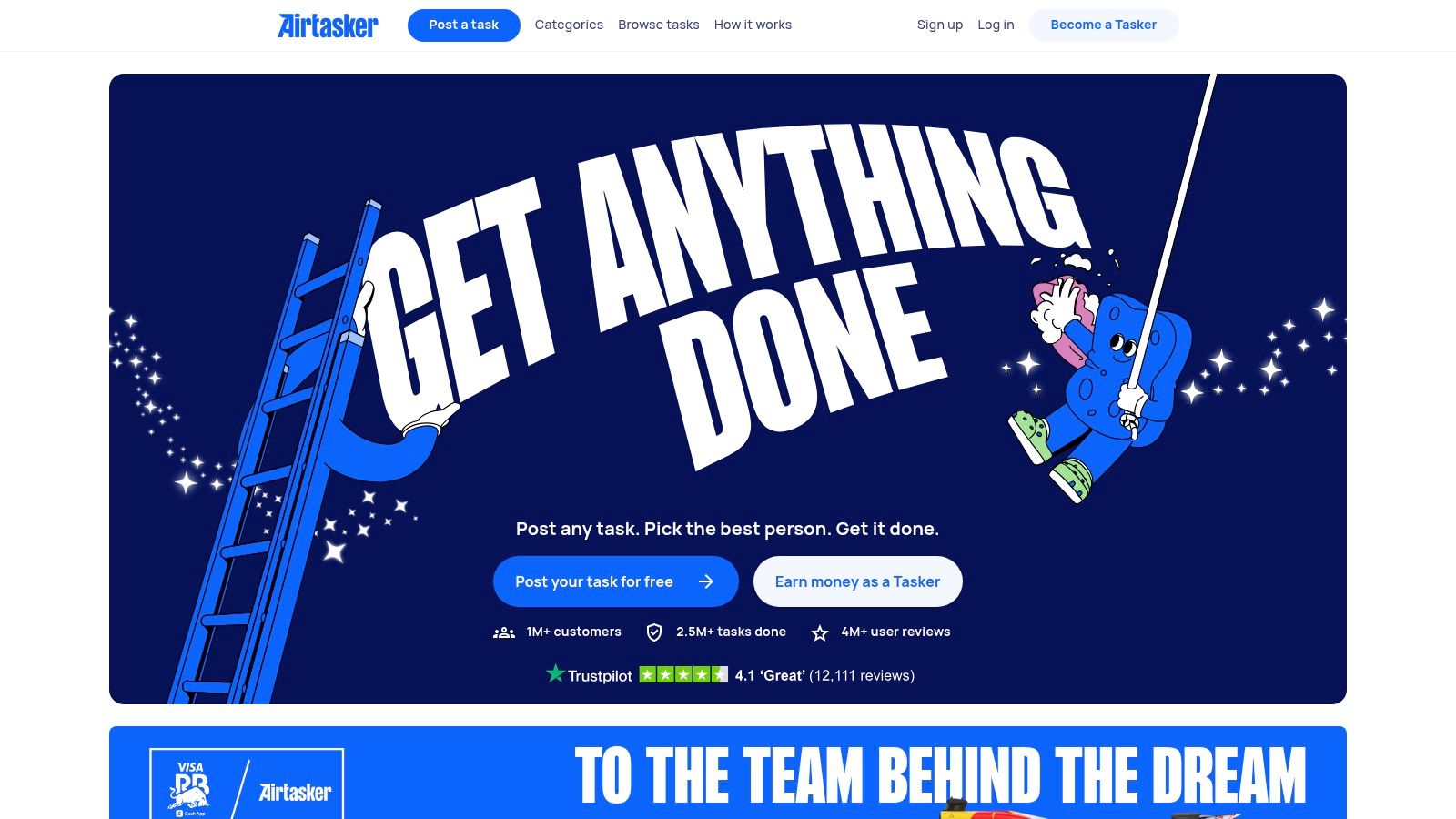
Airtasker is a well-known Australian marketplace for outsourcing tasks, but its value extends far beyond local, in-person jobs. For those looking to make money from home in Australia, it offers a significant stream of online and remote tasks. It's an excellent platform for leveraging your existing skills in administration, design, writing, or tech support, connecting you directly with Australian clients who need projects completed, all while paying in AUD.
What Is It and Who Is the Target Audience?
Airtasker allows "Posters" to list tasks they need done, and "Taskers" to bid on those jobs with a proposed price. While famous for tasks like furniture assembly or gardening, its "Online/Remote" category is a goldmine for digital services. You can find one-off gigs or build ongoing relationships with clients entirely from your home office.
The target audience of Taskers for remote work is diverse and includes:
- Virtual Assistants: Professionals offering remote administrative, technical, or creative assistance to clients.
- Freelance Creatives: Graphic designers, writers, video editors, and social media managers looking for project-based work.
- Skilled Professionals: Bookkeepers, web developers, tutors, and consultants offering their expertise on a flexible basis.
- Students & Side Hustlers: Individuals with specific skills (e.g., data entry, transcription, research) seeking to earn extra income around their schedules.
Earning Potential & Startup Costs
Your income on Airtasker is directly tied to the volume and value of the tasks you complete.
- Beginner: Completing a few small online tasks per week, like data entry or social media scheduling, could earn $150 - $400 per month.
- Intermediate: Consistently winning higher-value remote gigs like website design, content writing, or ongoing virtual assistance could generate $500 - $1,500+ per month.
Startup costs are minimal, making it highly accessible.
- Platform Fees: Airtasker is free to join. A service fee (starting around 20% and decreasing as you earn more) is deducted from your payment upon task completion.
- Tools of the Trade: You’ll need a reliable computer, internet connection, and any software relevant to your skills (e.g., Microsoft Office, Adobe Creative Suite).
Legal & Tax Considerations (Australia)
As a Tasker, you are an independent contractor, not an employee. You must get a free Australian Business Number (ABN) to operate. All earnings must be declared to the ATO as part of your income tax return. If your annual turnover from all business activities reaches $75,000, you are legally required to register for GST.
Quick Start Plan: Your First 30 & 90 Days
First 30 Days:
- Create a Strong Profile: Sign up at Airtasker. Complete your profile with a clear photo, a detailed bio highlighting your remote skills, and complete the ID verification for trust.
- Set Up Alerts: Create saved filters and notifications specifically for "Online/Remote" tasks in your areas of expertise (e.g., "graphic design," "virtual assistant").
- Make Your First Bids: Start by bidding on smaller, straightforward tasks to build your completion rate and get your first positive reviews.
- Craft a Winning Pitch: When you bid, don't just state a price. Briefly explain why you are the best person for the job and ask clarifying questions.
First 90 Days:
- Build Your Reputation: Aim for at least 5-10 positive reviews. This social proof is crucial for winning larger, more competitive tasks.
- Increase Your Bid Value: As your profile strengthens, start bidding on more complex and higher-paying projects that match your core skills.
- Develop Offer Templates: Create templates for your common bid types to respond to new tasks quickly and professionally.
- Review Your Pricing: Analyse what successful Taskers are charging for similar remote services and adjust your rates to remain competitive but profitable.
5. Sell Handmade Goods & Digital Products on Etsy Australia
For creative individuals, Etsy Australia is a powerhouse platform that provides a direct path to make money from home in Australia. It’s more than just a marketplace; it’s a global community of buyers actively searching for unique, handmade goods, vintage items, and creative digital downloads. This makes it an ideal launchpad for turning a hobby like crafting, art, or design into a viable home-based business.
What Is It and Who Is the Target Audience?
An Etsy business involves creating and listing physical or digital products for sale on the Etsy marketplace. You manage your own virtual shopfront, from product photography and descriptions to pricing and customer service, while leveraging Etsy's massive built-in audience.
The target market is incredibly diverse, depending on what you sell:
- Gift Shoppers: Individuals looking for personalised, unique gifts for birthdays, weddings, and holidays that they can't find in retail stores.
- Home Decorators: People seeking custom art prints, handmade ceramics, unique furniture, or personalised decor items.
- Small Business Owners & Event Planners: Those in need of digital products like social media templates, business card designs, or printable wedding invitations.
- Hobbyists & Crafters: Individuals looking for unique craft supplies, patterns, or DIY kits.
Earning Potential & Startup Costs
Your income on Etsy is directly tied to your product quality, niche, and marketing efforts.
- Beginner: A new shop focusing on a specific niche could realistically earn $200 - $700 per month as it gains traction.
- Intermediate: An established shop with good reviews and a consistent stream of new products could generate $700 - $2,500+ per month. Top Australian sellers earn significantly more.
Startup costs are manageable and can be scaled.
- Listing Fees: Etsy charges a small listing fee (approx. $0.30 AUD) per item, which is valid for four months.
- Transaction & Payment Fees: Etsy takes a 6.5% transaction fee on the total sale price, plus a payment processing fee (typically around 3% + $0.25 AUD).
- Materials & Supplies: The cost of raw materials if you are selling physical products. For digital products, this cost is nearly zero.
- Optional: A subscription to a design tool like Canva Pro for creating digital products or marketing materials.
Legal & Tax Considerations (Australia)
Operating an Etsy shop means you are running a business. You must get a free Australian Business Number (ABN) and declare all your income to the ATO. It is wise to set aside a portion of your earnings for tax. If your annual turnover from all your business activities reaches $75,000, you are legally required to register for GST and include it in your prices.
Quick Start Plan: Your First 30 & 90 Days
First 30 Days:
- Define Your Niche: Decide on a clear product line. Will you sell polymer clay earrings, digital planners, or custom pet portraits? Research competitors.
- Create Your Products: Produce a small batch of high-quality inventory (5-10 unique products) or finalise your digital files.
- Master Photography: Take bright, clear, and appealing photos of your products. This is the most critical step for attracting buyers.
- Open Your Shop: Set up your Etsy Australia shop, write compelling product descriptions using relevant keywords, and complete your shop policies.
First 90 Days:
- Optimise SEO: Learn the basics of Etsy SEO. Use specific keywords in your titles, tags, and descriptions to help buyers find you.
- Market Your Shop: Share your products on social media platforms like Instagram or Pinterest that align with your brand.
- Encourage Reviews: Provide excellent customer service to earn positive reviews, which are crucial for building trust and visibility.
- Expand Your Product Line: Based on initial sales and feedback, add new products to keep your shop fresh and encourage repeat business.
6. Build a Professional eCommerce Brand with Shopify
For Australians looking to move beyond third-party marketplaces and build a genuine online brand, Shopify is the gold standard. This platform provides all the tools needed to launch and scale a professional eCommerce store from home. It's the ideal way to make money from home in Australia when you want full control over your branding, customer relationships, and business data, whether you're selling handmade goods, dropshipping products, or digital downloads.

What Is It and Who Is the Target Audience?
Shopify is an all-in-one, subscription-based platform that allows you to create a website and use its integrated shopping cart solution to sell, ship, and manage your products. You aren't just a seller on a marketplace; you are the owner of the entire store.
The target audience is incredibly diverse and includes:
- Artisans & Makers: Australians who create their own products (e.g., jewellery, candles, art) and want a dedicated brand presence.
- Dropshippers: Entrepreneurs who want to sell products without holding inventory, integrating with apps like Spocket or DSers.
- Niche Retailers: Individuals passionate about a specific hobby (e.g., indoor plants, sustainable goods) who want to curate and sell a range of products.
- Service Providers: Consultants, coaches, and creatives selling digital products, online courses, or bookable services.
Earning Potential & Startup Costs
Your income is directly tied to your product, marketing, and brand strategy.
- Beginner: A new store focusing on a small niche could aim for $200 - $1,000 per month in the initial stages.
- Intermediate: A well-marketed store with a defined brand and repeat customers can generate $2,000 - $10,000+ per month.
Startup costs are manageable but require a clear budget.
- Shopify Subscription: Plans start from around $39 AUD per month after a free trial. Visit Shopify Australia for current pricing.
- Domain Name: Approximately $15 - $25 AUD per year.
- Product Costs: This varies from $0 (for digital goods) to thousands (for initial inventory).
- Optional: Premium themes ($100 - $400 AUD one-off) and monthly app subscriptions ($10 - $50+ each).
Legal & Tax Considerations (Australia)
As a Shopify store owner, you are running a business. You must have an Australian Business Number (ABN) and declare all revenue to the ATO. It is crucial to understand your obligations regarding income tax. If your annual turnover reaches the $75,000 threshold, you must register for GST, collect it on sales, and remit it to the ATO.
Quick Start Plan: Your First 30 & 90 Days
First 30 Days:
- Sign Up & Choose a Plan: Start your Shopify trial and select a plan that fits your initial needs.
- Define Your Niche & Products: Decide exactly what you will sell and source your first products or create your digital files.
- Basic Store Setup: Choose a theme, create your logo with a tool like Canva, and write your core pages (Home, About, Contact, Policies).
- Add Products: Upload at least 5-10 products with high-quality photos and compelling descriptions.
First 90 Days:
- Configure Payments & Shipping: Set up Shopify Payments and configure your shipping rates for Australian customers.
- Launch Your Store: Make your store live and announce it on your personal social media channels.
- Start Marketing: Create a business Instagram or Facebook page. Begin posting content related to your products and niche.
- Analyse & Refine: Use Shopify's built-in analytics to see where visitors come from and what they look at. Use this data to improve your store and marketing.
7. Amazon Australia (Seller Central)
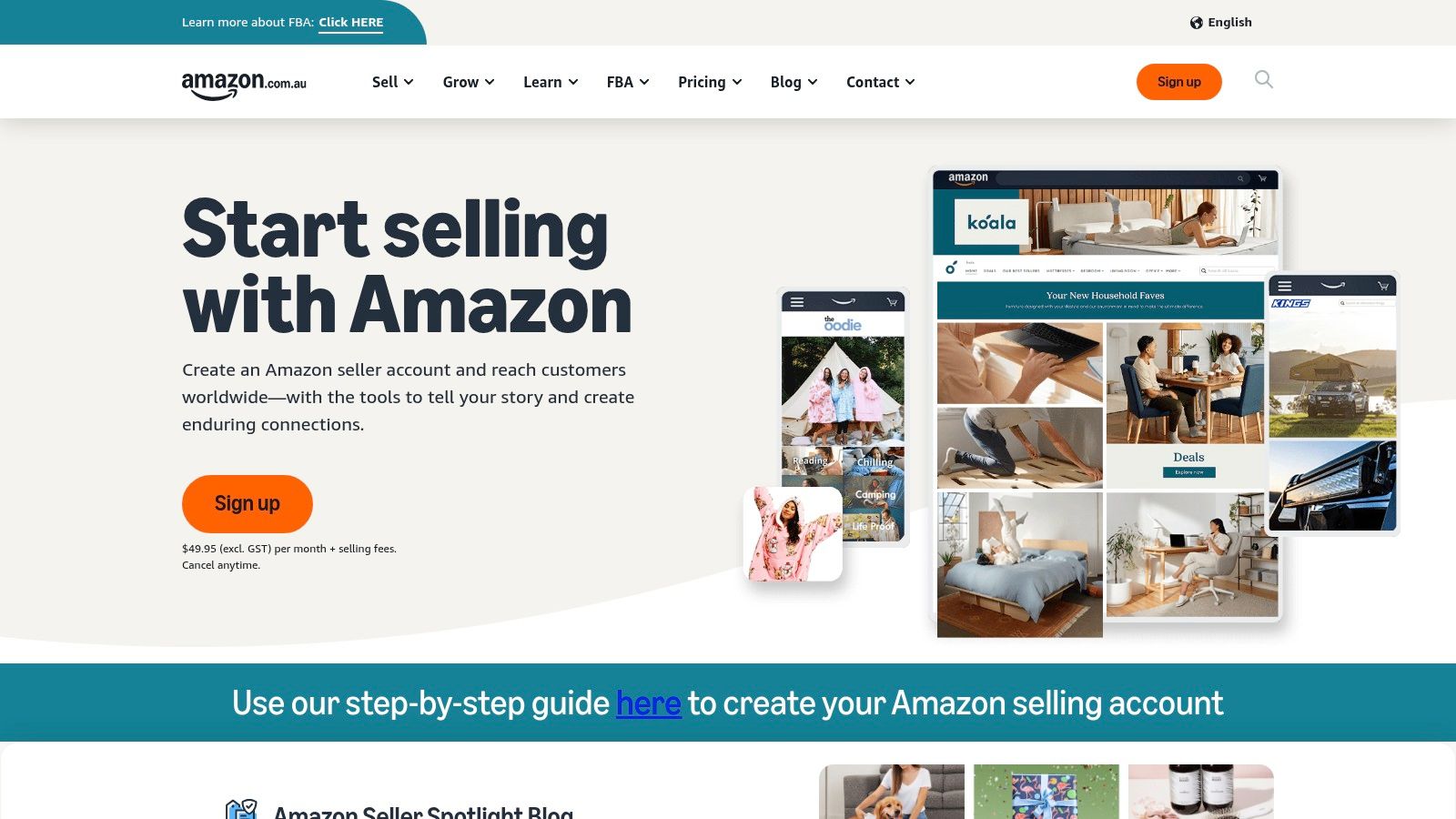
Tapping into Amazon’s vast marketplace is a powerful way to make money from home in Australia by selling physical products without needing a physical storefront. Seller Central is the dashboard where you manage everything from product listings to inventory and sales. It allows a home-based operator to leverage a massive, trusted e-commerce infrastructure, either by shipping products yourself or by using Amazon's world-class logistics network.
What Is It and Who Is the Target Audience?
Selling on Amazon.com.au involves listing products for sale on the platform. You can source products from wholesalers (reselling), create your own unique items (private label), or find bargains to flip (arbitrage). The key is leveraging Amazon’s enormous customer base and fulfilment options.
The target audience for this model includes:
- E-commerce Entrepreneurs: Individuals wanting to build a scalable online retail business from home.
- Side Hustlers: People looking to earn extra income by reselling products in their spare time.
- Brand Builders: Creators and inventors who want to launch their own product line and reach a national audience quickly.
- Existing Retailers: Small shop owners wanting to expand their sales channels and access Amazon’s Prime customer base.
Earning Potential & Startup Costs
Your income potential is directly tied to your product choice, pricing strategy, and sales volume.
- Beginner: A part-time seller focusing on retail arbitrage could realistically aim for $200 - $800 per month in profit.
- Intermediate: A seller launching a simple private label product or a successful wholesale line could generate $1,000 - $5,000+ per month in profit.
Startup costs are variable but require an initial investment in inventory.
- Amazon Seller Plan: Individual plan is free (pay per item sold) or Professional plan is $49.95 AUD/month.
- Inventory: This is the largest cost, ranging from $500 for a small batch of arbitrage items to $2,500+ for a first private label order.
- Other Fees: Amazon takes a referral fee (usually 6-15%) on each sale. If using Fulfilment by Amazon (FBA), storage and handling fees also apply.
Legal & Tax Considerations (Australia)
As a seller, you are running a business. You must have an Australian Business Number (ABN). All profit is considered taxable income and must be declared to the ATO. If your annual turnover reaches the $75,000 threshold, you are legally required to register for GST, which you will need to collect on your sales and remit to the ATO.
Quick Start Plan: Your First 30 & 90 Days
First 30 Days:
- Choose a Model: Decide between arbitrage, wholesale, or private label. Arbitrage is the fastest and cheapest to start.
- Product Research: Use tools like Jungle Scout or Helium 10 (or manual research) to find a high-demand, low-competition product.
- Set Up Account: Register for an Amazon Seller Central account and get approved to sell.
- Source Your Product: Purchase your initial batch of inventory from a local retailer (arbitrage) or supplier.
First 90 Days:
- Create Listings: Create compelling, keyword-optimised product listings with high-quality photos.
- Ship to Amazon (FBA): Label your products according to Amazon’s requirements and send your first shipment to an Amazon fulfilment centre.
- Launch & Promote: Set your initial price and consider using Amazon’s internal advertising (PPC) to drive early sales.
- Monitor & Optimise: Track your sales data, manage inventory levels, and gather customer reviews to build momentum. Making the right strategic choices is key, and you can learn more about how to scale effectively as you gain experience with these tips for growing a small business.
7-Point Comparison: Make Money From Home (Australia)
Your Next Step: Turning Your Plan Into Profit
We've journeyed through seven powerful and distinct avenues to make money from home in Australia. From the cutting-edge creative potential of an AI Art business to the structured marketplace of Upwork, the local-task focus of Airtasker, and the global entrepreneurial reach of a Shopify store, a viable option exists for nearly every skill set, passion, and lifestyle.
The central theme connecting these opportunities isn't a hidden secret or a magic bullet. Instead, it's the fundamental principle of matching a validated platform with consistent, professional execution. Your success hinges not on finding the "perfect" idea, but on choosing a path that genuinely aligns with your capabilities and committing to its growth.
Synthesising Your Strategy: Which Path is Yours?
The sheer volume of information can feel overwhelming, but your decision-making process can be simplified. Take a moment to reflect on the core elements of each platform we've explored and how they map onto your personal circumstances.
- For the Creative & Tech-Savvy: If you're drawn to visual creation and new technology, the Certificate in AI Art Monetisation offers a structured pathway to turn digital art into a tangible income stream on platforms like Etsy.
- For the Professional Service Provider: If you have established skills in areas like writing, graphic design, or administration, platforms like Upwork and Freelancer.com.au provide direct access to a global client base seeking your expertise.
- For the Hands-On Helper: If you prefer tangible, local tasks and enjoy helping people in your community, Airtasker is the ideal platform to monetise your practical skills, from furniture assembly to gardening.
- For the Maker & Curator: If you create unique handmade goods or curate vintage items, Etsy Australia provides a dedicated, enthusiastic marketplace ready to discover your products.
- For the Brand Builder & Entrepreneur: If your ambition is to build a scalable e-commerce brand from the ground up, Shopify (Australia) and Amazon Australia (Seller Central) offer robust, comprehensive toolsets to manage everything from product listings to marketing and fulfilment.
Your Immediate Action Plan
Your journey to make money from home in Australia begins not with a giant, intimidating leap, but with a single, manageable step. The most significant barrier is often inertia. To overcome it, focus on one small, achievable task you can complete today.
Revisit the 30-day action plans outlined for each method. Which one feels the most exciting and realistic for you right now?
The key to momentum is to take one small action immediately. This could be as simple as drafting a profile description for Upwork, researching a product niche on Amazon using a keyword tool, or sketching out your first three AI art concepts.
Remember to address the administrative essentials early. Securing an Australian Business Number (ABN) is a free, straightforward online process that instantly legitimises your venture and is a crucial first step for tax and invoicing purposes.
Bridging the Skills Gap for a Faster Launch
If you feel a gap between your current abilities and what's required for your chosen path, view it not as a roadblock but as an opportunity for targeted growth. Investing in practical, industry-relevant training is one of the most effective ways to accelerate your journey, build confidence, and avoid common pitfalls.
By focusing on consistent effort and practical skill application, you can systematically transform the ambition of earning an income from home into a sustainable, profitable, and rewarding reality. The tools are available, the market is ready, and your next step is waiting.
Ready to bridge the gap between idea and income with job-ready skills? Explore the targeted, practical courses at Prac Skills AU, designed specifically to help Australians launch and grow their home-based businesses and side hustles. Visit Prac Skills AU to find the micro-training you need to start earning sooner.