February 3, 2026
.webp)
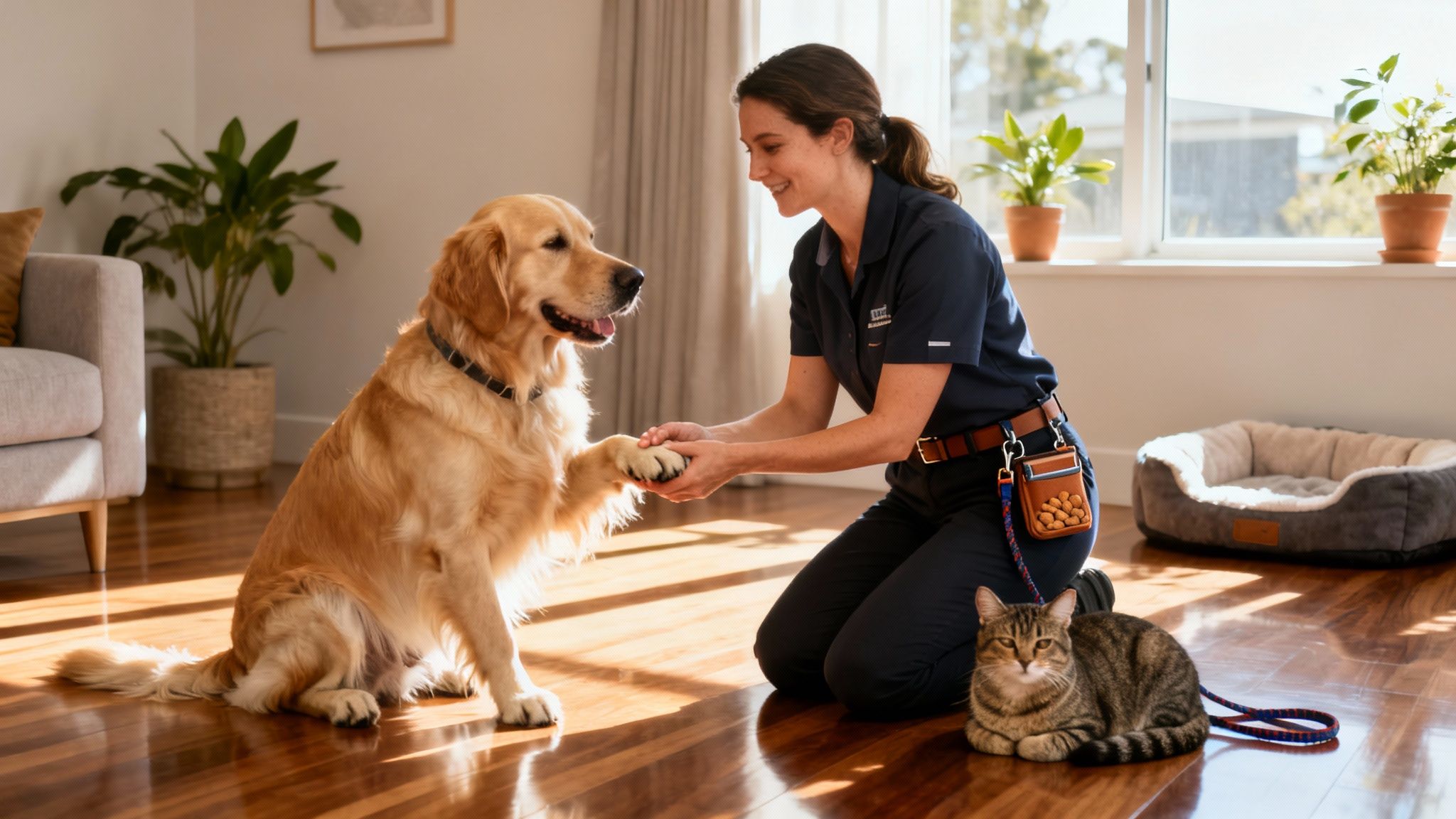
How to Become a Pet Sitter: Start Your Caring, Profitable Career
Discover how to become a pet sitter with our practical guide covering roles, pricing, starting your service, and gaining clients.
Career Development
minutes
So, you're thinking about turning your love for animals into a career? It's a brilliant idea, but becoming a professional pet sitter is about more than just cuddles and walks in the park. It’s a real business, and that means you need to blend your passion for pets with some sharp business sense, legal know-how, and a solid set of practical skills.
Before you can even think about finding your first furry client, you'll need to sort out the essentials: setting up a proper business, getting the right insurance, and figuring out what to charge. It's a journey, but one that takes you from being a hobbyist to a trusted professional pet owners can rely on.
Is Pet Sitting the Right Career for You?

The dream of spending your days with happy dogs and purring cats is what draws most people in. But to really make a go of it, you need to take a good, hard look at what the job actually involves. It’s a unique mix of genuine animal affection, entrepreneurial spirit, and a serious dose of responsibility.
The good news? You've picked a great time to jump in. Australia's pet care industry is buzzing. More and more pet owners are ditching traditional kennels for personalised, in-home care. This isn't just a fleeting trend; it's a fast-growing market creating a huge demand for reliable, professional sitters.
The Booming Australian Pet Care Market
The numbers don't lie—the demand for skilled pet care professionals is skyrocketing. This isn’t a small niche anymore; it’s a mainstream service that gives pet owners incredible peace of mind while they’re away.
Recent research from Grand View Research paints a very clear picture. The Aussie pet sitting market pulled in $49.9 million in 2024 and is expected to hit a massive $107.6 million by 2030. That’s a compound annual growth rate of 16.1%, which points to a strong, sustainable business opportunity.
What this means for you is simple: if you're serious about becoming a pet sitter, you’re stepping into a field with real potential for both a solid side income and a full-blown career.
Beyond the Cuddles: A Reality Check
While playing with puppies is definitely a job perk, the day-to-day reality of professional pet sitting is much more demanding. To succeed, you need a specific blend of personal qualities and professional skills.
A successful pet sitter is part animal lover, part business owner, and part crisis manager. You must be prepared for the unexpected, from a sudden vet visit to a last-minute client request, all while maintaining a calm, professional demeanour.
Ask yourself honestly if you've got what it takes:
- An Entrepreneurial Spirit: Are you a self-starter? You’ll be managing your own schedule, handling your own finances, and juggling all client communication yourself.
- Unwavering Responsibility: Can people trust you completely? You’re not just looking after their beloved pets; you’re holding the keys to their home.
- Adaptability: Are you ready for anything? You'll be caring for animals with all sorts of personalities, medical needs, and quirky routines.
This career path is incredibly rewarding, but it demands a level of dedication that goes way beyond just loving animals. If you've got the drive, it's one of the best profitable side hustle ideas in Australia out there, with every chance of turning into your full-time passion.
Developing Your Core Pet Care Skills

Sure, loving animals is where it all starts. But let’s be honest, that’s just the entry ticket. To really make a name for yourself and earn the deep trust of pet owners, you have to move beyond just passion and into genuine proficiency.
What truly separates a professional from a hobbyist is competence. It’s the ability to handle a whole range of situations with a calm head and the right skills, ensuring every animal is safe, happy, and well cared for. This means knowing how to manage different personalities, spotting subtle health warnings before they become emergencies, and being able to confidently give medication. These are the skills that build a five-star reputation.
Reading the Unspoken Language
Animals can't use words to tell you when something is wrong, but their body language speaks volumes. A top-tier pet sitter knows how to interpret these silent signals, turning a potential problem into a non-issue before it ever escalates.
Take a dog showing the whites of its eyes (often called "whale eye"), tucking its tail, or constantly licking its lips. That’s not just a cute quirk; it's a clear sign of stress or fear. Knowing this allows you to step back, give the dog some space, or remove whatever is causing the anxiety. It's how you prevent a panicked snap or an unnecessary bite.
It’s the same with cats. A cat that suddenly goes into hiding, stops grooming itself, or changes its litter box habits isn't just being difficult. It could be signalling anything from anxiety to a serious medical problem like a urinary tract infection. Being observant and understanding these signs is absolutely non-negotiable in this line of work.
The Power of Formal Training and Certification
While nothing beats hands-on experience, formal qualifications are what make you stand out from the crowd. Think of certifications not just as pieces of paper, but as powerful trust signals. They immediately tell clients you’re serious about your profession and have put in the work to back it up.
Pet First Aid and CPR aren't just 'nice-to-have' skills. They are essential tools that can literally mean the difference between life and death. Believe me, clients actively look for—and will pay a premium for—sitters who have these certifications.
Completing a proper course gives you the practical skills to handle common emergencies like choking, heatstroke, or injuries with a calm, methodical approach. That confidence is a game-changer for you and a massive relief for your clients.
- Pet First Aid & CPR: Learn to handle emergencies like cuts, poisoning, and choking. Many local vets or organisations like St John Ambulance run excellent workshops.
- Animal Behaviour: Get inside their heads and understand the psychology behind why animals act the way they do. This is key for safely managing things like anxiety, fear, and aggression.
- Specialised Care: Build skills in giving medication (including injections for diabetic pets) or looking after senior animals with mobility challenges.
Investing in your education is a direct investment in your business. For anyone wanting a structured path to mastering these core skills, a formal qualification like a Certificate in Dog Walking and Pet Sitting is a fantastic way to build a comprehensive foundation.
A Practical Skills Self-Assessment
Before you even think about taking on your first client, it’s a good idea to be brutally honest with yourself about your current abilities. This isn't about being perfect; it's about knowing where you shine and where you need to put in some work.
Use this simple checklist to see where you stand.
Can you confidently...
If you found yourself ticking "Needs Improvement" more than once or twice, take that as your cue to seek out some training. Building these core skills is the single most important step you can take to establish yourself as a trustworthy, capable, and in-demand professional. It’s the bedrock of a successful business.
Getting Your Business Set Up Legally and Financially
Alright, let’s talk about the serious stuff. Turning your passion for pets into a real, legitimate business means moving beyond casual cash-in-hand jobs. It's time to build a proper professional operation, and that starts with getting your legal and financial foundations sorted.
Getting this right from day one is what separates the hobbyists from the pros. It protects you, protects your clients, and gives you the confidence to grow.
First on the list is making your business official. For anyone in Australia wanting to operate professionally, this means getting an Australian Business Number (ABN). Think of it as your business’s unique fingerprint. It’s an 11-digit number that identifies you to the government, other businesses, and your clients. Getting one is free, and it’s an immediate signal that you’re a legitimate, professional service. It's also absolutely essential for managing your tax obligations correctly.
Choosing Your Business Structure
Before you jump online to register, you need to decide what your business will look like on paper. For most new pet sitters, this decision is pretty straightforward. The vast majority of us start out as a sole trader.
Being a sole trader is the simplest and most common way to get started. It basically means you are the business. You’re in full control, but you're also legally responsible for everything, including any debts. The beauty of this structure is that it’s cheap to set up and has far fewer reporting headaches than a company, making it perfect when you're just dipping your paws into the pet sitting world.
Once you’re committed, the next step is figuring out how to register a business in Australia. This process will walk you through getting that ABN and understanding your Goods and Services Tax (GST) obligations. Don’t stress about GST just yet, though—most new sitters will be well under the $75,000 annual turnover threshold where you’d need to register.
Why You Absolutely Cannot Skip Insurance
If there’s one non-negotiable part of setting up your pet sitting business, it’s insurance. I can't stress this enough. Accidents can and do happen, no matter how careful or experienced you are. Operating without the right cover is a massive financial gamble that could end your business before it even has a chance to take off.
You'll mainly need to look at two types of insurance. Their names might sound a bit similar, but they cover very different, and equally important, scenarios.
Think of insurance as your professional safety net. It's not just another expense; it's the ultimate proof to your clients that you take their pet's safety and their home's security seriously. It’s hands down the most important investment you'll make in your business.
Let's break down exactly what you need.
Public Liability vs Professional Indemnity
Getting your head around the difference between these two policies is vital. You really need both for complete peace of mind.
Public Liability Insurance: This is your absolute must-have. It covers you if your business activities cause injury to a third party or damage to their property. For instance, if a dog you’re walking pulls and trips someone who breaks their arm, this policy has your back. Or, if a cat in your care knocks over and smashes an expensive vase, Public Liability would cover the costs.
Professional Indemnity Insurance: This one is about the service or advice you provide. It protects you against claims of professional negligence. Imagine you recommend a new brand of treats and the client’s dog has a severe allergic reaction. If they claim your bad advice caused harm, this insurance would cover your legal defence and any potential payout.
Real-World Scenario Comparison
While some insurers might bundle these, it’s crucial to read the fine print and ensure you have both. Skimping on insurance to save a few dollars now is a false economy. A single unexpected incident could cost you everything.
Nailing these two things—your ABN and your insurance—are the foundational steps that build a resilient, trustworthy, and successful pet sitting career.
Designing Your Services and Pricing for Profit

Alright, you've sorted the legal stuff. Now for the exciting part—deciding what you'll actually do and how much you'll charge for it. This isn't just about picking numbers out of thin air; it’s a strategic move that will shape your income and the kind of clients you attract.
First, let's shift your mindset away from just "trading hours for dollars." You're not selling your time; you're selling trust, expertise, and complete peace of mind for pet owners. A clear, well-thought-out service menu shows clients exactly what value you bring to the table.
Building Your Service Menu
So, what kind of pet sitter do you want to be? Are you all about quick, energetic drop-in visits, or are you more comfortable settling in for an overnight stay? Your own lifestyle and what you enjoy will heavily influence your core services.
Most successful sitters build their business around a handful of key offerings.
Drop-In Visits: These are your classic 30-60 minute pop-ins. Think feeding, fresh water, a quick toilet break, and a bit of playtime. They're an absolute lifeline for owners of cats, caged pets, or dogs who just need a midday check.
Dog Walking: This can be a standalone service or bundled with a drop-in visit. Offering different walk lengths—say, 30, 45, or 60 minutes—is a smart way to cater to everyone from senior dogs who just need a potter around the block to high-energy pups who need to burn off steam.
Overnight Stays: This is your premium offering. You stay in the client's home, keeping the pets in their familiar environment and sticking to their routine. It's a game-changer for anxious animals, multi-pet households, or owners who want that extra layer of security.
House Sitting: Often rolled into an overnight stay, this can also include extra tasks like grabbing the mail, watering the plants, and generally making the house look lived-in.
Setting Your Rates Strategically
Pricing. It's the one thing that ties new sitters in knots. The goal is to find that perfect balance where you’re competitive in your local area but also valuing your skills, time, and the responsibility you're taking on.
Before you do anything, have a look at what other sitters in your area are charging. Recent industry data shows that after a period of fluctuation, pet sitting rates in Australia are settling. Hourly rates are now averaging around AU$38, while overnight stays command a higher average of about AU$55 per night. These numbers are a fantastic starting point, and you can dive deeper by checking out this detailed industry report on pet sitting services.
Once you have a baseline, it's time to get specific.
Your pricing shouldn't be a flat fee. It should be a flexible system that accounts for the complexity and responsibility of each unique job. A client with three dogs, one of whom needs insulin shots, requires a very different level of service than a client with one low-maintenance cat.
Think about these factors when putting together a quote:
- Number and Type of Pets: More pets mean more work. A base rate for one pet plus a small surcharge for each additional animal is standard practice.
- Special Needs: Is medication, an injection, or special handling for an anxious or elderly pet required? This is specialised care, and your rate should absolutely reflect that.
- Holiday and Weekend Surcharges: Your time is more valuable during peak periods like public holidays, Christmas, and Easter. A surcharge of 25-50% is completely normal.
- Travel Time: If a client is well outside your usual service area, adding a small fee to cover your fuel and extra time is fair.
Creating Value with Service Packages
Here’s a pro tip: instead of just listing prices, bundle your services into packages. This makes it easier for clients to choose and often increases your booking value. It moves the conversation from "how much per visit?" to "which solution is right for my pet?"
Think about what your clients really need and build packages around those scenarios. Below is a table with some ideas to get you started.
Sample Pet Sitting Service Packages and Pricing Guide
Here’s a look at how you might structure your offerings to make them clear and appealing to potential clients in the Australian market.
Remember, these are just starting points. Feel free to adjust the names, inclusions, and prices to fit your unique business and local market.
By putting real thought into your services and pricing structure, you're not just a person who likes animals—you're a professional who understands the market and provides incredible value. This foundation is absolutely crucial for building a profitable and long-lasting pet sitting career.
Alright, you've sorted the business side of things and designed your services. Now for the big one: finding the furry clients who need you.
Getting those first few bookings can feel like the toughest part of the whole journey, but trust me, it’s more about smart, local effort than having a massive marketing budget. Your real mission is to build trust and become a familiar, reliable face in your community, one happy pet at a time.
For now, forget about splashing cash on fancy advertising. The stuff that really works when you're starting out is a mix of grassroots hustle and a solid online presence that screams professionalism and genuine passion for animals.
Building Your Digital Pawprint
Let's be real – if people can't find you online, you barely exist. A simple, professional online presence is non-negotiable, as it’s the first place potential clients will go to check you out. You don’t need a complex website just yet; a well-managed social media profile is often more than enough to get the ball rolling.
Instagram is a brilliant place to start. It’s visual, easy to get the hang of, and absolutely perfect for showing off happy pets. Set up a dedicated business profile and start filling it with great photos and little videos of your adventures. Just remember: always get explicit permission from owners before you post pictures of their animals. A feed full of happy, well-cared-for pets is your single most powerful marketing tool.
Your social media isn't just a photo album; it's your digital storefront. Use it to show your face, share helpful pet care tips, and talk about what makes your service stand out. A few posts a week is all it takes to stay on people's radar.
To really make your profile work for you:
- Nail your bio: Be crystal clear about what you do (e.g., "Professional Pet Sitter in Carlton, Melbourne"), the services you offer, and the suburbs you cover.
- Use local hashtags: Think
#melbournedogs,#sydneypetsitter, or#perthdogwalker. This is how local pet owners will stumble across your profile. - Connect with the local scene: Follow and chat with local vets, groomers, dog-friendly cafes, and pet shops. A little digital networking goes a long way.
The Power of Local Partnerships
Never, ever underestimate the power of a good old-fashioned referral. Getting to know the other pet-related businesses in your neighbourhood is one of the most solid, long-term ways to find clients. These people are already trusted advisors to the exact pet owners you want to reach.
Start by just getting out there and introducing yourself. Pop into your local vet clinics, grooming salons, and independent pet supply stores. Don’t just dump a stack of flyers and run; have a real conversation. Explain who you are, mention you’re fully insured (this is a big one!), and ask if they have a community notice board or a list of recommended local services.
Offering a small referral fee or a friendly reciprocal deal can be a great little incentive. For instance, you could offer a 10% discount to any client they send your way, or you could make a point of recommending their grooming services to your own clients. It’s all about creating a network where everyone helps each other out.
Using Platforms to Kickstart Your Business
While building your own direct client list is the end goal, jumping on pet sitting platforms like Mad Paws or Pawshake can be a fantastic launchpad. Think of them as marketing machines that connect you with a constant stream of pet owners who are actively looking for care right now.
The huge advantage is that they handle the marketing, the payments, and even provide a basic level of insurance, which takes a lot of pressure off when you're just finding your feet. Using these platforms is an amazing way to get some hands-on experience and, most importantly, rack up those crucial first five-star reviews. Positive reviews are social proof, and in this industry, they're pure gold.
Of course, there are a few trade-offs to keep in mind.
The smartest play here is to use these platforms as a stepping stone. Go above and beyond for every client you get through an app. As you deliver amazing service, your direct word-of-mouth referrals will start to grow, allowing you to gradually build your own independent business where you keep 100% of what you earn.
Nailing the Client Experience from Start to Finish

Exceptional service is what turns a one-off booking into a loyal client who raves about you to everyone they know. It’s not just about filling the food bowl or going for a walk; it’s about creating a seamless, reassuring experience that gives owners complete peace of mind.
Think of this professional workflow as your secret weapon. It builds trust from the very first hello and makes sure every sit ends on a high note, setting you up for a stellar reputation and a calendar full of repeat business.
The All-Important Meet and Greet
This is where the magic really happens. The initial meet and greet isn't just a quick key handover—it's your opportunity to show off your professionalism, get a real feel for the pet's needs, and make sure it’s a good fit for everyone.
Treat this meeting like a friendly, informal interview. You’re there to gather crucial information while showing the client they're placing their beloved pet and home in capable, trustworthy hands.
A successful meet and greet is all about asking the right questions. You need to go beyond "When does Fluffy eat?" to truly understand a pet's personality, routines, and quirks. This is the intel that lets you provide genuinely outstanding care.
Come prepared with a checklist of questions to guide the chat. It shows you’re thorough and stops you from forgetting something critical when you’re caught up in the moment with a cute dog.
- Routines and Habits: What does a typical day look like? Where do they sleep? Are there any no-go zones in the house?
- Health and Safety: Who is their vet and what’s the contact number? Do they have any allergies, pre-existing conditions, or current medications?
- Behaviour and Personality: How do they react to strangers or other animals on walks? Are there any triggers for anxiety or aggression I should be aware of?
- Home Logistics: Can you show me where the cleaning supplies, pet food, and leads are kept? What are the emergency contact details for a trusted neighbour or family member?
Crafting a Bulletproof Care Agreement
Once you’ve got all the details, it’s time to formalise everything in a comprehensive care agreement or service contract. This document is a lifesaver—it protects both you and the client by clearly outlining expectations, responsibilities, and what to do in an emergency.
It prevents misunderstandings and becomes your go-to guide during the sit. Make sure your agreement is clear, easy to read, and signed by both of you before the service officially begins.
Key things to include in your agreement:
- Service Details: Dates of service, specific tasks you'll be performing, and the agreed-upon rates.
- Pet Information Profile: A detailed summary of everything you learned at the meet and greet, from feeding schedules to medication instructions and behavioural notes.
- Veterinary Release Form: This gives you explicit permission to seek vet care in an emergency. It should specify their preferred clinic and a spending limit, if they want one.
- Emergency Protocols: Outline what you'll do in a medical emergency, a natural disaster, or a household issue like a power outage.
Confidence in handling emergencies is non-negotiable. The skills you learn in a Canine First Aid and CPR course are invaluable here, giving both you and your clients that extra reassurance that you're prepared for anything.
Delivering Five-Star Service During the Sit
With the groundwork laid, the sit itself is your time to shine. The main goal here is to make the owner feel connected and totally confident that their pet is happy, safe, and being spoiled rotten.
Proactive communication is everything. Don’t wait for the owner to chase you for an update; send one every single day. A happy snap or short video with a quick message like, "Max had a great time chasing his ball at the park today!" works wonders.
It's the little touches that make a huge difference. If you notice they're running low on their pet's favourite treats, send a quick text asking if they'd like you to pick some up. It shows you’re paying attention and genuinely care.
The Perfect Hand-Off and Follow-Up
How you wrap up the service is just as important as how you started it. A great final impression solidifies the positive experience and paves the way for future bookings and glowing reviews.
Always aim to leave their home even cleaner than you found it. Wash any used dishes, tidy up pet areas, and take out the rubbish. Walking into a spotless home is a fantastic way to end things.
Consider leaving a brief "report card" or summary of the sit on the counter.
Example Sit Report:
"Hi Sarah! It was an absolute pleasure looking after Bella. She ate all her meals, and we had some lovely walks along the creek. I've left the keys on the hook and made sure everything is tidy. She was a perfect guest! Hope you had a wonderful trip."
This small gesture oozes professionalism and makes it easy for them to remember the great service you provided. A day or two after they return, send a brief follow-up message. Thank them for their business and, if they seemed happy, gently ask if they'd be willing to leave a review. This professional cycle is exactly how you become the go-to pet sitter in your area.
Starting your own pet sitting business is a huge step, and it's totally normal for questions to start bubbling up. In fact, it's smart to get your head around the details before you dive in. To get you started on the right foot, let's tackle some of the most common questions I hear from aspiring sitters across Australia.
Getting these common concerns sorted upfront will build your confidence. And down the track, when your business is up and running, you’ll want to know how to create an FAQ page for your own website to build that same trust with your clients.
Do I Need a Formal Qualification to Be a Pet Sitter in Australia?
The short answer is no—there’s no mandatory government qualification you need to start pet sitting in Australia. But that absolutely doesn't mean you should skip training altogether.
Think about it from a pet owner's perspective. They're looking for someone they can trust with two of their most precious things: their fur babies and their home. Getting certified in Pet First Aid & CPR is one of the best moves you can make. It’s a powerful way to show clients you’re a committed professional, gives you the confidence to handle an emergency, and often lets you charge more premium rates.
How Much Can I Realistically Earn as a Pet Sitter?
Honestly, this can vary a lot. Your income really depends on where you're based, what services you're offering, and how much experience you have under your belt.
- If you're just starting out part-time, you could bring in a few hundred dollars a month—perfect for a side hustle.
- Once you're established full-time with a solid client list, especially in big cities like Sydney or Melbourne, earning upwards of $50,000 a year is definitely achievable.
Your earning potential really starts to climb as you build an amazing reputation and add specialised services like overnight stays, holiday care, or looking after pets with special medical needs.
If there's one thing every new pet sitter absolutely must have, it’s comprehensive insurance. Public liability insurance is non-negotiable. It’s what lets you run a responsible business and gives both you and your clients total peace of mind.
Should I Join an App or Go Independent?
This is the classic dilemma for new sitters. Lots of people get their start on platforms like Mad Paws or Pawshake, and for good reason. They’re fantastic for getting your foot in the door, gaining experience, and racking up those all-important first five-star reviews.
The catch? These apps take a pretty hefty cut of your earnings, usually between 15-25%.
For most successful sitters, the long-term goal is to build their own independent client base through word-of-mouth and smart local marketing. When you work for yourself, you keep 100% of your income and have complete control over how you run your business.