February 3, 2026
.webp)
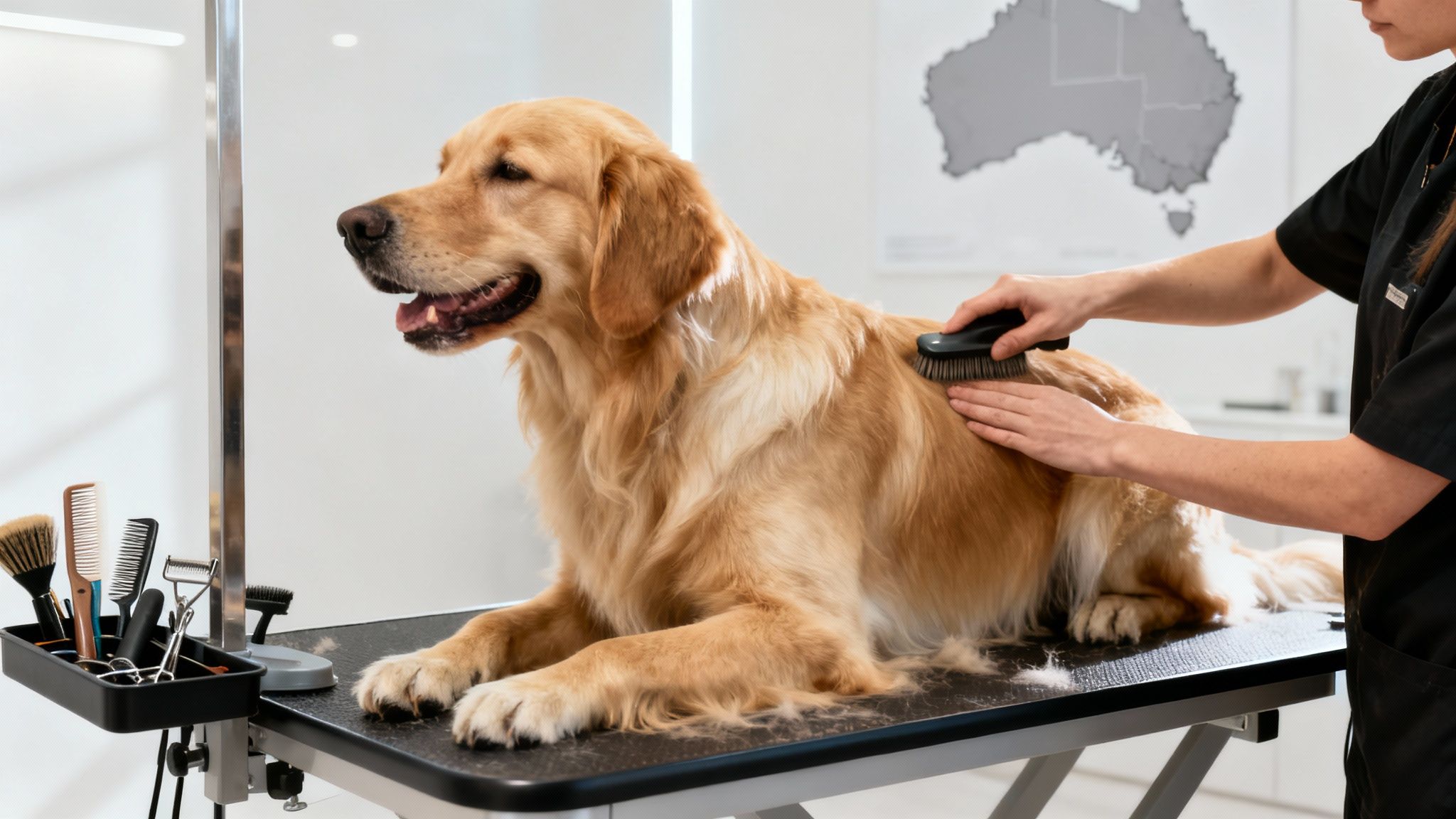
Animal grooming course: Find the Best Training in Australia
Learn how to choose the right animal grooming course in Australia with tips on curriculum, career paths, and top training options.
Career Development
minutes
If you've ever felt a special connection with animals and wondered how to turn that passion into a proper career, an animal grooming course is your starting point. It's the structured, hands-on training that teaches you how to safely and skilfully handle, bathe, and style pets, covering everything from animal welfare to breed-specific cuts and even client communication. Think of it as your formal gateway into a thriving, feel-good industry.
Why a Career in Animal Grooming Is More Than Just a Job
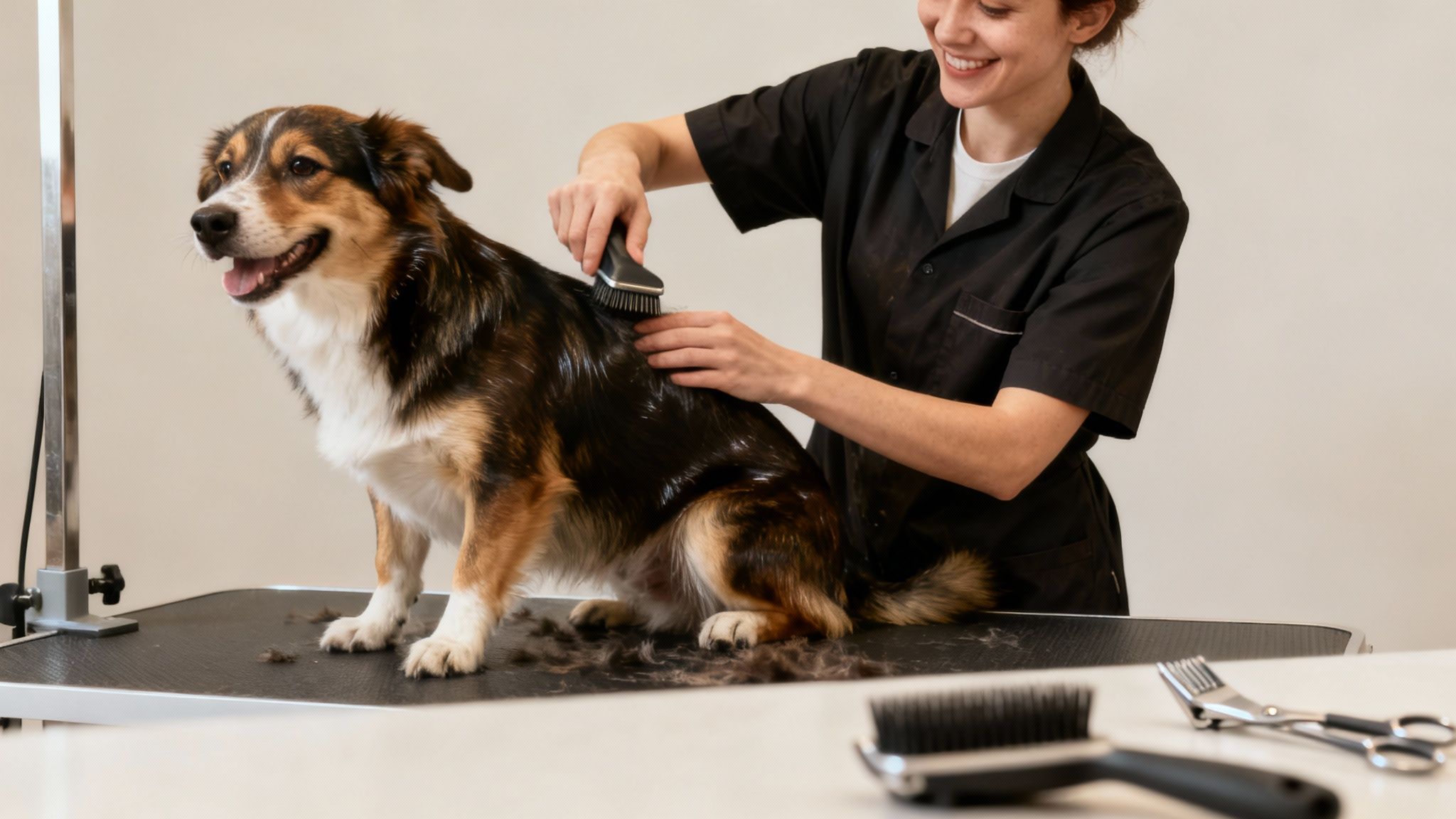
There's a unique kind of satisfaction that comes from transforming a scruffy, matted pet into a clean, comfortable, and happy companion. For a lot of us, this isn't just a task—it's a calling. If you feel that spark of joy when working with animals, you’re already halfway to a career you'll genuinely love.
This guide is here to bridge the gap between that passion and your professional future. A good grooming course is the critical first step, giving you the technical skills and safety know-how that separates a well-meaning hobbyist from a trusted expert.
Turning Passion into a Profession
Choosing a career in animal grooming means stepping into a field built on care, trust, and a bit of artistry. It's a hands-on profession where your work directly improves an animal’s quality of life, and the demand for skilled groomers is growing fast right across Australia.
The numbers don't lie. The pet grooming industry is booming, with the number of salons increasing by 12% between 2019 and 2023. This sector pulled in USD 106.3 million in 2024 and is expected to climb to USD 176.4 million by 2030. That signals a clear and growing need for certified professionals. You can dig deeper into these trends and see the full report over at Wifitalents.
A formal course does more than teach you how to use clippers. It teaches you to read an animal’s behaviour, spot potential skin issues, and build real relationships with clients who see their pets as part of the family.
This guide will serve as your complete roadmap. We'll walk through everything you need to know to make a smart decision, from what you’ll actually learn day-to-day to how you can launch your career afterward. You’ll get a clear picture of:
The practical skills covered in a typical curriculum.
The pros and cons of learning online versus in-person.
How accreditation works and why it’s important here in Australia.
The different career paths you can take after you graduate.
By the time you're done reading, you’ll have the confidence and clarity to pick the right animal grooming course and start building a truly rewarding career.
What You Will Actually Learn in an Animal Grooming Course
Thinking about an animal grooming course? Forget any ideas of it just being about bubble baths and bows. Stepping into a proper grooming course is more like enrolling in a combined science, art, and business program, all rolled into one. It’s a deep dive designed to shape you into a professional who can guarantee the health, safety, and happiness of every animal that comes through your door.
You'll start with the absolute bedrock of the profession: animal handling. This isn't about muscle; it’s about psychology. It’s learning to read a dog's body language, knowing how to calm a jittery terrier, and understanding the right way to lift a big, goofy golden retriever. Get this right, and you build trust, prevent injuries, and turn a potentially scary experience into a positive one.
From Anatomy to Artistry
Once you're confident with safe handling, the course shifts into the ‘science’ of the job. This is where you get to know the ins and outs of skin and coat health. You’ll learn to tell the difference between a husky’s thick double coat and a cavalier’s fine, silky fur—and more importantly, understand what each one needs.
This knowledge is non-negotiable. Using the wrong brush on a poodle can create painful mats, and not drying a labrador’s undercoat properly can lead to nasty skin infections. A great grooming course teaches you to be the first line of defence, spotting things like parasites, skin problems, or weird lumps long before anyone else.
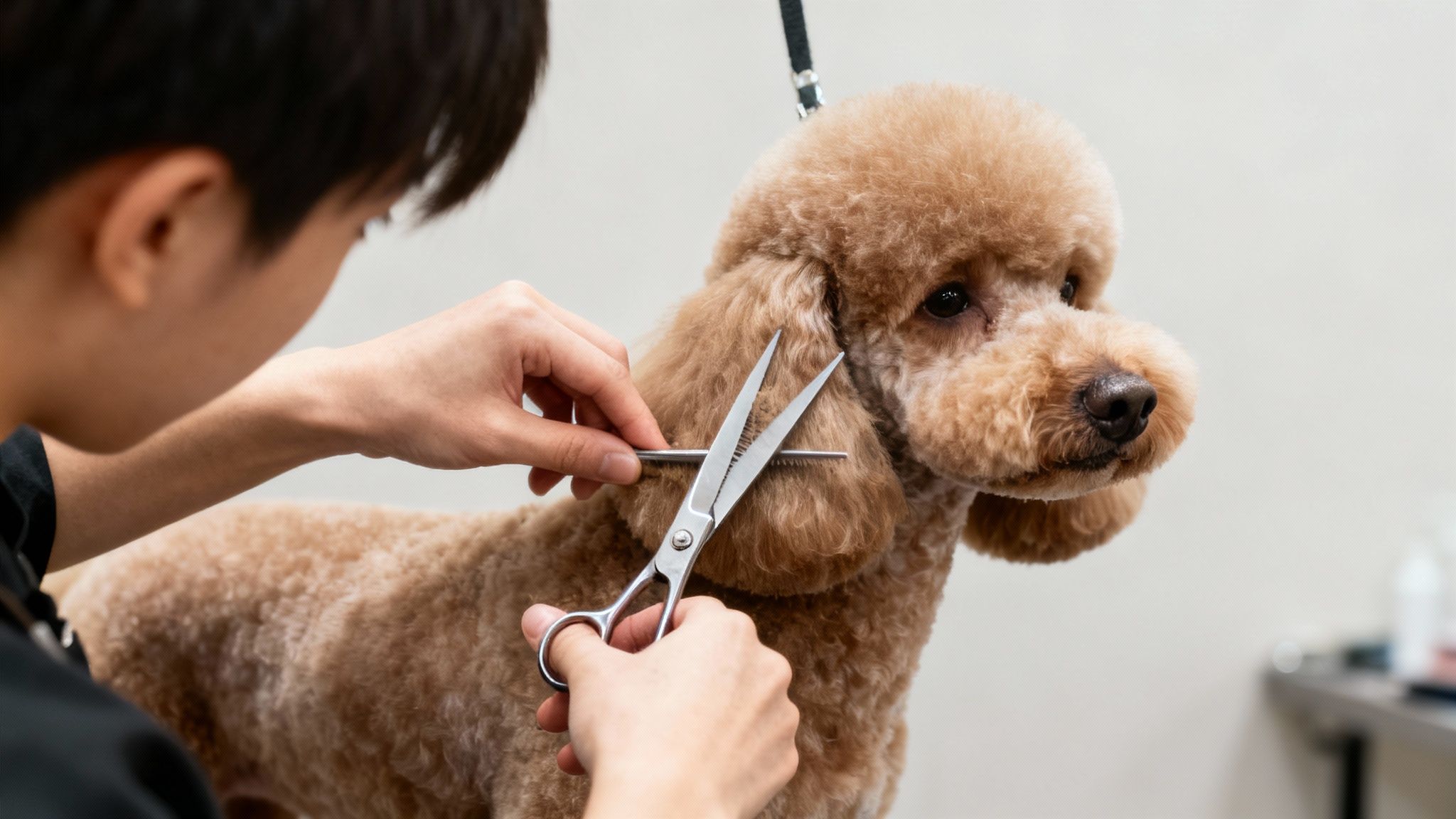
From there, you move into the ‘art’ of grooming, where clippers and scissors become your tools of the trade. You'll learn to master:
Clipping and Scissoring Techniques: Getting comfortable with different blade lengths and scissor holds to create everything from a practical "summer cut" to a polished, breed-standard style.
Breed-Specific Grooming Standards: Understanding the classic trims for breeds like schnauzers or westies, and knowing how to adapt them for pets who are just there for a tidy-up.
Coat Finishing: Nailing the techniques for fluff drying, brushing, and de-shedding that give a dog that professional, straight-from-the-salon look.
The goal isn’t just to make a pet look pretty. It's about blending your knowledge of their body and coat with styling skills to create a cut that’s comfortable, healthy, and practical for their lifestyle.
Before we move on, let's break down what a typical, well-rounded curriculum looks like. This table shows the core modules you should expect to see in a quality Australian grooming course.
Core Skills Covered in a Comprehensive Animal Grooming Course
These modules work together to build a complete skill set, ensuring you're ready for any dog—and any client—who walks through your door.
More Than Just Technical Skills
A top-tier grooming course knows that you’re not just working with animals—you’re running a business and dealing with their human owners. That's why the best programs now include modules on client communication and salon management.
These skills are crucial in today's market. Spending on pet services in Australia, including grooming, has surged by 30% since 2021, now making up a huge piece of the nation’s $33 billion pet industry. As owners look for more specialised care, groomers need the business smarts to match.
This side of the course often covers:
Client Communication: Learning how to do a proper consultation, manage a client’s expectations, and give helpful after-care advice.
Salon Management Basics: Getting a grip on scheduling, keeping your workspace clean and safe, and managing your supplies.
Safety and First Aid: Gaining the critical knowledge needed to handle any workplace emergencies with confidence.
By blending hands-on animal care, technical artistry, and solid business basics, a good course gives you everything you need. You'll not only learn how to groom your dog at home but also gain the confidence to do it professionally. The practical skills you'll develop, like those explored in our broader animal care courses, ensure you don’t just graduate as a groomer, but as a capable professional ready for a fantastic career.
Choosing Your Learning Path: Online Vs In-Person Training
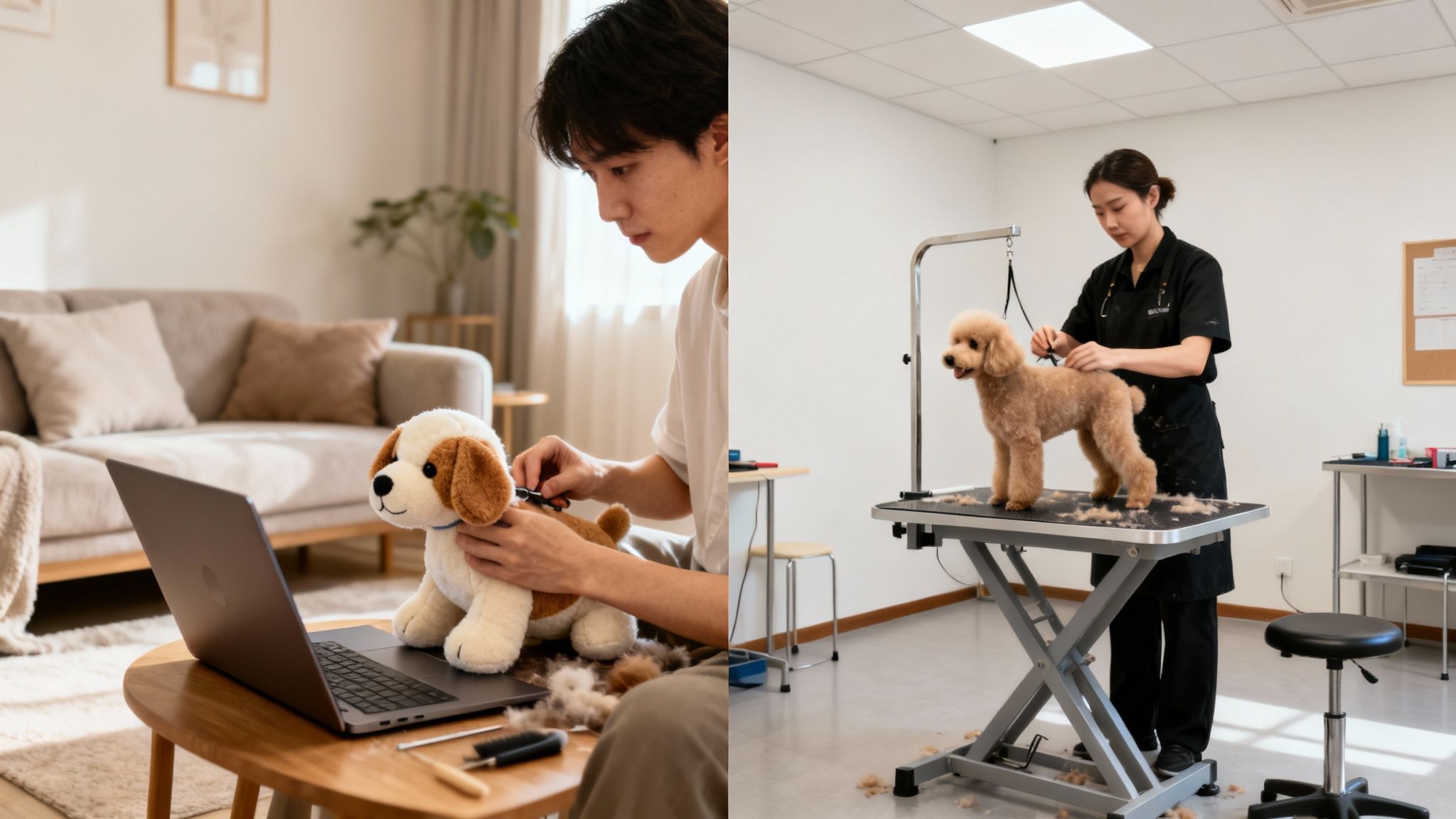
So, you’ve decided to jump into the world of animal grooming. Fantastic! Now comes one of the first big forks in the road: do you sign up for an online course or head to a physical classroom? Both paths can lead you to a fantastic career working with animals, but they take very different routes to get there. Your choice really boils down to your lifestyle, how you learn best, and what you want to achieve.
Think of it like learning to cook. You could go to a hands-on culinary school where a chef is right there to correct your knife skills in real-time. Or, you could follow an expert’s online course, pausing and rewinding the videos in your own kitchen until you’ve nailed the technique. Both methods can turn you into a great cook, but the journey is completely different.
There’s no single “best” way to do this. The right choice is the one that slots neatly into your life and gives you the practical skills you need to succeed. Let’s break down the realities of each to help you figure out your next move.
The Flexibility of Online Grooming Courses
Online training has exploded in popularity, and it’s easy to see why. It offers a level of flexibility that’s tough to beat, especially if you’re already juggling a job, family, or other commitments. You can dive into the theory of canine anatomy at midnight or watch a scissoring tutorial on your lunch break.
This self-paced structure puts you squarely in the driver’s seat. Instead of being locked into a rigid class schedule, you move through the material as quickly or as slowly as you need. For anyone who’s self-motivated, this is a massive plus. On top of that, online courses are often kinder to your wallet since they don’t have the overheads of a physical training centre.
But all that freedom comes with a trade-off. The biggest hurdle with any online animal grooming course is getting enough practical, hands-on experience. Without a classroom full of dogs ready for a trim, you have to get a bit creative.
Online learning demands self-discipline. You essentially become your own boss, responsible for scheduling study time and finding opportunities to practice on real animals—whether they're your own pets, a friend’s dog, or through volunteering.
To really make online learning work, you need to be proactive. This might mean:
Practising on family and friends' pets to get comfortable with different coat types and temperaments.
Volunteering at a local animal shelter to work with a huge variety of breeds you might not otherwise see.
Seeking mentorship from a local groomer who might let you observe or help out with basic tasks like bathing and drying.
The Power of In-Person Training
In-person grooming schools throw you right into an immersive, hands-on learning environment from day one. This traditional approach gives you direct access to experienced instructors who can offer immediate, personalised feedback. If you’re holding your clippers at the wrong angle or misreading a dog's body language, they’re right there to guide you.
That instant correction is invaluable for mastering the physical art of grooming. You also get to work with a whole range of professional-grade equipment, from hydraulic grooming tables to high-velocity dryers, that you probably don’t have sitting at home. And maybe most importantly, you’ll be handling different dogs every single day. This constant exposure to various breeds, sizes, and temperaments is the fastest way to build real-world competence and confidence.
The structured environment of an in-person course provides a clear, motivating pathway, with set class times and a community of fellow students to learn alongside. However, this structure demands a serious time commitment, often requiring full-time attendance for several months, and it’s typically the more expensive option.
Here’s a head-to-head comparison to help you weigh it all up:
Ultimately, picking your learning path is a personal decision. Take a good look at your budget, your daily schedule, and how you genuinely learn best. Whether you choose the flexibility of an online animal grooming course or the hands-on intensity of an in-person program, the right education will set you up for a brilliant career.
Understanding Accreditation and Industry Recognition
When you start digging into animal grooming courses, you'll see words like "accredited," "certified," and "industry recognised" pop up everywhere. But what do they actually mean in the Australian pet grooming world? Getting your head around this is the key to picking a course that genuinely prepares you for a successful career.
Let's get one thing straight: unlike vets or electricians, animal grooming in Australia isn't a government-regulated industry. This means there's no mandatory national licence you have to get before you can start clipping and coiffing. But this lack of formal regulation makes things like accreditation and industry recognition even more important.
Think of it like hiring a builder. You wouldn’t just go with someone who shows up with a ute and a few tools. You’d look for proof they know their stuff—maybe they're part of a professional association or have qualifications that back up their skills. It’s the exact same principle in grooming.
Why Accreditation Matters
So, why does it matter? Reputable accreditations are a powerful signal to both employers and pet owners. They show that a course provider has met specific standards for quality, ethics, and curriculum. While they aren't a legal requirement, these credentials prove a serious commitment to professional excellence and, most importantly, animal welfare.
They’re basically a seal of approval. It's the difference between a high-quality educational program and a hobbyist course that might only scratch the surface.
What to Look For in an Animal Grooming Course
Okay, so how do you spot a course with credentials that actually mean something? In Australia, there are a few key things to keep an eye out for that signal quality and respect within the industry.
Registered Training Organisation (RTO) Status: This is a formal level of recognition. RTOs are government-approved providers, and their status is often linked to nationally recognised certificate qualifications. It’s a serious indicator of quality control.
Industry Body Endorsement: Look for connections to well-regarded Australian pet industry groups, like the Pet Industry Association of Australia (PIAA). When a course is endorsed by a body like this, it means the content is relevant, up-to-date, and aligns with what the industry actually needs.
CPD Accreditation: Many professional courses are accredited for Continuing Professional Development (CPD). This is huge because it shows the course is recognised for contributing to your ongoing learning, something that employers really value.
Enrolling in an accredited course isn't just about getting a piece of paper. It's about building a foundation of trust. It tells your future clients that you have invested in professional training focused on their pet’s safety, health, and wellbeing.
To get a better idea of what these relationships look like in practice, you can explore the various accreditations and partnerships that legitimate training providers maintain. These affiliations speak volumes about a provider’s commitment to quality education.
The Importance of Lifelong Learning
Graduating from your first grooming course is a massive achievement, but it’s really just the starting line of your professional journey. The pet care industry is always changing, with new techniques, tools, and animal welfare insights coming out all the time.
This is where Continuing Professional Development (CPD) becomes absolutely essential. Committing to ongoing learning shows you're dedicated to being at the top of your game. It ensures you’re always current with the latest safety protocols, styling trends, and best practices for handling every animal with kindness and expertise. Ultimately, this dedication to constant improvement is what will define your reputation and help you build a long, successful career built on skill and trust.
Your Career After Graduation: From Salon to Business Owner
Finishing your animal grooming course isn’t just about getting a certificate—it’s like being handed the keys to a whole bunch of exciting career doors. The skills you’ve just worked so hard to master don't lock you into one single path. Far from it. They give you the power to shape a career that truly fits your ambitions, your lifestyle, and your deep passion for animals.
While starting out in an established salon is a fantastic first step for many, it’s really just the beginning of what’s possible. From the freedom of the open road in a mobile van to the personal touch of a home-based studio, your qualification is the foundation you'll build your professional life on.
The Classic Route: The Salon Groomer
For most new graduates, the first stop is a bustling grooming salon. This is an absolutely brilliant way to sharpen your skills under the watchful eye of experienced pros. Think of it as a paid apprenticeship where you’re exposed to a huge variety of breeds and temperaments every single day.
A typical day is a whirlwind of appointments, from quick nail trims to full, breed-specific styling. You’ll be part of a team, sharing knowledge and tackling tricky grooms together. It's the perfect environment to build your speed, confidence, and understanding of the industry's rhythm, all without the initial stress of running your own show.
The Entrepreneurial Path: The Mobile Groomer
If the idea of being your own boss and setting your own hours sounds like a dream, mobile grooming might be calling your name. This path puts you squarely in the driver's seat—literally. You’ll invest in a specially kitted-out van and bring your services right to your clients' doorsteps.
This model is incredibly convenient for pet owners and can create a much less stressful environment for anxious animals. Your initial startup costs are focused on the vehicle and equipment, but you completely avoid the ongoing overheads of a physical shopfront. Life as a mobile groomer is never dull; you’ll navigate different suburbs, manage your own schedule, and build really strong, personal relationships with your clients.
The Home-Based Business: The Boutique Salon
Another fantastic option for budding entrepreneurs is setting up a salon right from your own home. This approach blends the professionalism of a high-street salon with a comfortable, intimate setting. It's an excellent way to launch a business with much lower overheads while keeping total control over your work environment and the client experience you offer.
A home-based groomer can create a calm, one-on-one atmosphere that’s absolutely perfect for nervous pets. Your success will depend on creating a professional, safe, and council-compliant workspace on your property and getting the word out locally. It can offer a wonderful work-life balance, letting you build a loyal client base right in your own community.
No matter which path you choose, the core skills remain the same—it’s the application that changes. The real secret is finding the business model that best suits your personality, your financial situation, and what you want your career to look like in the long run.
Each career path offers its own unique mix of freedom, financial investment, and daily routine. To help you weigh up the options, here’s a look at how they stack up side-by-side.
Comparing Animal Grooming Career Paths in Australia
This table gives you a starting point for thinking about where you see yourself. Remember, many groomers even transition between these paths throughout their careers, so nothing is set in stone! No matter your choice, knowing what you'll need is crucial. A good place to start your research is this guide on the essential tools for a pet grooming salon.
Finding Your Niche: Specialised Grooming Services
Beyond just choosing a business model, you can carve out a unique space for yourself by specialising. This is how you become the go-to expert for a specific type of client, which often allows you to command higher rates and build a stellar reputation.
Here are a few profitable niches to think about:
Cat Grooming: So many groomers focus only on dogs, leaving a huge gap in the market for skilled and confident cat groomers.
Breed-Specific Styling: You could become the local master of styling certain breeds, like Poodles, Schnauzers, or Terriers, attracting show dog owners or passionate breed enthusiasts.
Holistic Grooming: Focusing on all-natural products and creating a zen-like, stress-free experience can attract a very dedicated and high-value client base.
Canine Health and Safety: Adding extra qualifications is a powerful way to stand out. For example, completing a Certificate in Canine First Aid & CPR gives clients immense peace of mind and shows your commitment to their pet's wellbeing.
Ultimately, finishing your animal grooming course is just step one. Where you take your career next is entirely up to you. Whether you thrive in a team, dream of your own business on wheels, or want to become a master of a specific grooming art, the opportunities are out there waiting for you.
How to Choose the Right Animal Grooming Course for You
Picking the right animal grooming course is a massive step towards your new career, so it pays to look past the glossy brochures and figure out what a program is really offering. The decision you make now will directly shape your confidence, your skill level, and how quickly you get ahead in the industry.
Think of it like choosing a personal trainer. You wouldn't just go for the cheapest option, would you? Of course not. You’d check out their qualifications, their track record with other clients, and whether their style actually matches what you want to achieve. Applying that same critical eye here will help you find a course that genuinely prepares you for the day-to-day realities of being a professional groomer.
Your Course Selection Checklist
To help you cut through the marketing fluff, use this checklist to properly weigh up your options. Any high-quality course should be ticking most, if not all, of these boxes.
Experienced and Accessible Instructors: Who’s actually teaching you? Look for instructors with years of hands-on experience running a salon or a mobile business, not just someone with academic knowledge. Their real-world advice is pure gold.
Emphasis on Hands-On Practice: Theory is one thing, but grooming is a physical skill that needs practice. Does the course have a solid plan for practical experience? This could be through in-person workshops, required volunteer hours, or structured assignments you have to complete on real dogs.
Comprehensive and Transparent Curriculum: A good provider will be upfront about what you'll learn, module by module. You should see everything from canine anatomy and scissoring techniques to the basics of running a business. Vague course outlines are a major red flag.
Positive Student Reviews and Testimonials: What are people who have finished the course saying? Hunt for genuine, detailed reviews that talk about the learning experience, how supportive the instructors were, and what happened to their careers after they graduated.
Post-Graduation Support: Does the provider offer any help once you've finished? Things like career advice, a graduate community forum, or resources for starting your own business show they’re invested in your success long after you've paid the course fees.
Your goal is to find a partnership, not just a product. The best animal grooming course providers see themselves as your first step into a professional community and are committed to supporting you beyond the final lesson.
Red Flags to Watch For
Just as important as knowing what to look for is knowing what to run away from. Some places are more interested in getting your enrolment fee than seeing you succeed. Keep an eye out for these warning signs.
Be cautious if you encounter:
High-Pressure Sales Tactics: If you feel like you're being rushed into a decision with a "limited-time offer" that’s about to expire, take a step back. Reputable educators want you to be sure about your choice.
Guarantees of High Income: Let's be real—no course can guarantee you'll be earning a specific salary right after you finish. Promises of an instant six-figure income are just not realistic, and it’s a dishonest way to get you to sign up.
Vague or Hidden Costs: The total fee for the course should be crystal clear. Be very wary of providers who are cagey about extra costs for things like toolkits, exam fees, or getting your final certificate.
Lack of Industry Recognition: If a course has no visible accreditations, endorsements from professional grooming bodies, or any real connection to the industry in Australia, you have to question its value.
By carefully weighing these factors and trusting your gut, you can confidently pick a grooming course that doesn’t just teach you the skills, but truly sets you up for a successful and rewarding career.
Of course. Here is the rewritten section, crafted to sound completely human-written and natural, following the provided style guide.
Your Top Questions About Animal Grooming Courses, Answered
Thinking about turning your love for animals into a career? It’s a big step, and you’ve probably got a few questions buzzing around. To help you feel confident about the path ahead, we’ve put together answers to the most common queries we hear from aspiring groomers in Australia.
How Long Does It Take to Become a Certified Animal Groomer in Australia?
There’s no single timeline, as it really depends on the path you choose. If you're going for a formal qualification, like a Certificate III in Animal Care Services (Pet Grooming), you're typically looking at 6 to 12 months of full-time study.
On the other hand, you might find shorter, intensive workshops that pack specific skills into just a few weeks. Online courses offer the most wiggle room, letting you learn at your own pace. Your completion time will really come down to your personal schedule and how much time you can dedicate.
Do I Need Prior Experience with Animals to Enrol?
For most entry-level courses, absolutely not. The only real prerequisite is a genuine passion for animals and a real hunger to learn the craft.
Of course, any hands-on time you've had—whether with your own pets or from volunteering at a shelter—is a bonus, but it's rarely a deal-breaker. Keep in mind, though, that some advanced or specialised courses might require you to have a foundational program under your belt or some proven industry experience before you can sign up.
The best courses are designed to build your skills from the ground up, starting with the fundamentals of safe animal handling and behaviour before moving on to more technical grooming techniques.
What Is the Average Salary for a Pet Groomer in Australia?
A groomer's salary can vary quite a bit, depending on your experience, where you're located, and whether you're working for someone else or running your own show. When you're just starting out in a salon, you can expect to earn something close to the national minimum wage.
Once you’ve got some experience, that figure can climb to between $55,000 and $70,000 annually. But the real earning potential kicks in when you become your own boss. Successful mobile services or boutique salons can pull in six-figure revenues, though that depends heavily on building a solid client base and having sharp business skills.
Ready to turn your passion for animals into a rewarding career? At Prac Skills AU, we offer industry-recognised, self-paced online courses designed to give you the practical skills you need to succeed. Explore our animal care programs and start your journey today at https://www.pracskills.com.au.